Harvard University, Cambridge, MA, USA.
Department of Neurology, Taipei Veterans General Hospital, Taipei, Taiwan; School of Medicine, National Yang Ming Chiao Tung University College of Medicine, Taipei, Taiwan.
Cell Rep. 2023 Jan 31;42(1):111919. doi: 10.1016/j.celrep.2022.111919. Epub 2023 Jan 10.
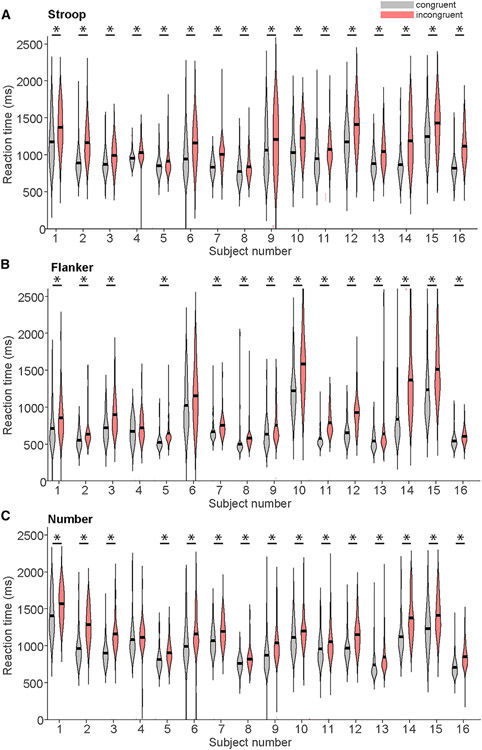
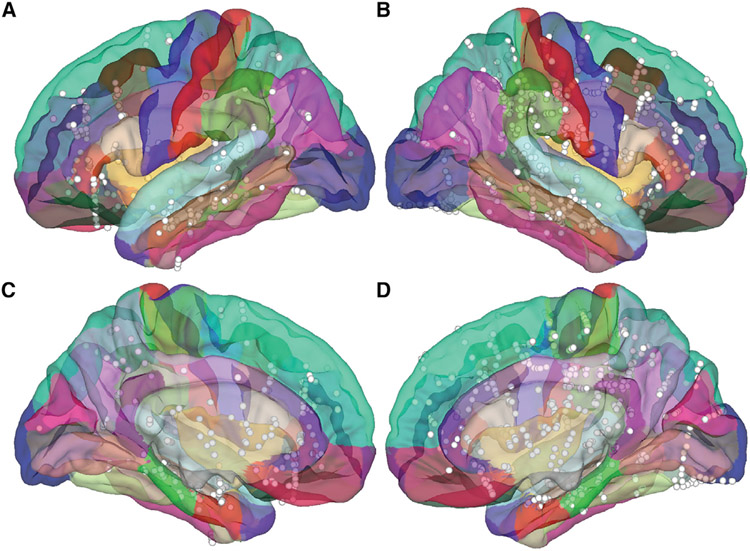
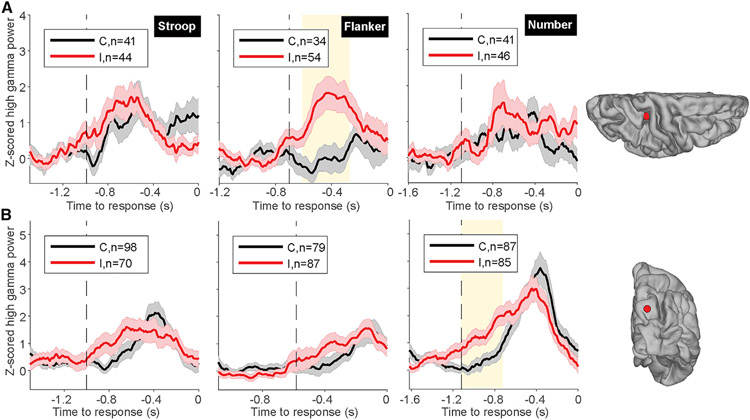
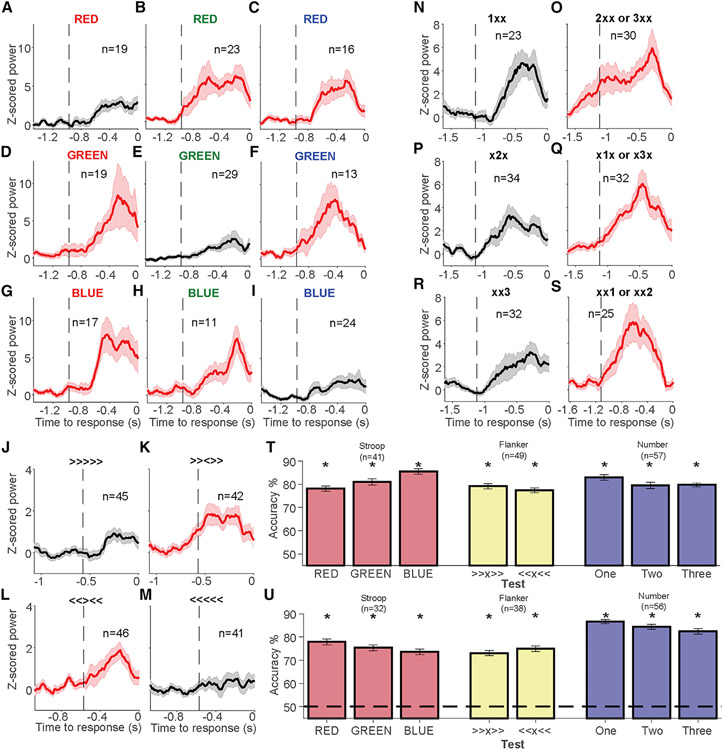
Cognitive control involves flexibly combining multiple sensory inputs with task-dependent goals during decision making. Several tasks involving conflicting sensory inputs and motor outputs have been proposed to examine cognitive control, including the Stroop, Flanker, and multi-source interference task. Because these tasks have been studied independently, it remains unclear whether the neural signatures of cognitive control reflect abstract control mechanisms or specific combinations of sensory and behavioral aspects of each task. To address these questions, we record invasive neurophysiological signals from 16 patients with pharmacologically intractable epilepsy and compare neural responses within and between tasks. Neural signals differ between incongruent and congruent conditions, showing strong modulation by conflicting task demands. These neural signals are mostly specific to each task, generalizing within a task but not across tasks. These results highlight the complex interplay between sensory inputs, motor outputs, and task demands underlying cognitive control processes.
认知控制涉及在决策过程中灵活地将多个感觉输入与任务相关的目标结合起来。已经提出了几种涉及冲突感觉输入和运动输出的任务来检查认知控制,包括斯特鲁普、侧抑制和多源干扰任务。由于这些任务是独立研究的,因此仍然不清楚认知控制的神经特征是否反映了抽象的控制机制,还是每个任务的感觉和行为方面的特定组合。为了解决这些问题,我们从 16 名患有药物难治性癫痫的患者中记录了侵入性神经生理信号,并比较了任务内和任务间的神经反应。神经信号在不一致和一致条件下有所不同,表现出强烈的冲突任务需求调制。这些神经信号主要是特定于每个任务的,在任务内具有通用性,但不能跨任务通用。这些结果强调了认知控制过程中感觉输入、运动输出和任务需求之间的复杂相互作用。