Yuan Yuan, Gao Fan, Chang Ying, Zhao Qiu, He Xingxing
Department of Gastroenterology, Zhongnan Hospital of Wuhan University, Wuhan, China.
Department of Gastroenterology, Tongji Hospital, Tongji Medical College, Huazhong University of Science and Technology, Wuhan, China.
Biomark Res. 2023 Jan 18;11(1):6. doi: 10.1186/s40364-023-00449-w.
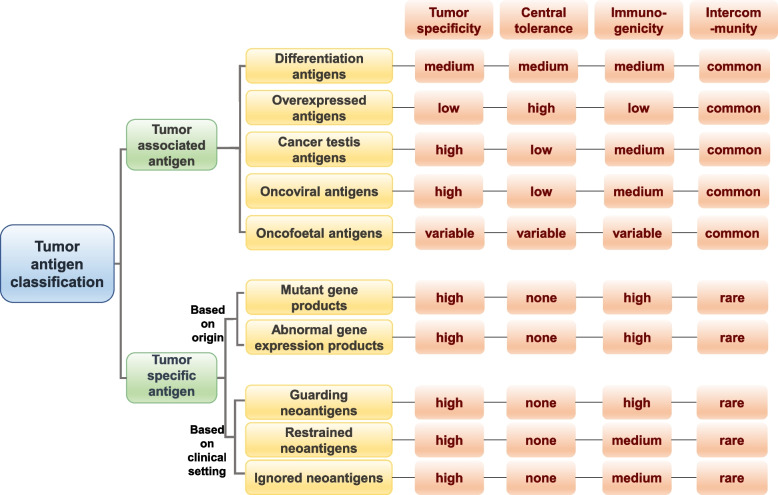
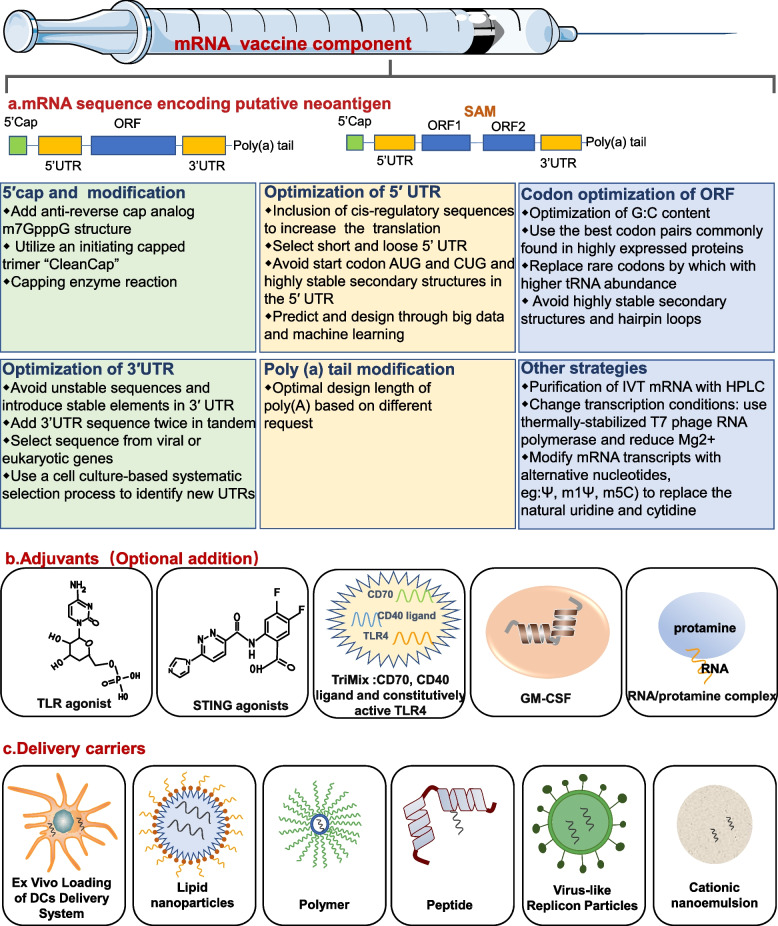
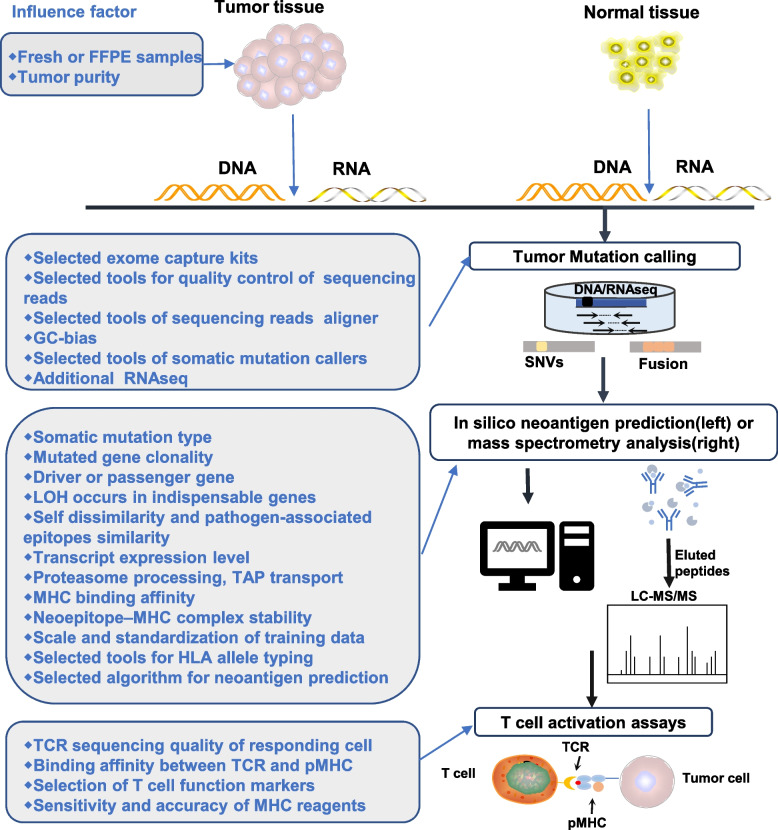
High-frequency mutations in tumor genomes could be exploited as an asset for developing tumor vaccines. In recent years, with the tremendous breakthrough in genomics, intelligence algorithm, and in-depth insight of tumor immunology, it has become possible to rapidly target genomic alterations in tumor cell and rationally select vaccine targets. Among a variety of candidate vaccine platforms, the early application of mRNA was limited by instability low efficiency and excessive immunogenicity until the successful development of mRNA vaccines against SARS-COV-2 broken of technical bottleneck in vaccine preparation, allowing tumor mRNA vaccines to be prepared rapidly in an economical way with good performance of stability and efficiency. In this review, we systematically summarized the classification and characteristics of tumor antigens, the general process and methods for screening neoantigens, the strategies of vaccine preparations and advances in clinical trials, as well as presented the main challenges in the current mRNA tumor vaccine development.
肿瘤基因组中的高频突变可被用作开发肿瘤疫苗的有利条件。近年来,随着基因组学、智能算法的巨大突破以及对肿瘤免疫学的深入了解,快速靶向肿瘤细胞中的基因组改变并合理选择疫苗靶点已成为可能。在各种候选疫苗平台中,mRNA的早期应用受到稳定性差、效率低和免疫原性过强的限制,直到针对SARS-CoV-2的mRNA疫苗成功研发,打破了疫苗制备的技术瓶颈,使得肿瘤mRNA疫苗能够以经济的方式快速制备,且具有良好的稳定性和效率。在这篇综述中,我们系统地总结了肿瘤抗原的分类和特点、新抗原筛选的一般过程和方法、疫苗制备策略及临床试验进展,并介绍了当前mRNA肿瘤疫苗开发中的主要挑战。