Zhao Tian-Xue, Zhang Li, Zhou Ning, Sun Dong-Sheng, Xie Jian-Hong, Xu Shao-Kun
Department of Endocrinology Affiliated Hangzhou First People's Hospital Zhejiang University School of Medicine Hangzhou China.
Geriatric Medicine Center Department of Geriatric Medicine Zhejiang Provincial People's Hospital (Affiliated People's Hospital, Hangzhou Medical College) Hangzhou Zhejiang China.
Food Sci Nutr. 2022 Sep 20;11(1):101-113. doi: 10.1002/fsn3.3069. eCollection 2023 Jan.
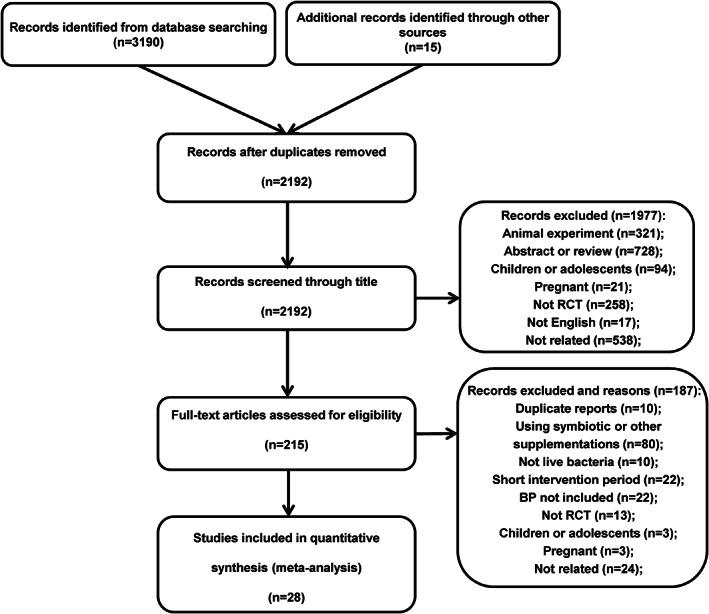
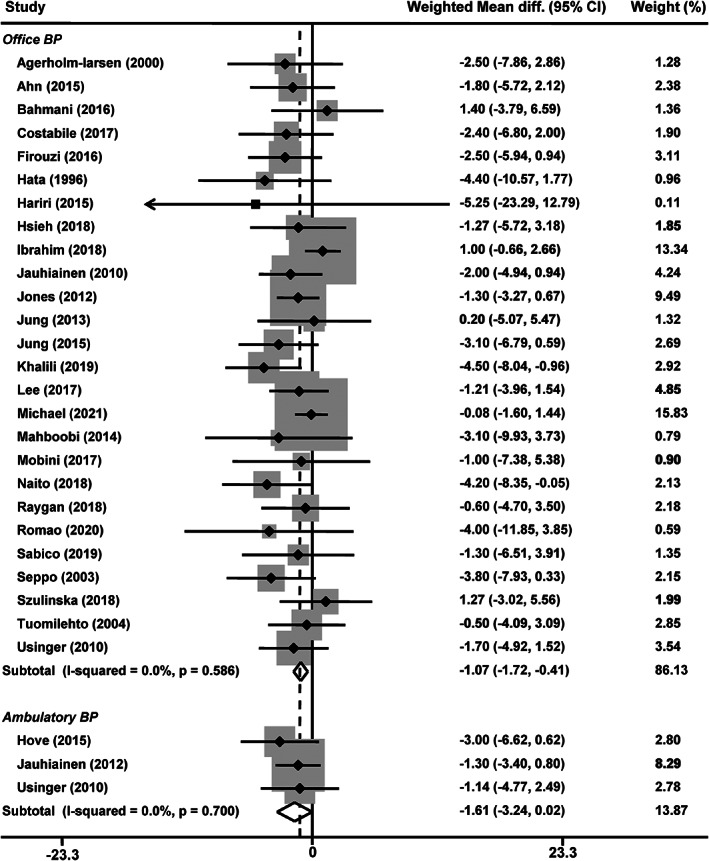
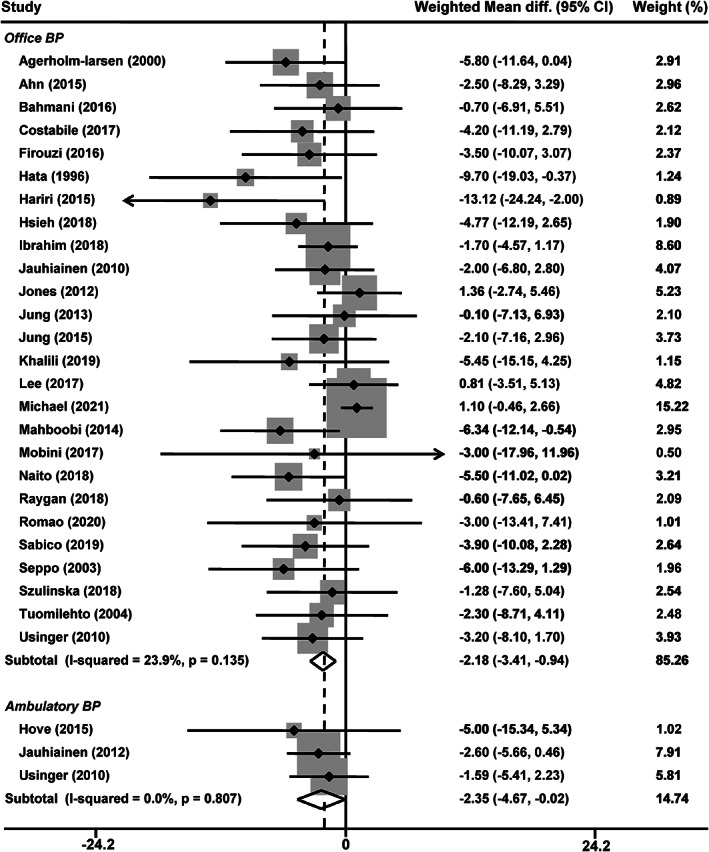
Previous studies showed a controversial result on the relationship between probiotics treatment duration and blood pressure (BP). The present meta-analysis is performed to summarize the effects of long-term (≥8 weeks) use of probiotics on office and ambulatory BP using combined evidence from randomized, controlled trials. We searched PubMed, Embase, Cochrane library, and the ClinicalTrials.gov till January, 2021 to identify eligible articles. Primary outcomes were changes in office BP. In the presence of heterogeneity, a random-effects model was used to calculate the combined treatment effect. Begg's funnel plots and Egger's regression test were used to assess the publication bias. Meta-analysis of 26 trials in 1624 participants demonstrated that probiotic consumption significantly decreased office systolic BP by 2.18 mmHg (95% confidence interval [CI], -3.41 to -0.94 mmHg) and diastolic BP by 1.07 mmHg (95% CI, -1.72 to -0.41 mmHg). The analysis on ambulatory BP from three trials showed a similar reduction by -2.35/-1.61 mmHg ( ≤ .052). Subgroup analysis in hypertensive and diabetic patients showed a significant reduction in systolic and diastolic BP ( ≤ .02). The reductions in diabetic and hypertensive patients were comparatively larger than nondiabetic and normotensive patients ( ≥ .052). With the increase of age, baseline body mass index (BMI), treatment duration, and systolic BP, the effects of probiotics on BP did not increase significantly ( ≥ .18). The present meta-analysis suggests a beneficial effect of probiotics on BP by a modest degree, especially in the diabetes mellitus and hypertension. Prolonging the treatment duration could not improve the antihypertensive effect.
先前的研究表明,益生菌治疗时长与血压(BP)之间的关系存在争议性结果。本荟萃分析旨在利用随机对照试验的综合证据,总结长期(≥8周)使用益生菌对诊室血压和动态血压的影响。我们检索了截至2021年1月的PubMed、Embase、Cochrane图书馆和ClinicalTrials.gov,以确定符合条件的文章。主要结局为诊室血压的变化。在存在异质性的情况下,使用随机效应模型计算合并治疗效果。采用Begg漏斗图和Egger回归检验评估发表偏倚。对1624名参与者的26项试验进行的荟萃分析表明,食用益生菌可使诊室收缩压显著降低2.18 mmHg(95%置信区间[CI],-3.41至-0.94 mmHg),舒张压降低1.07 mmHg(95%CI,-1.72至-0.41 mmHg)。对三项试验的动态血压分析显示,收缩压/舒张压有类似程度的降低,为-2.35/-1.61 mmHg(P≤0.052)。高血压和糖尿病患者的亚组分析显示,收缩压和舒张压显著降低(P≤0.02)。糖尿病和高血压患者的血压降低幅度相对大于非糖尿病和血压正常的患者(P≥0.052)。随着年龄、基线体重指数(BMI)、治疗时长和收缩压的增加,益生菌对血压的影响并未显著增加(P≥0.18)。本荟萃分析表明,益生菌对血压有一定程度的有益作用,尤其是在糖尿病和高血压患者中。延长治疗时长并不能改善降压效果。