Shandong Key Laboratory of Optical Communication Science and Technology, School of Physics Science and Information Technology, Liaocheng University, Liaocheng 252059, China.
College of Agronomy, Liaocheng University, Liaocheng 252059, China.
Biosensors (Basel). 2023 Jan 4;13(1):85. doi: 10.3390/bios13010085.
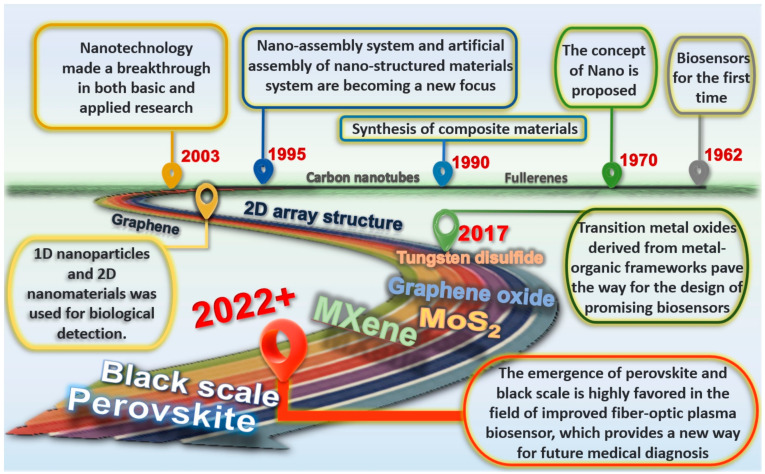
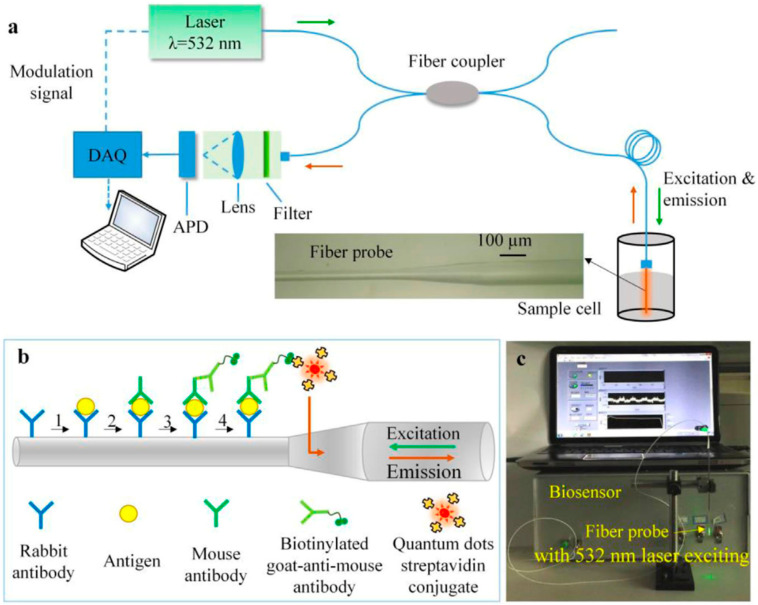
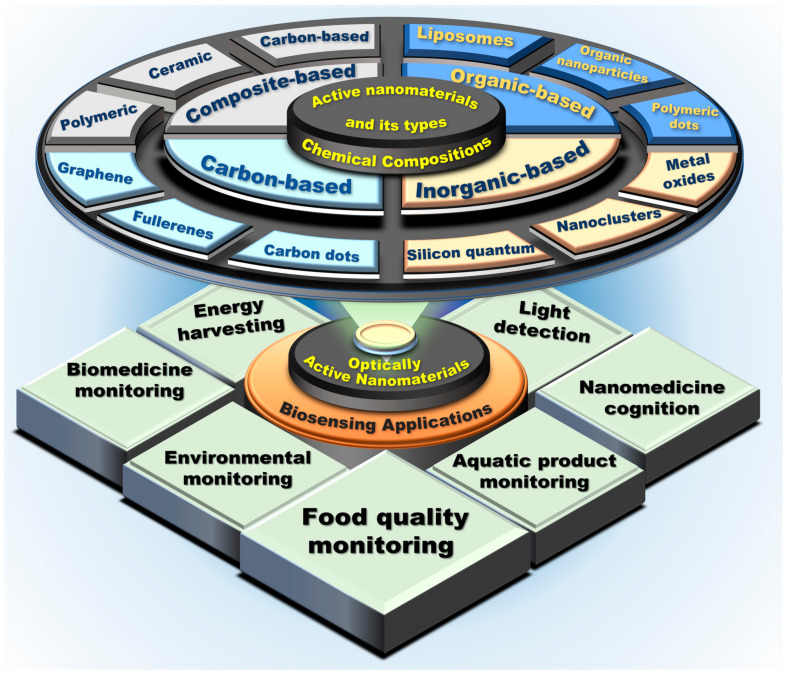
This article discusses optically active nanomaterials and their optical biosensing applications. In addition to enhancing their sensitivity, these nanomaterials also increase their biocompatibility. For this reason, nanomaterials, particularly those based on their chemical compositions, such as carbon-based nanomaterials, inorganic-based nanomaterials, organic-based nanomaterials, and composite-based nanomaterials for biosensing applications are investigated thoroughly. These nanomaterials are used extensively in the field of fiber optic biosensing to improve response time, detection limit, and nature of specificity. Consequently, this article describes contemporary and application-based research that will be of great use to researchers in the nanomaterial-based optical sensing field. The difficulties encountered during the synthesis, characterization, and application of nanomaterials are also enumerated, and their future prospects are outlined for the reader's benefit.
本文讨论了手性纳米材料及其在光学生物传感中的应用。这些纳米材料除了提高其灵敏度外,还提高了其生物相容性。出于这个原因,对纳米材料,特别是基于其化学成分的纳米材料,如基于碳的纳米材料、基于无机的纳米材料、基于有机的纳米材料以及用于生物传感应用的基于复合材料的纳米材料进行了深入研究。这些纳米材料在光纤生物传感领域得到了广泛应用,以提高响应时间、检测限和特异性。因此,本文介绍了基于纳米材料的光学传感领域的当代和应用基础研究,这将对该领域的研究人员非常有用。还列举了纳米材料在合成、表征和应用过程中遇到的困难,并为读者概述了它们的未来前景。