Shandong Key Laboratory of Optical Communication Science and Technology, School of Physics Science and Information Technology, Liaocheng University, Liaocheng 252059, China.
College of Agronomy, Liaocheng University, Liaocheng 252059, China.
Biosensors (Basel). 2022 Oct 8;12(10):843. doi: 10.3390/bios12100843.
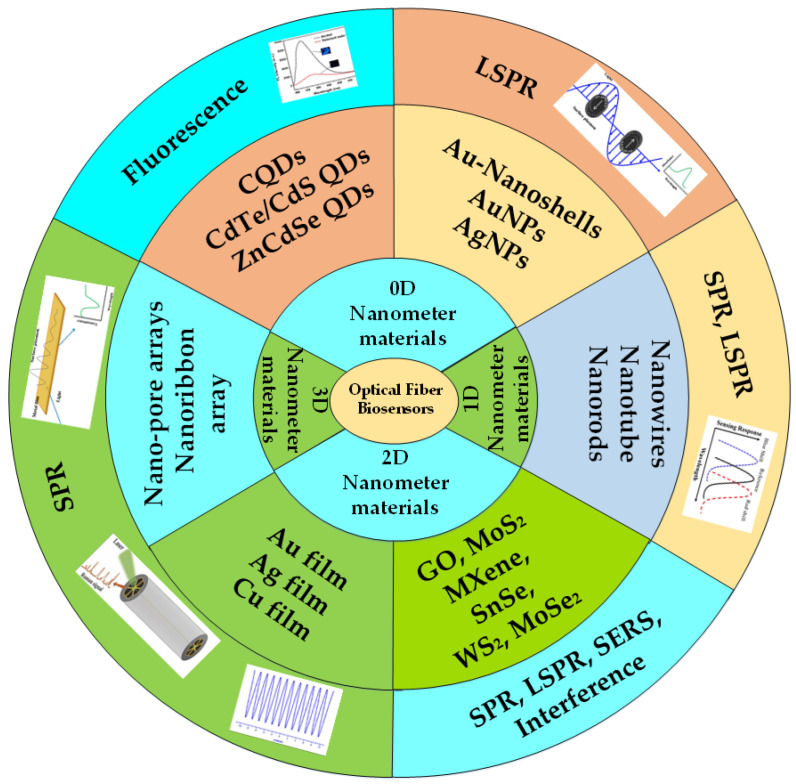
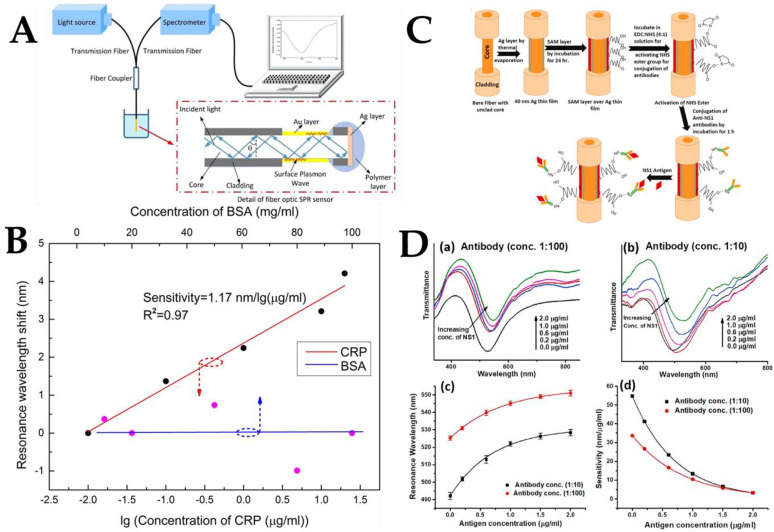
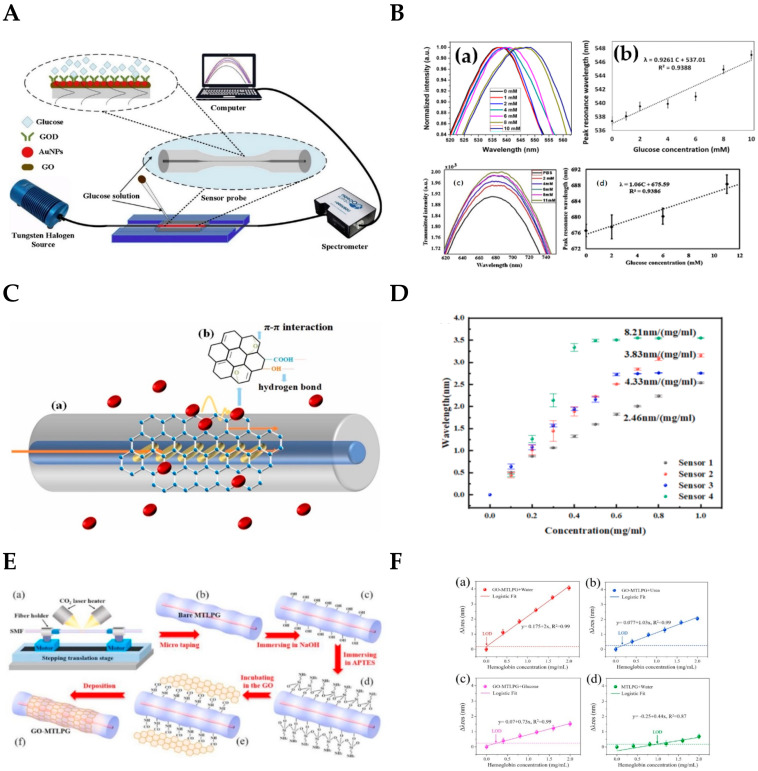
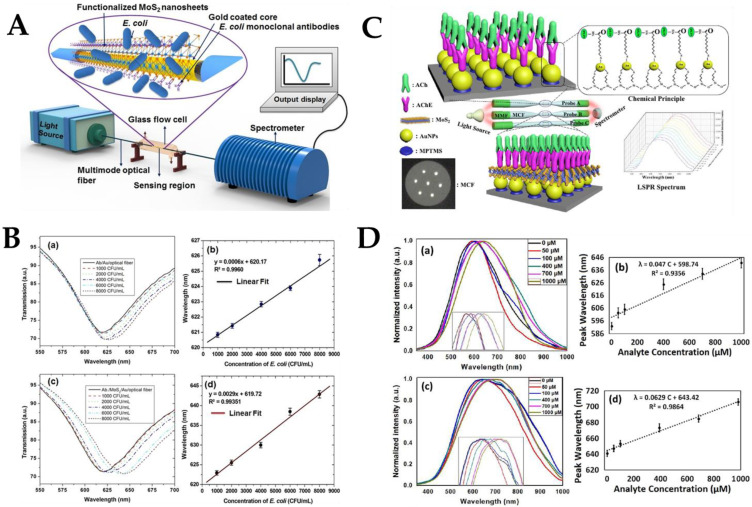
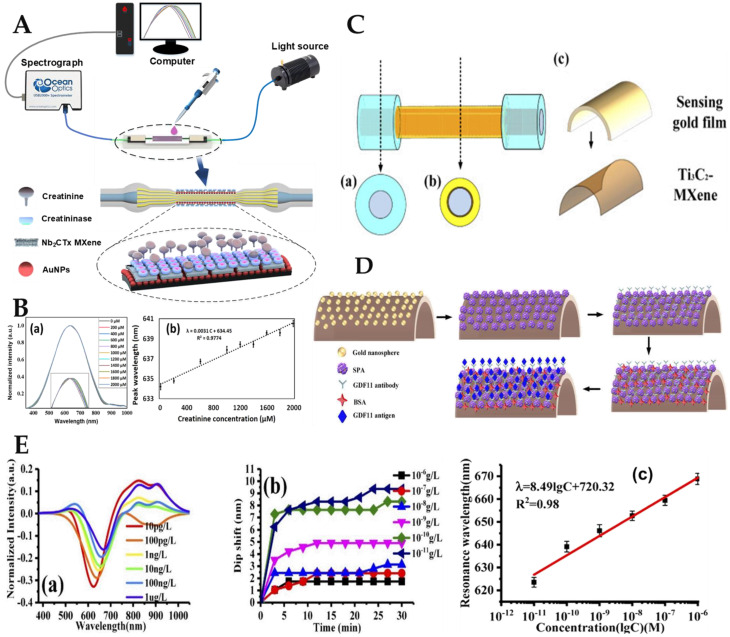
This article presents a concise summary of current advancements in novel nanomaterial-based optical fiber biosensors. The beneficial optical and biological properties of nanomaterials, such as nanoparticle size-dependent signal amplification, plasmon resonance, and charge-transfer capabilities, are widely used in biosensing applications. Due to the biocompatibility and bioreceptor combination, the nanomaterials enhance the sensitivity, limit of detection, specificity, and response time of sensing probes, as well as the signal-to-noise ratio of fiber optic biosensing platforms. This has established a practical method for improving the performance of fiber optic biosensors. With the aforementioned outstanding nanomaterial properties, the development of fiber optic biosensors has been efficiently promoted. This paper reviews the application of numerous novel nanomaterials in the field of optical fiber biosensing and provides a brief explanation of the fiber sensing mechanism.
本文简要总结了基于新型纳米材料的光纤生物传感器的最新进展。纳米材料具有独特的光学和生物学性质,如纳米颗粒尺寸相关的信号放大、等离子体共振和电荷转移能力,被广泛应用于生物传感领域。纳米材料的生物相容性和生物受体结合特性提高了传感探针的灵敏度、检测限、特异性和响应时间,以及光纤生物传感平台的信噪比。这为提高光纤生物传感器的性能提供了一种实用方法。由于纳米材料具有上述突出的性质,光纤生物传感器的发展得到了有效推动。本文综述了多种新型纳米材料在光纤生物传感领域的应用,并简要解释了光纤传感机制。