School of Computer Science, University of Petroleum and Energy Studies (UPES), Dehradun 248007, India.
Persistent Systems, India 411057, India.
Medicina (Kaunas). 2023 Jan 6;59(1):119. doi: 10.3390/medicina59010119.
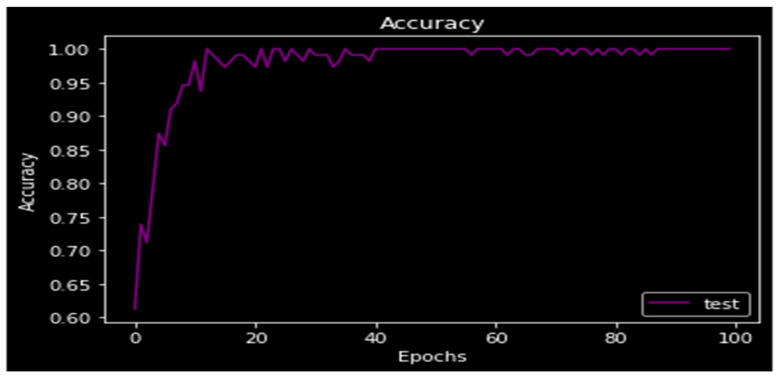
: Medical image segmentation is more complicated and demanding than ordinary image segmentation due to the density of medical pictures. A brain tumour is the most common cause of high mortality. : Extraction of tumorous cells is particularly difficult due to the differences between tumorous and non-tumorous cells. In ordinary convolutional neural networks, local background information is restricted. As a result, previous deep learning algorithms in medical imaging have struggled to detect anomalies in diverse cells. : As a solution to this challenge, a deep convolutional generative adversarial network for tumour segmentation from brain Magnetic resonance Imaging (MRI) images is proposed. A generator and a discriminator are the two networks that make up the proposed model. This network focuses on tumour localisation, noise-related issues, and social class disparities. : Dice Score Coefficient (DSC), Peak Signal to Noise Ratio (PSNR), and Structural Index Similarity (SSIM) are all generally 0.894, 62.084 dB, and 0.88912, respectively. The model's accuracy has improved to 97 percent, and its loss has reduced to 0.012. : Experiments reveal that the proposed approach may successfully segment tumorous and benign tissues. As a result, a novel brain tumour segmentation approach has been created.
医学图像分割比普通图像分割复杂且要求更高,因为医学图像密度较高。脑肿瘤是导致高死亡率的最常见原因。由于肿瘤细胞和非肿瘤细胞之间存在差异,因此提取肿瘤细胞尤其困难。在普通卷积神经网络中,局部背景信息受到限制。因此,以前的医学影像深度学习算法难以检测不同细胞中的异常。为了解决这个挑战,提出了一种用于从脑磁共振成像(MRI)图像中分割肿瘤的深度卷积生成对抗网络。所提出的模型由生成器和鉴别器两个网络组成。该网络专注于肿瘤定位、与噪声相关的问题和社会阶层差异。Dice 得分系数(DSC)、峰值信噪比(PSNR)和结构相似性指数(SSIM)分别为 0.894、62.084 dB 和 0.88912。模型的准确率提高到 97%,损失降低到 0.012。实验表明,所提出的方法可以成功分割肿瘤和良性组织。因此,创建了一种新的脑肿瘤分割方法。