Mosiane Karabo Sekopi, Nweke Ekene Emmanuel, Balogun Mohammed, Fru Pascaline Nanga
Department of Surgery, School of Clinical Medicine, Faculty of Health Sciences, University of the Witwatersrand, 7 York Road, Parktown, Johannesburg 2193, South Africa.
Biopolymer Modification and Therapeutics Lab, Materials Science & Manufacturing, Council for Scientific and Industrial Research, Meiring Naude Road, Brummeria, Pretoria 0001, South Africa.
Polymers (Basel). 2023 Jan 14;15(2):448. doi: 10.3390/polym15020448.
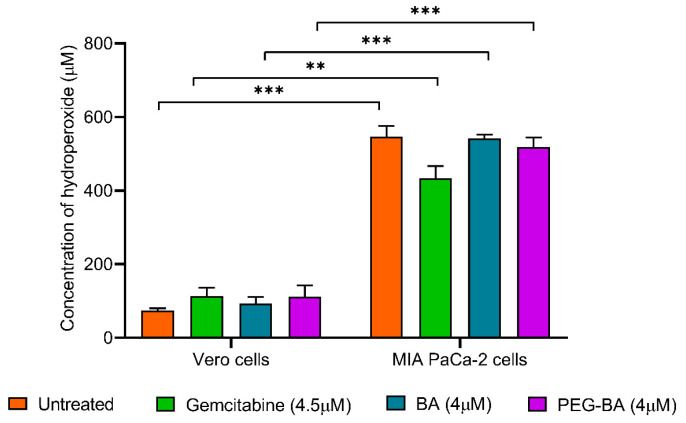
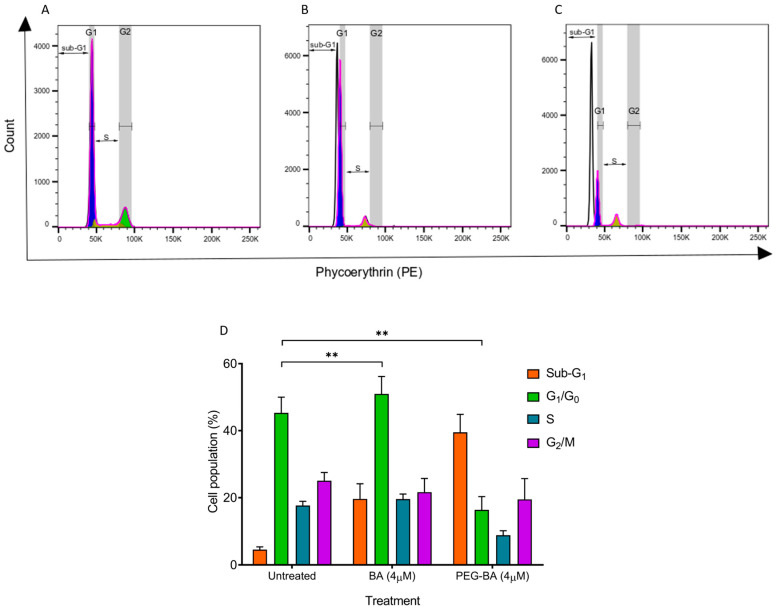
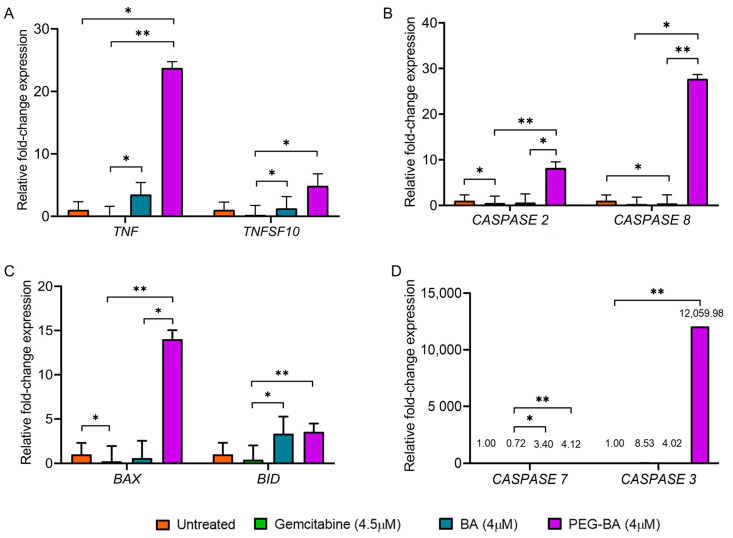
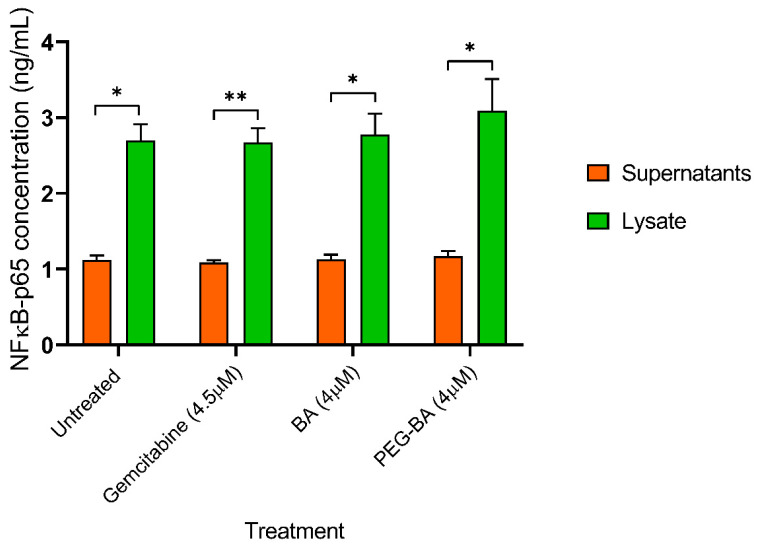
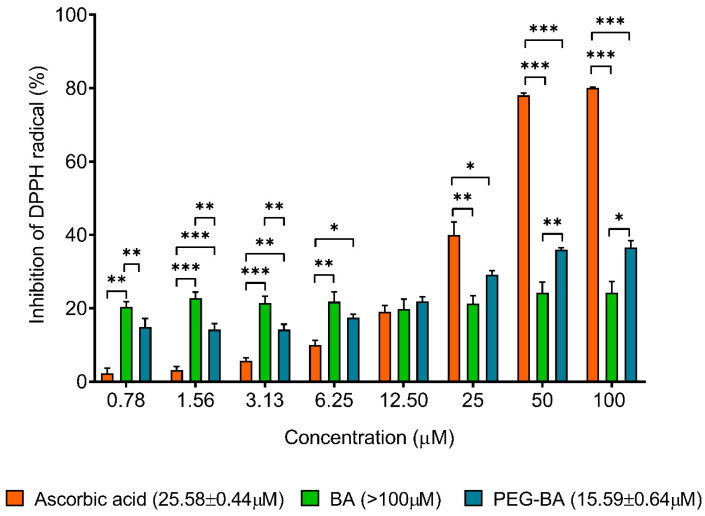
Pancreatic cancer (PC) is one of the most aggressive solid malignancies with poor treatment response and low survival rates. Herbal medicines such as betulinic acid (BA) have shown potential in treating various solid tumours, but with limitations that can be circumvented by polymer-drug conjugation. Polyethylene glycol-BA (PEG-BA) polymer-drug conjugate has previously shown selective anticancer activity against PC cells. Here, we elucidate the mechanism of cell death and the cell death pathway, anti-inflammatory and antioxidant activities of PEG-BA. PEG-BA induced apoptotic cell death by arresting MIA-PaCa-2 cells in the Sub-G1 phase of the cell cycle compared with BA and untreated cells (39.50 ± 5.32% > 19.63 ± 4.49% > 4.57 ± 0.82%). NFκB/p65 protein expression was moderately increased by PEG-BA (2.70 vs. 3.09 ± 0.42 ng/mL; p = 0.1521). However, significant (p < 0.05) overexpression of the proapoptotic genes TNF (23.72 ± 1.03) and CASPASE 3 (12,059.98 ± 1.74) compared with untreated cells was notable. The antioxidant potential of PEG-BA was greater (IC50 = 15.59 ± 0.64 µM) compared with ascorbic acid (25.58 ± 0.44 µM) and BA-only (>100 µM) and further confirmed with the improved reduction of hydroperoxide levels compared with BA-only (518.80 ± 25.53 µM vs. 542.43 ± 9.70 µM). In conclusion, PEG-BA activated both the intrinsic and extrinsic pathways of apoptosis and improved antioxidant activities in PC cells, suggesting enhanced anticancer activity upon conjugation.
胰腺癌(PC)是最具侵袭性的实体恶性肿瘤之一,治疗反应差且生存率低。桦木酸(BA)等草药在治疗各种实体肿瘤方面已显示出潜力,但存在一些局限性,可通过聚合物-药物偶联来规避。聚乙二醇-桦木酸(PEG-BA)聚合物-药物偶联物先前已显示出对胰腺癌细胞具有选择性抗癌活性。在此,我们阐明了PEG-BA的细胞死亡机制、细胞死亡途径、抗炎和抗氧化活性。与BA和未处理的细胞相比,PEG-BA通过使MIA-PaCa-2细胞停滞在细胞周期的亚G1期诱导凋亡细胞死亡(39.50±5.32%>19.63±4.49%>4.57±0.82%)。PEG-BA使NFκB/p65蛋白表达适度增加(2.70对3.09±0.42 ng/mL;p = 0.1521)。然而,与未处理的细胞相比,促凋亡基因TNF(23.72±1.03)和CASPASE 3(12,059.98±1.74)有显著(p<0.05)过表达。与抗坏血酸(25.58±0.44µM)和仅BA(>100µM)相比,PEG-BA的抗氧化潜力更大(IC50 = 15.59±0.64µM),并且与仅BA相比,过氧化氢水平的降低得到改善进一步证实了这一点(518.80±25.53µM对542.43±9.70µM)。总之,PEG-BA激活了凋亡的内在和外在途径,并改善了胰腺癌细胞的抗氧化活性,表明偶联后抗癌活性增强。