Cui Kangli, Chen Tingwei, Zhu Yujuan, Shi Yang, Guo Yaqiong, Qin Jianhua
Division of Biotechnology, CAS Key Laboratory of SSAC Dalian Institute of Chemical Physics, Chinese Academy of Sciences Dalian China.
University of Chinese Academy of Sciences Beijing China.
Bioeng Transl Med. 2022 Sep 23;8(1):e10390. doi: 10.1002/btm2.10390. eCollection 2023 Jan.
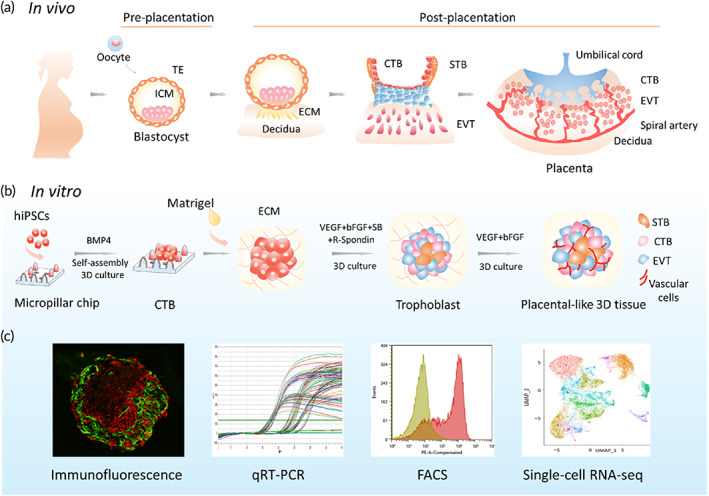
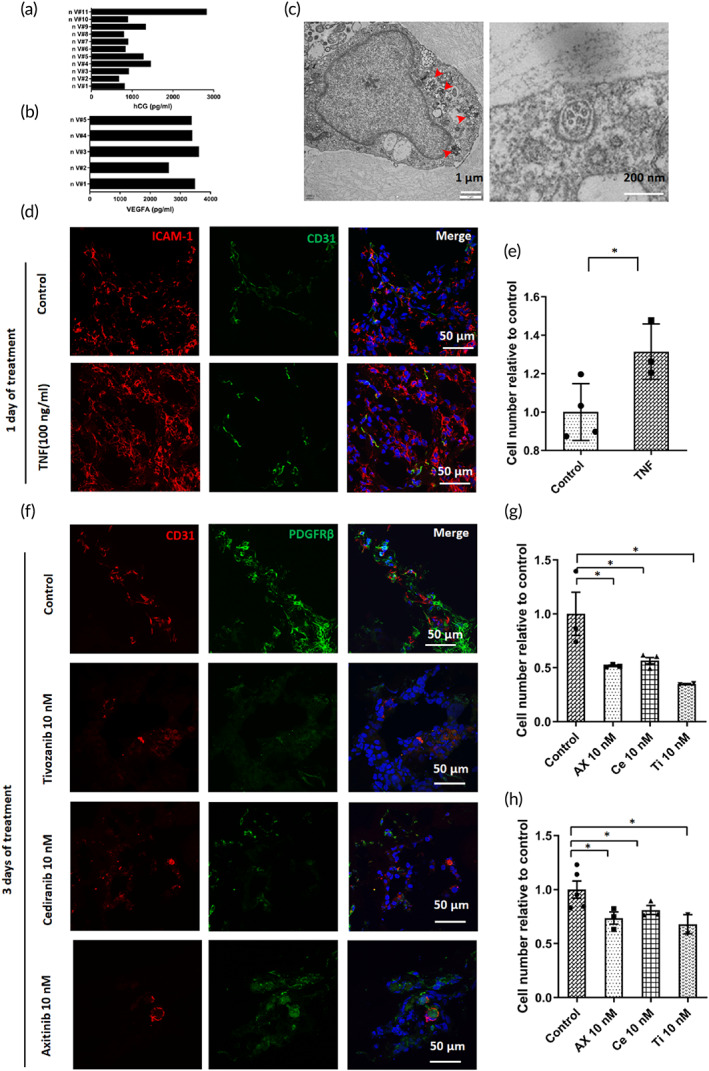
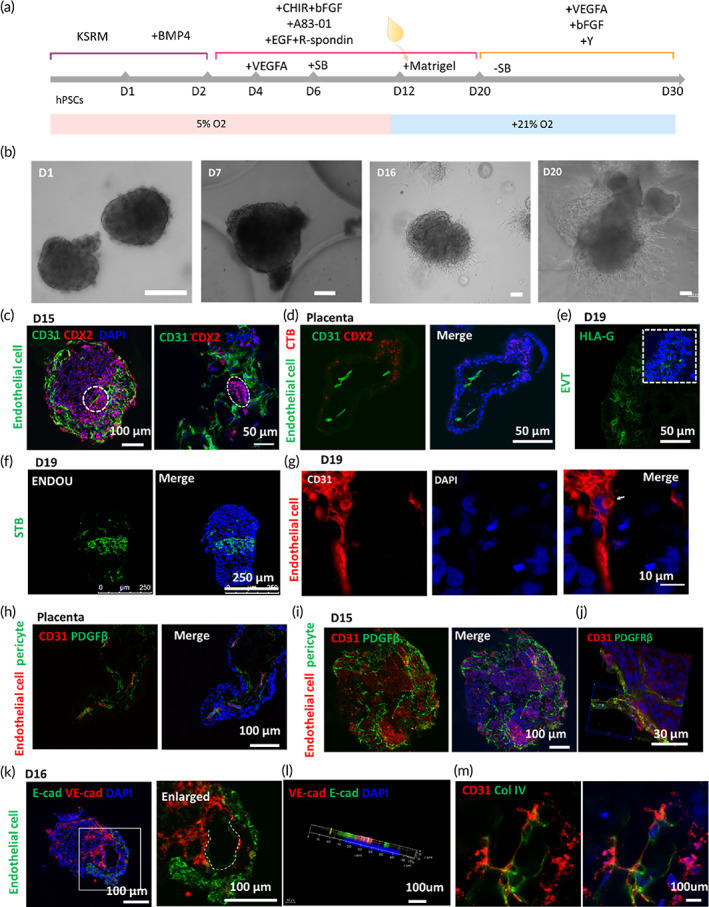
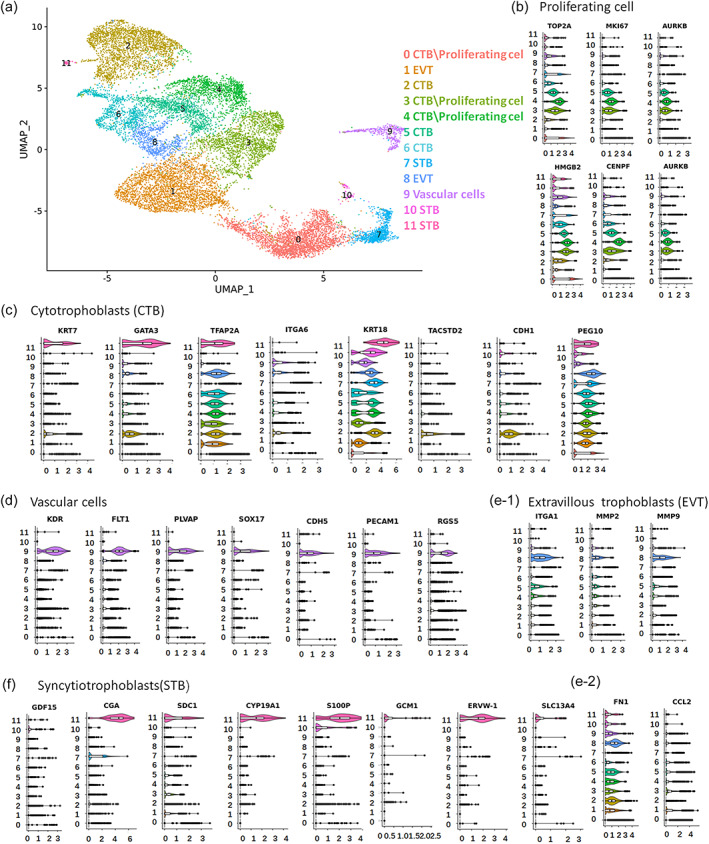
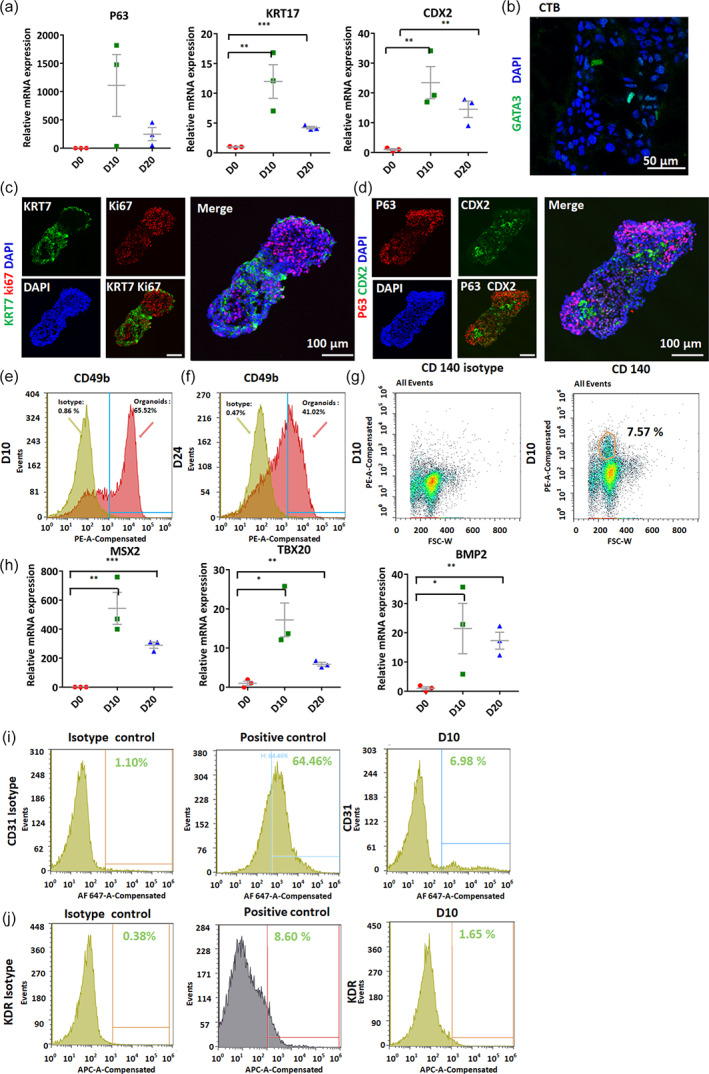
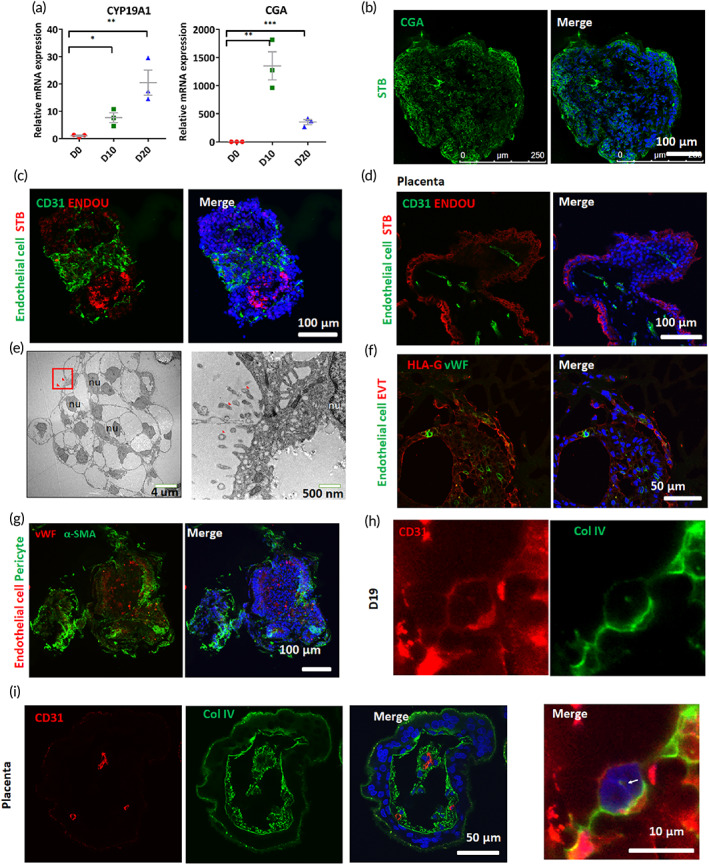
The placenta is an essential organ that maintains the health of both the fetus and its mother. Understanding the development of human placenta has been hindered by the limitations of existing animal models and monolayer cell cultures. Models that can recapitulate the essential aspects of human placental multicellular components and vasculature are still lacking. Herein, we presented a new strategy to establish placenta-like organoids with vascular-like structures from human-induced pluripotent stem cells in a defined three-dimensional (3D) culture system. The resulting placenta-like tissue resembles first-trimester human placental development in terms of complex placental components and secretory function. The multicellular tissue was characterized by the inclusion of trophoblasts (cytotrophoblasts, syncytiotrophoblasts, extravillous trophoblasts, and other endogenous vascular cells), which were identified by immunofluorescence, flow cytometry analyses, real-time quantitative reverse transcription polymerase chain reaction and single-cell RNA-seq. Moreover, the 3D tissue was able to secrete the placenta-specific hormone human chorionic gonadotropin β (hCG-β) and vascular endothelial growth factor A (VEGFA). The tissue responded to the inflammatory factor tumor necrosis factor-α (TNF-α) and VEGF receptor inhibitors. This new model system can represent the major features of placental cellular components, and function, which have not been realized in 2D monolayer cultures. The developed tissue system might open new avenues for studying normal early human placental development and its disease states.
胎盘是维持胎儿及其母亲健康的重要器官。现有动物模型和单层细胞培养的局限性阻碍了对人类胎盘发育的理解。目前仍缺乏能够概括人类胎盘多细胞成分和脉管系统基本特征的模型。在此,我们提出了一种新策略,即在特定的三维(3D)培养系统中,从人诱导多能干细胞建立具有类血管结构的胎盘类器官。所得的胎盘样组织在复杂的胎盘成分和分泌功能方面类似于孕早期人类胎盘发育。该多细胞组织的特征是包含滋养层细胞(细胞滋养层细胞、合体滋养层细胞、绒毛外滋养层细胞和其他内源性血管细胞),通过免疫荧光、流式细胞术分析、实时定量逆转录聚合酶链反应和单细胞RNA测序进行鉴定。此外,该3D组织能够分泌胎盘特异性激素人绒毛膜促性腺激素β(hCG-β)和血管内皮生长因子A(VEGFA)。该组织对炎症因子肿瘤坏死因子-α(TNF-α)和VEGF受体抑制剂有反应。这种新的模型系统可以呈现胎盘细胞成分和功能的主要特征,而这些特征在二维单层培养中尚未实现。所开发的组织系统可能为研究正常的早期人类胎盘发育及其疾病状态开辟新途径。