Fatahi Somaye, Alyahyawi Naseem, Albadawi Naryman, Mardali Farzaneh, Dara Naghi, Sohouli Mohammad Hassan, Prabahar Kousalya, Rohani Pejman, Koushki Nazanin, Sayyari Aliakbar, Hosseini Amir Hossein, Abu-Zaid Ahmed
Pediatric Gastroenterology, Hepatology, and Nutrition Research Center, Research Institute for Children's Health, Shahid Beheshti University of Medical Sciences, Tehran, Iran.
Department of Nutrition, School of Public Health, Iran University of Medical Sciences, Tehran, Iran.
Front Nutr. 2023 Jan 9;9:1007725. doi: 10.3389/fnut.2022.1007725. eCollection 2022.
Vitamin D deficiency is very common among children with IBD. Since there are conflicting results regarding the association of vitamin D with IBD, we conducted this systematic review to confirm the association of vitamin D with IBD.
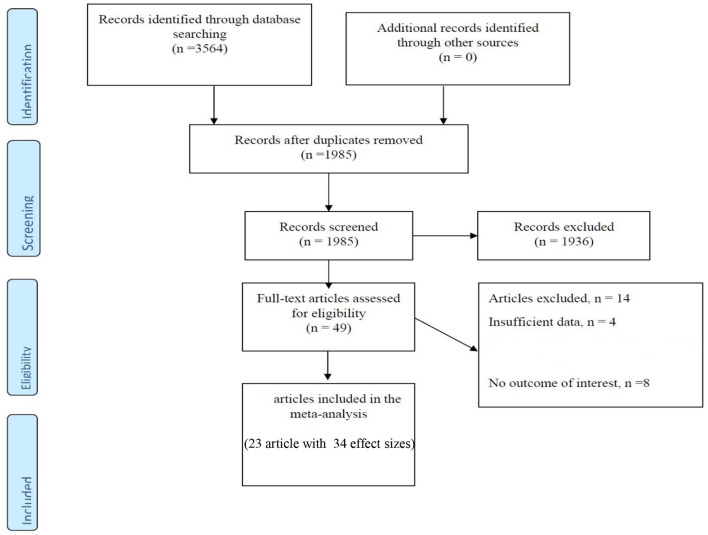
We conducted a systematic search in Scopus, Cochrane Library, Web of Science, PubMed, and Google Scholar to find relevant studies. Articles with cross-sectional and case-control designs that reported the association between vitamin D and IBD among children were included.
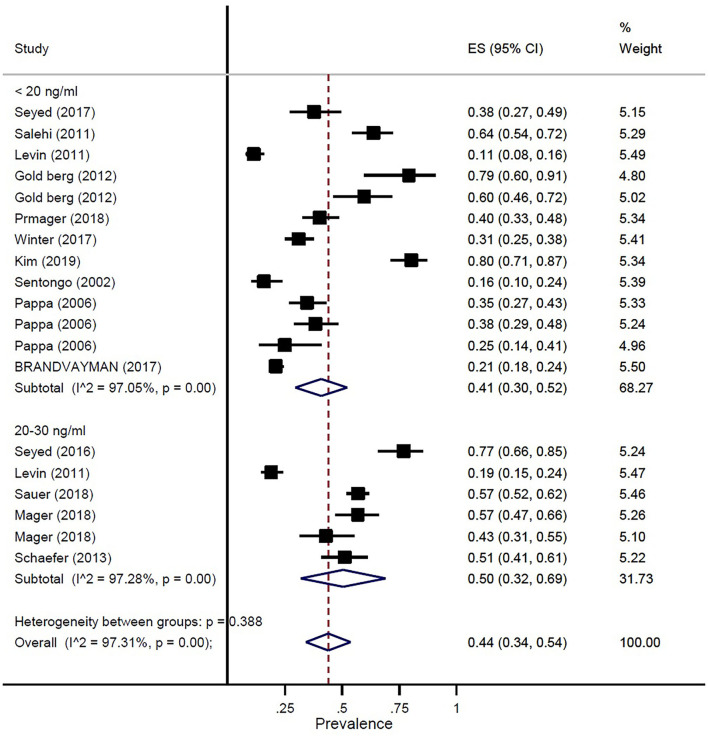
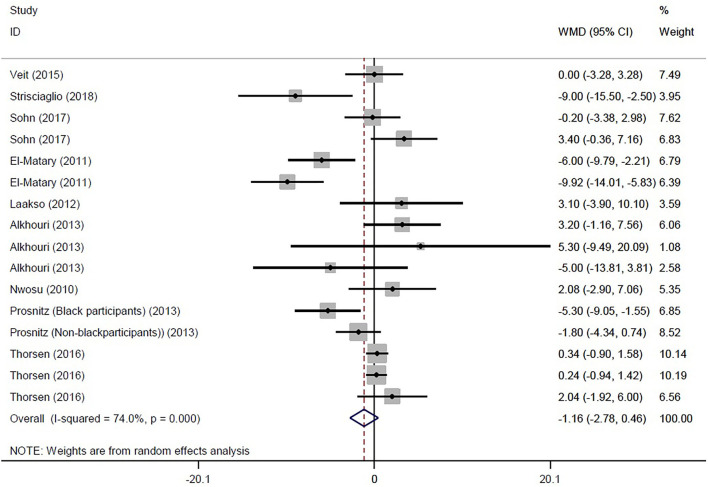
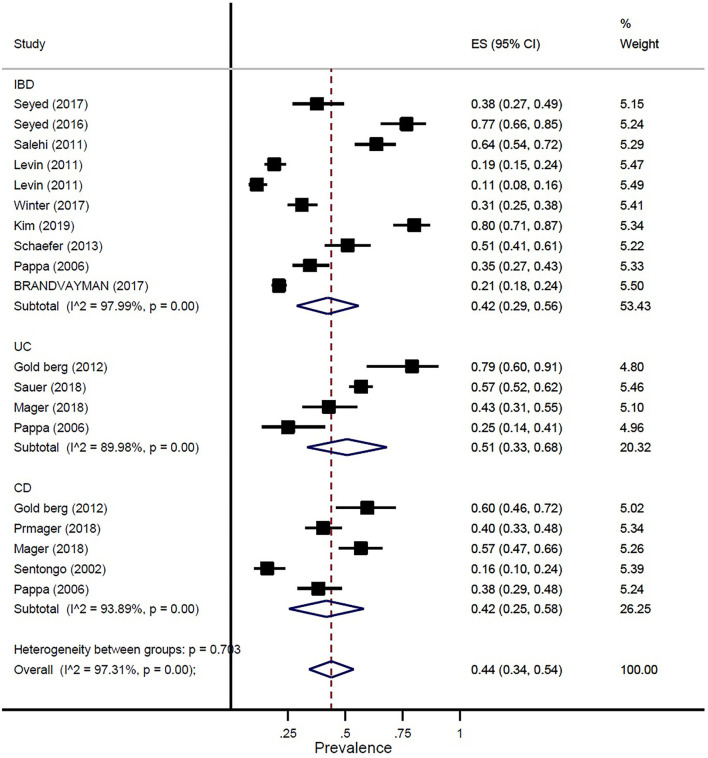
Eventually, 9 studies (with 16 effect sizes) reported the mean and SD or the median and the interquartile range of serum vitamin D levels in both subjects with IBD and control subjects. The random effects meta-analysis revealed that subjects with IBD had -1.159 ng/ml (95% CI: -2.783, 0.464) lower serum vitamin D concentrations compared with their healthy counterparts, but this difference was not significant. A total of 14 studies (with 18 effect sizes) with 2,602 participants provided information for the prevalence of vitamin D deficiency or insufficiency in patients with IBD as 44% (95% CI: 0.34-0.54) with significant heterogeneity noted among studies ( < 0.001; I = 97.31%).
This systematic and meta-analysis study revealed that vitamin D deficiency was associated with IBD. Longitudinal studies should be conducted in the future to confirm our findings. Large randomized controlled trials assessing the doses of supplementation of vitamin D would provide a better understanding of the association between vitamin D and IBD.
炎症性肠病(IBD)患儿中维生素D缺乏非常普遍。由于关于维生素D与IBD之间关联的研究结果相互矛盾,我们进行了这项系统评价以确认维生素D与IBD之间的关联。
我们在Scopus、Cochrane图书馆、科学网、PubMed和谷歌学术上进行了系统检索以查找相关研究。纳入了采用横断面设计和病例对照设计且报告了儿童维生素D与IBD之间关联的文章。
最终,9项研究(共16个效应量)报告了IBD患者和对照受试者血清维生素D水平的均值和标准差或中位数和四分位间距。随机效应荟萃分析显示,与健康对照相比,IBD患者的血清维生素D浓度低1.159纳克/毫升(95%置信区间:-2.783,0.464),但这种差异不显著。共有14项研究(共18个效应量)、2602名参与者提供了IBD患者维生素D缺乏或不足患病率的信息,为44%(95%置信区间:0.34 - 0.54),研究间存在显著异质性(<0.001;I² = 97.31%)。
这项系统评价和荟萃分析研究表明维生素D缺乏与IBD相关。未来应开展纵向研究以证实我们的发现。评估维生素D补充剂量的大型随机对照试验将有助于更好地理解维生素D与IBD之间的关联。