Vadillo Miguel A, Blanco Fernando, Yarritu Ion, Matute Helena
1 Primary Care and Public Health Sciences, King's College London, UK.
2 Department of Experimental Psychology, University College London, UK.
Exp Psychol. 2016 Jan;63(1):3-19. doi: 10.1027/1618-3169/a000309.
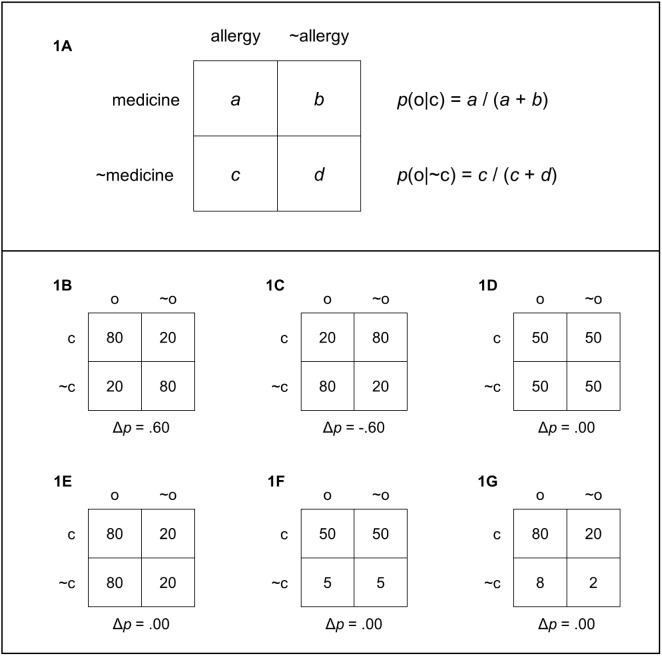
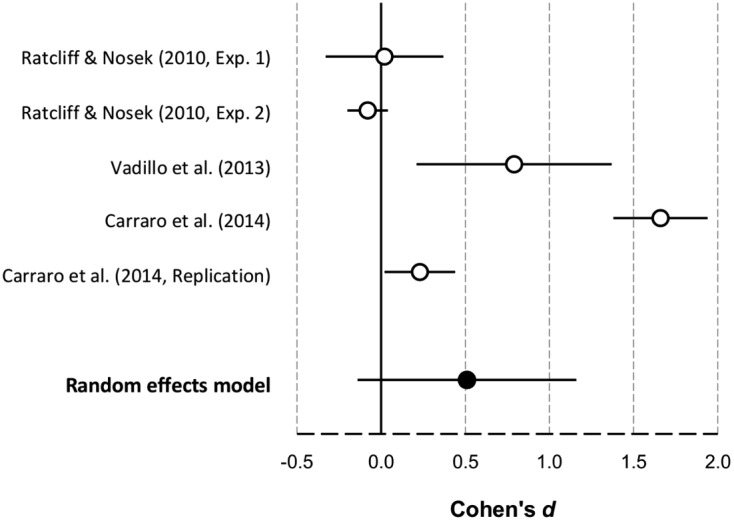
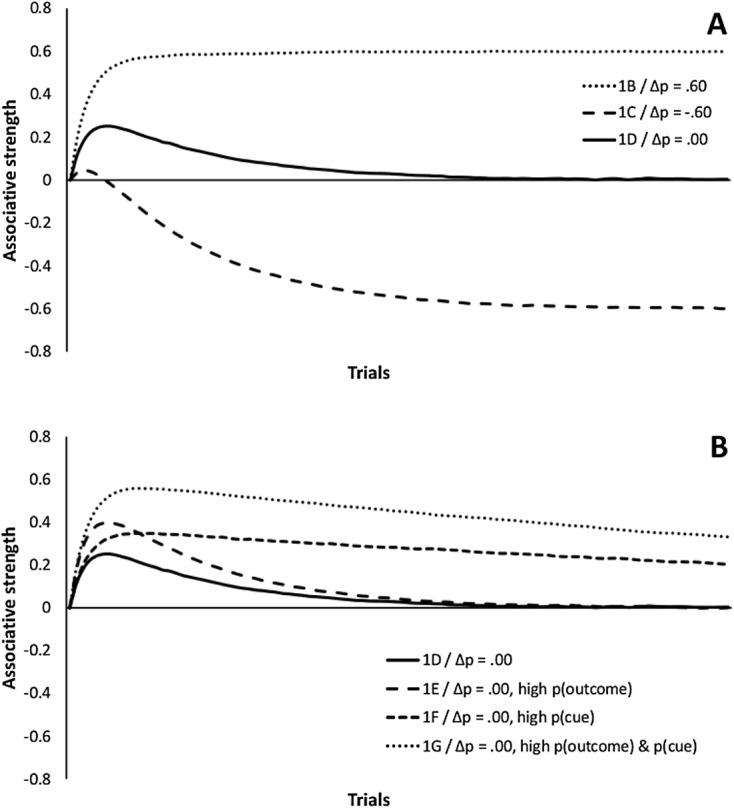
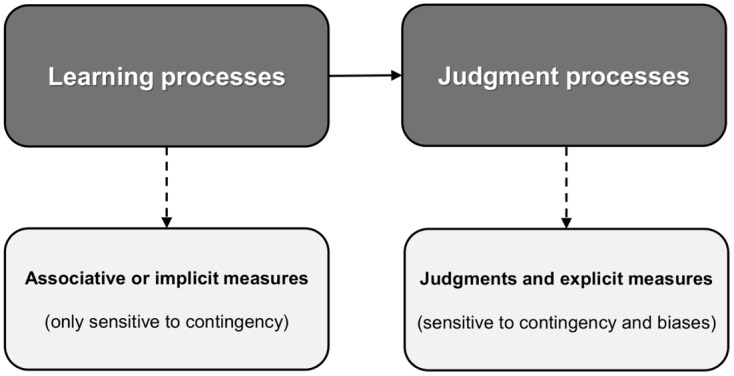
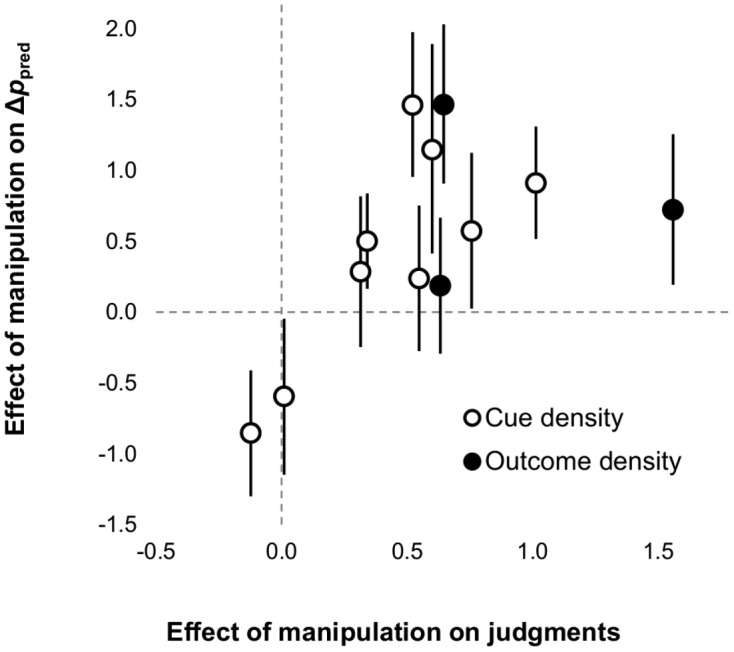
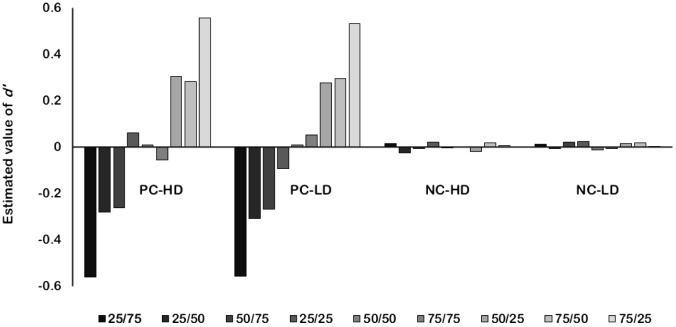
Decades of research in causal and contingency learning show that people's estimations of the degree of contingency between two events are easily biased by the relative probabilities of those two events. If two events co-occur frequently, then people tend to overestimate the strength of the contingency between them. Traditionally, these biases have been explained in terms of relatively simple single-process models of learning and reasoning. However, more recently some authors have found that these biases do not appear in all dependent variables and have proposed dual-process models to explain these dissociations between variables. In the present paper we review the evidence for dissociations supporting dual-process models and we point out important shortcomings of this literature. Some dissociations seem to be difficult to replicate or poorly generalizable and others can be attributed to methodological artifacts. Overall, we conclude that support for dual-process models of biased contingency detection is scarce and inconclusive.
数十年来对因果关系和偶然性学习的研究表明,人们对两个事件之间偶然性程度的估计很容易受到这两个事件相对概率的影响。如果两个事件频繁同时发生,那么人们往往会高估它们之间的偶然性强度。传统上,这些偏差是根据相对简单的单一学习和推理过程模型来解释的。然而,最近一些作者发现这些偏差并非在所有因变量中都出现,并提出了双过程模型来解释变量之间的这些分离现象。在本文中,我们回顾了支持双过程模型的分离现象的证据,并指出了这一文献的重要缺陷。一些分离现象似乎难以复制或普遍性较差,而其他一些则可归因于方法上的人为因素。总体而言,我们得出结论,支持偏差偶然性检测双过程模型的证据很少且尚无定论。