Department of Psychology, Science Division, New York University Abu Dhabi, Abu Dhabi, UAE.
College of Arts and Sciences, Khalifa University of Science and Technology, Abu Dhabi, UAE.
Cogn Res Princ Implic. 2023 Jan 26;8(1):7. doi: 10.1186/s41235-023-00464-3.
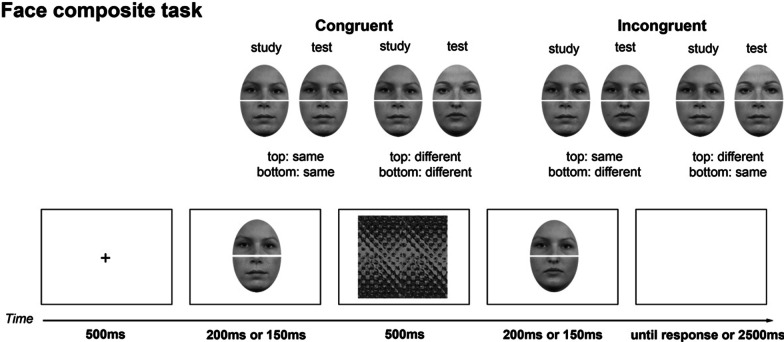
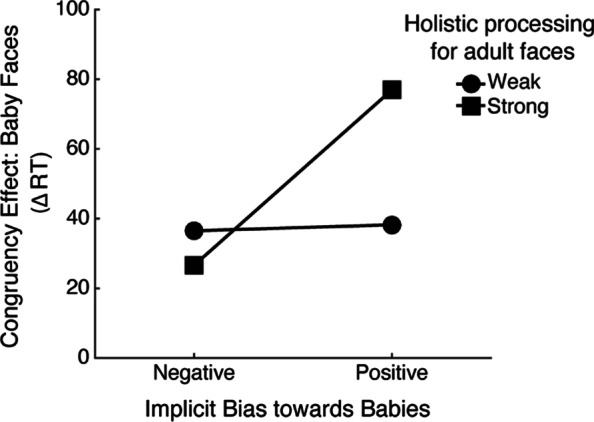
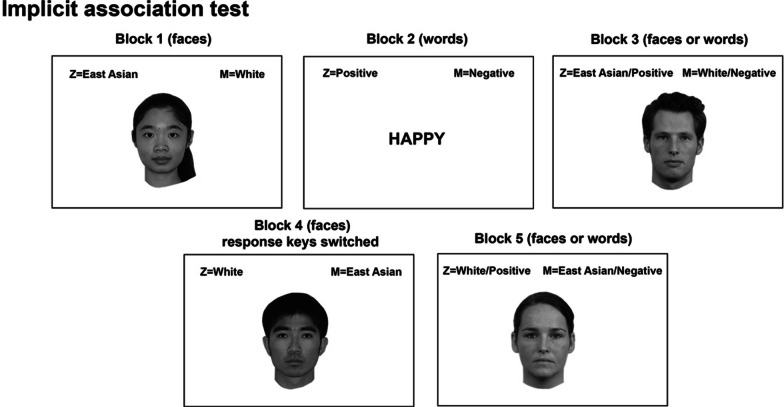
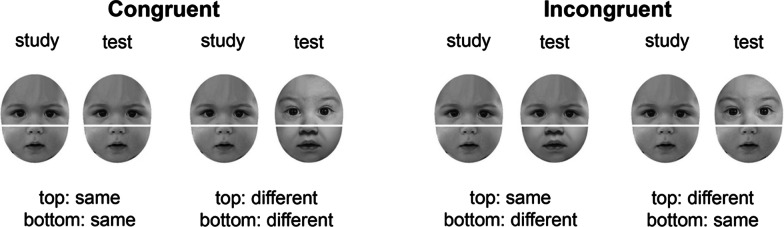
Although faces of in-group members are generally thought to be processed holistically, there are mixed findings on whether holistic processing remains robust for faces of out-group members and what factors contribute to holistic processing of out-group faces. This study examined how implicit social bias, experience with out-group members, and ability to process in-group faces holistically might predict the magnitude of holistic processing for faces of two out-groups: other-race and other-age groups. In Experiment 1, Caucasian participants viewed Caucasian (own-race) and East Asian (other-race) faces. In Experiment 2, young adult participants viewed young adult (own-age) and baby (other-age) faces. Each participant completed a composite task with in-group and out-group faces, an implicit association test, and questionnaires about their experience with in-group and out-group members. We found that while the participants had relatively extensive experience with the other-race group, they had limited experience with the other-age group. Nonetheless, implicit social bias was found to positively predict the magnitude of holistic processing for both other-race and other-age faces. Exploratory analyses on the interactions among the predictors suggest that the effect of implicit social bias was primarily observed in participants with strong holistic processing ability of in-group faces but with low level of experience with members of the out-groups. These findings suggest that observers utilize different kinds of information when processing out-group faces, and that social features, such as race or age, are incorporated to influence how out-group faces are processed efficiently.
尽管人们普遍认为内群体成员的面孔整体加工,但对于外群体成员的面孔是否仍然具有整体加工的稳健性,以及哪些因素有助于外群体面孔的整体加工,存在混合的研究结果。本研究考察了内隐社会偏见、与外群体成员的接触经验以及整体加工内群体面孔的能力如何预测两个外群体面孔(异族和异龄群体)的整体加工程度。在实验 1 中,白种参与者观看了白种(本族)和东亚(异族)面孔。在实验 2 中,年轻成年参与者观看了年轻成年(本族)和婴儿(异族)面孔。每个参与者都完成了一个包含内群体和外群体面孔的综合任务、内隐联想测验和关于他们与内群体和外群体成员接触经验的问卷。我们发现,尽管参与者与异族群体有相对广泛的接触经验,但他们与异龄群体的接触经验有限。尽管如此,内隐社会偏见被发现对外族和异族面孔的整体加工程度有积极的预测作用。对预测因子之间的交互作用的探索性分析表明,内隐社会偏见的影响主要出现在对本族面孔具有强烈整体加工能力但对外群体成员的经验水平较低的参与者中。这些发现表明,观察者在处理外群体面孔时会利用不同类型的信息,并且社会特征(如种族或年龄)被纳入到影响外群体面孔如何有效加工的因素中。