Evans Department of Medicine and Whitaker Cardiovascular Institute, Boston University School of Medicine, Boston, MA, United States of America.
University of Louisville School of Medicine, Louisville, KY, United States of America.
PLoS One. 2023 Jan 26;18(1):e0280674. doi: 10.1371/journal.pone.0280674. eCollection 2023.
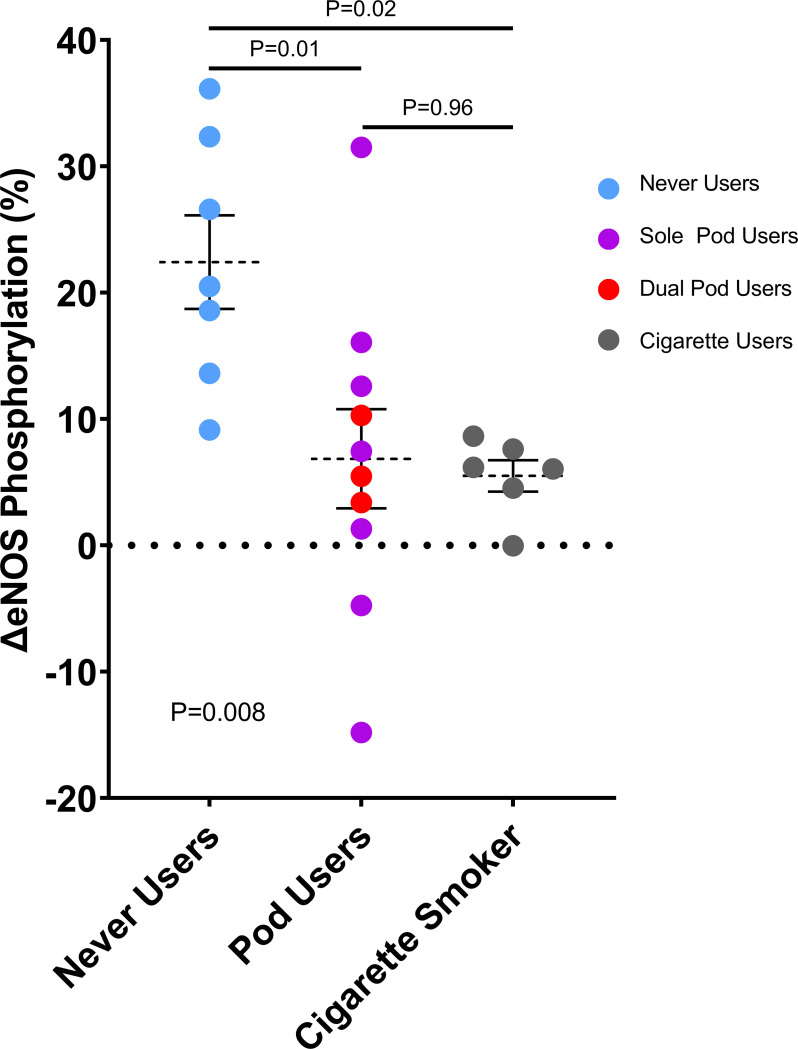
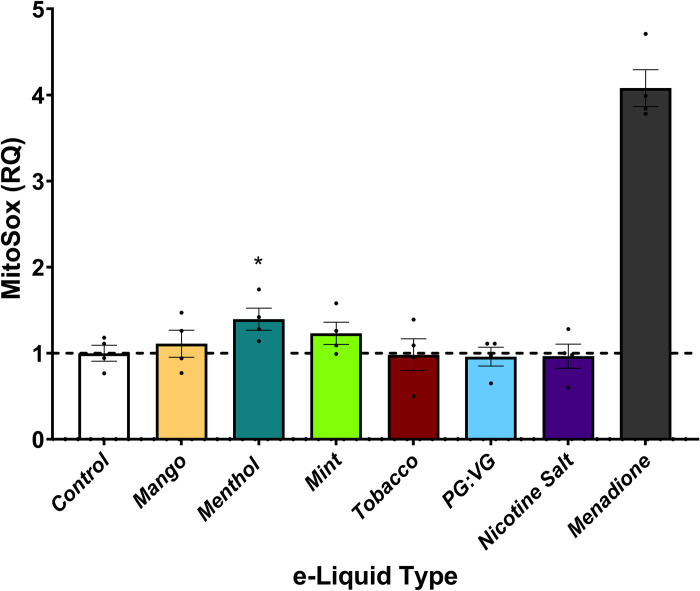
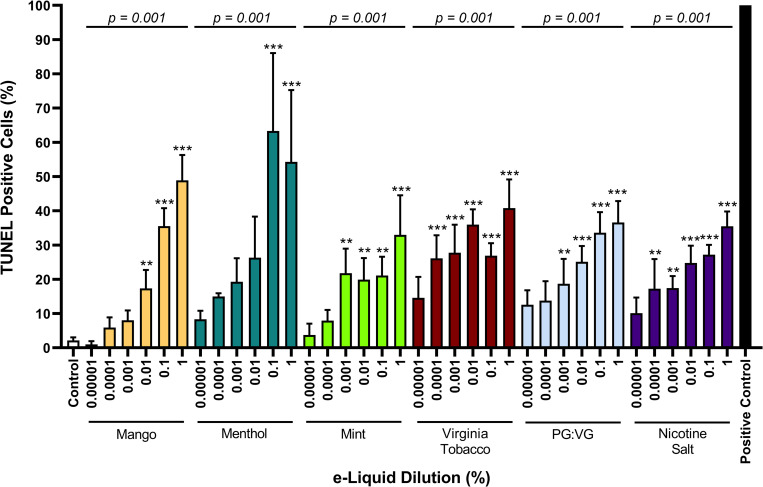
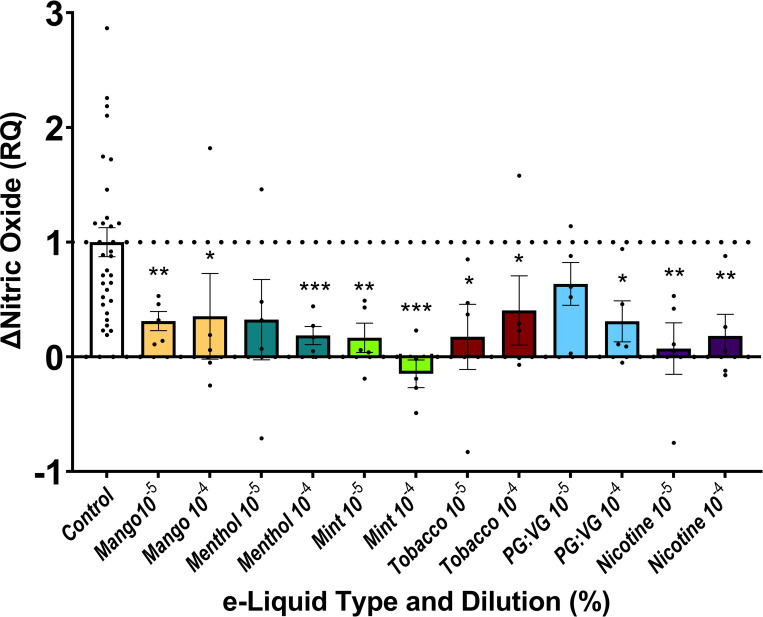
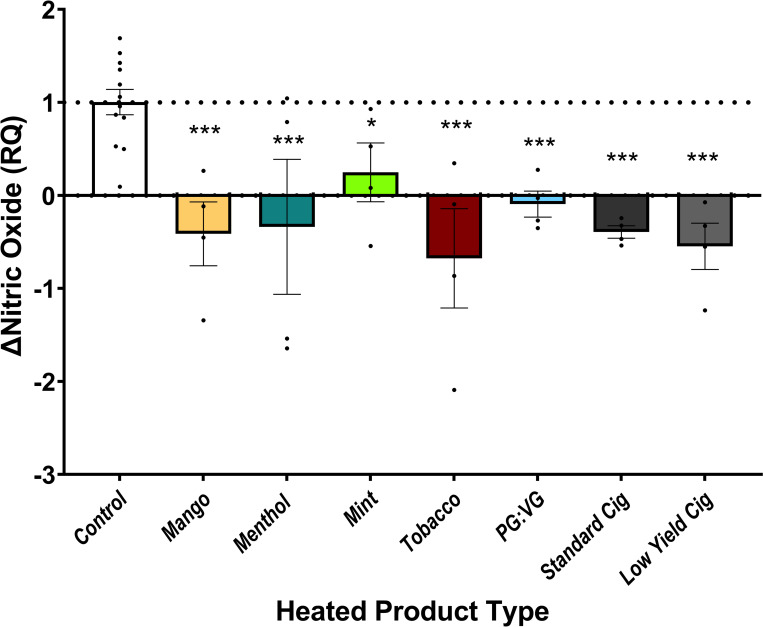
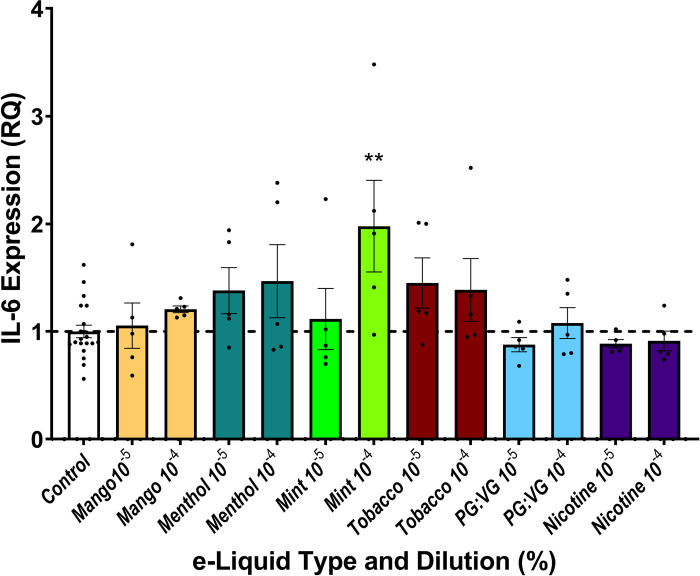
Pod-based electronic (e-) cigarettes more efficiently deliver nicotine using a protonated formulation. The cardiovascular effects associated with these devices are poorly understood. We evaluated whether pod-based e-liquids and their individual components impair endothelial cell function. We isolated endothelial cells from people who are pod users (n = 10), tobacco never users (n = 7), and combustible cigarette users (n = 6). After a structured use, pod users had lower acetylcholine-mediated endothelial nitric oxide synthase (eNOS) activation compared with never users and was similar to levels from combustible cigarette users (overall P = 0.008, P = 0.01 pod vs never; P = 0.96 pod vs combustible cigarette). The effects of pod-based e-cigarettes and their constituents on vascular cell function were further studied in commercially available human aortic endothelial cells (HAECs) incubated with flavored JUUL e-liquids or propylene glycol (PG):vegetable glycerol (VG) at 30:70 ratio with or without 60 mg/mL nicotine salt for 90 min. A progressive increase in cell death with JUUL e-liquid exposure was observed across 0.0001-1% dilutions; PG:VG vehicle with and without nicotine salt induced cell death. A23187-stimulated nitric oxide production was decreased with all JUUL e-liquid flavors, PG:VG and nicotine salt exposures. Aerosols generated by JUUL e-liquid heating similarly decreased stimulated nitric oxide production. Only mint flavored e-liquids increased inflammation and menthol flavored e-liquids enhanced oxidative stress in HAECs. In conclusion, pod e-liquids and their individual components appear to impair endothelial cell function. These findings indicate the potential harm of pod-based devices on endothelial cell function and thus may be relevant to cardiovascular injury in pod type e-cigarette users.
基于 pod 的电子烟通过质子化配方更有效地输送尼古丁。这些设备相关的心血管影响尚不清楚。我们评估了基于 pod 的电子烟液及其各个成分是否会损害内皮细胞功能。我们从 pod 用户(n = 10)、从不吸烟的人(n = 7)和可燃香烟使用者(n = 6)中分离出内皮细胞。在进行了结构化使用后,pod 用户的乙酰胆碱介导的内皮一氧化氮合酶(eNOS)激活水平低于从不使用者,与可燃香烟使用者的水平相似(总体 P = 0.008,P = 0.01 pod 与从不使用者;P = 0.96 pod 与可燃香烟)。还使用市售的人主动脉内皮细胞(HAEC)进一步研究了基于 pod 的电子烟及其成分对血管细胞功能的影响,将其与调味 JUUL 电子烟液或丙二醇(PG):蔬菜甘油(VG)以 30:70 的比例在有或没有 60mg/ml 尼古丁盐的情况下孵育 90 分钟。观察到随着 JUUL 电子烟液暴露浓度从 0.0001%到 1%的稀释,细胞死亡逐渐增加;PG:VG 载剂无论是否含有尼古丁盐都会诱导细胞死亡。用所有 JUUL 电子烟液口味、PG:VG 和尼古丁盐处理后,A23187 刺激的一氧化氮产生减少。JUUL 电子烟液加热产生的气溶胶也同样降低了刺激的一氧化氮产生。只有薄荷味的电子烟液会增加炎症,而薄荷醇味的电子烟液会增强 HAECs 的氧化应激。总之,pod 电子烟液及其各个成分似乎会损害内皮细胞功能。这些发现表明基于 pod 的设备对内皮细胞功能可能存在潜在危害,因此可能与 pod 型电子烟使用者的心血管损伤有关。