Universidad de Costa Rica, San José, Costa Rica.
Universidad Nacional, Heredia, Costa Rica.
Parasit Vectors. 2023 Jan 26;16(1):34. doi: 10.1186/s13071-022-05579-y.
Mosquitoes are vectors of various arboviruses belonging to the genera Alphavirus and Flavivirus, and Costa Rica is endemic to several of them. The aim of this study was to describe and analyze the community structure of such vectors in Costa Rica.
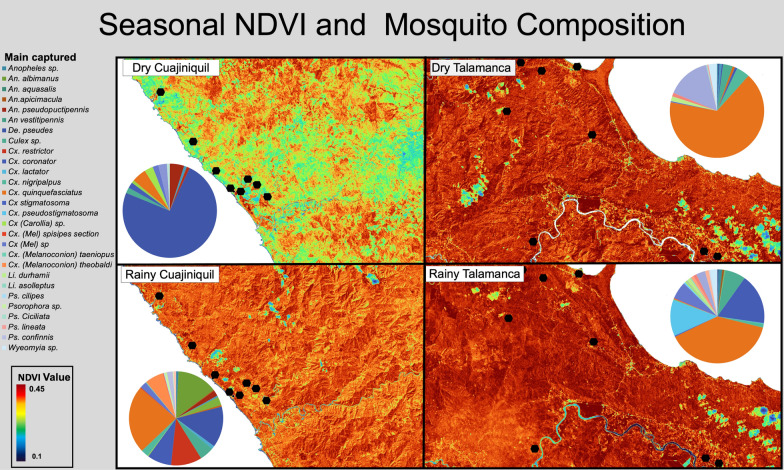
Sampling was performed in two different coastal locations of Costa Rica with evidence of arboviral activity during rainy and dry seasons. Encephalitis vector surveillance traps, CDC female gravid traps and ovitraps were used. Detection of several arboviruses by Pan-Alpha and Pan-Flavi PCR was attempted. Blood meals were also identified. The Normalized Difference Vegetation Index (NDVI) was estimated for each area during the rainy and dry seasons. The Chao2 values for abundance and Shannon index for species diversity were also estimated.
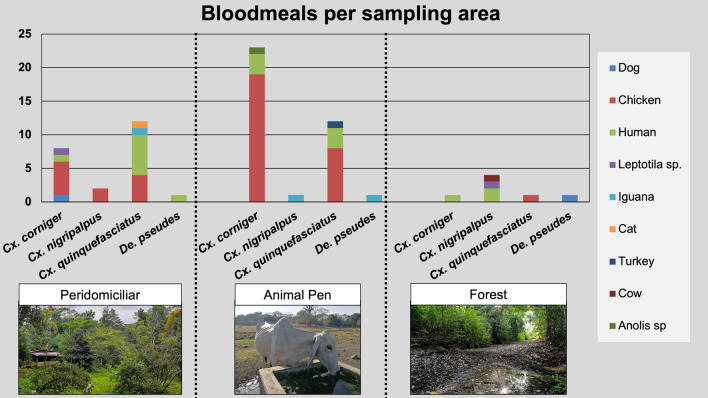
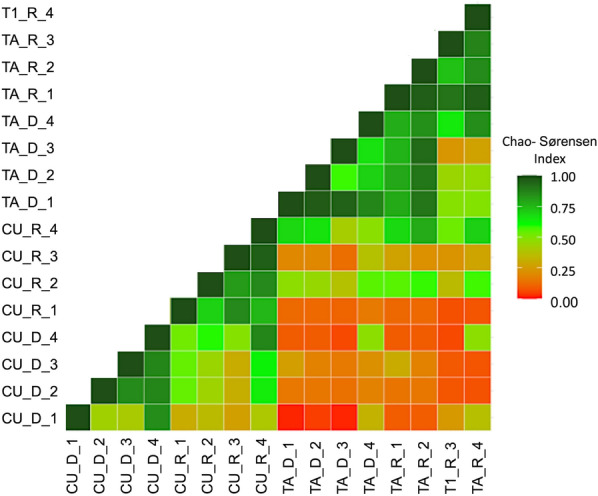
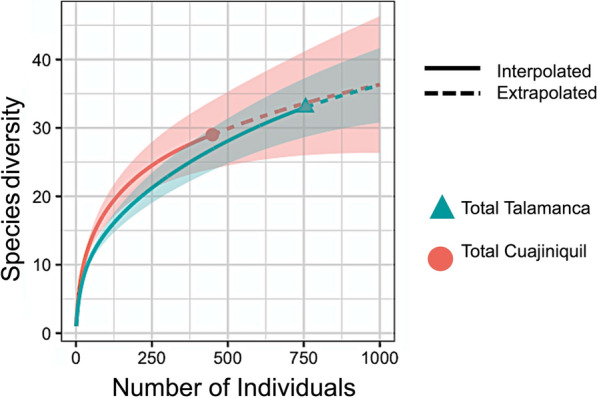
A total of 1802 adult mosquitoes belonging to 55 species were captured, among which Culex quinquefasciatus was the most caught species. The differences in NDVI were higher between seasons and between regions, yielding lower Chao-Sørensen similarity index values. Venezuelan equine encephalitis virus, West Nile virus and Madariaga virus were not detected at all, and dengue virus and Zika virus were detected in two separate Cx. quinquefasciatus specimens. The primary blood-meal sources were chickens (60%) and humans (27.5%). Both sampled areas were found to have different seasonal dynamics and population turnover, as reflected in the Chao2 species richness estimation values and Shannon diversity index.
Seasonal patterns in mosquito community dynamics in coastal areas of Costa Rica have strong differences despite a geographical proximity. The NDVI influences mosquito diversity at the regional scale more than at the local scale. However, year-long continuous sampling is required to better understand local dynamics.
蚊子是属于甲病毒属和黄病毒属的各种虫媒病毒的载体,哥斯达黎加是其中几种病毒的地方性流行区。本研究旨在描述和分析哥斯达黎加此类媒介的群落结构。
在哥斯达黎加两个具有虫媒病毒活动证据的沿海地区进行了采样,分别在雨季和旱季使用脑炎媒介监测诱蚊笼、CDC 雌性诱蚊器和诱卵器。尝试使用泛甲病毒和泛黄病毒 PCR 检测几种虫媒病毒。还鉴定了血液餐。在雨季和旱季,分别估计了每个区域的归一化差异植被指数(NDVI)。还估计了丰度的 Chao2 值和物种多样性的 Shannon 指数。
共捕获了 1802 只属于 55 种的成年蚊子,其中库蚊是捕获最多的物种。季节和地区之间的 NDVI 差异较大,导致 Chao-Sørensen 相似性指数值较低。委内瑞拉马脑炎病毒、西尼罗河病毒和马迪拉加病毒均未检出,在两个单独的库蚊样本中检测到登革热病毒和寨卡病毒。主要的血液来源是鸡(60%)和人(27.5%)。两个采样区域均表现出不同的季节性动态和种群更替,这反映在 Chao2 物种丰富度估计值和 Shannon 多样性指数上。
尽管地理位置相近,但哥斯达黎加沿海地区蚊子群落动态的季节性模式存在很大差异。NDVI 对区域尺度上的蚊子多样性影响大于局部尺度。然而,需要进行全年连续采样,以更好地了解当地动态。