Centro de Investigación, DACS-Universidad Juárez Autónoma de Tabasco, Av. Gregorio Méndez No. 2838-A. Col. Tamulte ́, 86150, Villahermosa, Centro, Tabasco, Mexico.
Departamento de Ingeniería Celular Y Biocatálisis, Instituto de Biotecnología, UNAM, Av. Universidad, 2001, Chamilpa, Cuernavaca, Mor., Mexico.
Microb Cell Fact. 2023 Jan 26;22(1):18. doi: 10.1186/s12934-022-02009-7.
Although Levan-type fructooligosaccharides (L-FOS) have been shown to exhibit prebiotic properties, no efficient methods for their large-scale production have been proposed. One alternative relies on the simultaneous levan synthesis from sucrose, followed by endolevanase hydrolysis. For this purpose, several options have been described, particularly through the synthesis of the corresponding enzymes in recombinant Escherichia coli. Major drawbacks still consist in the requirement of GRAS microorganisms for enzyme production, but mainly, the elimination of glucose and fructose, the reaction by-products.
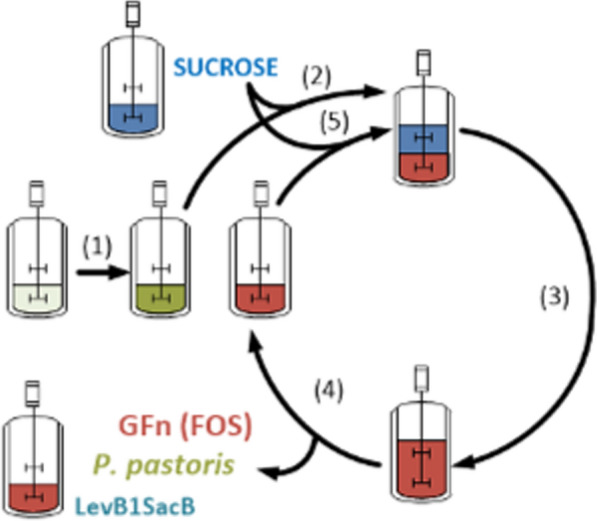
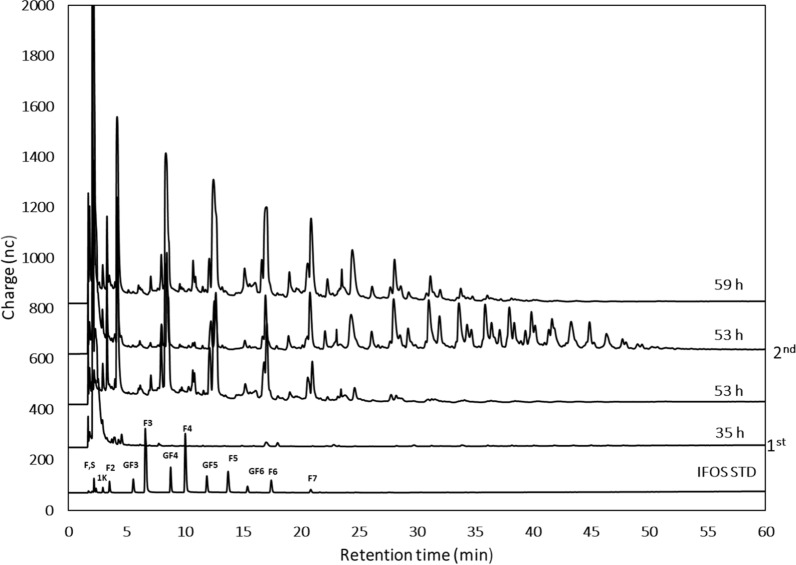
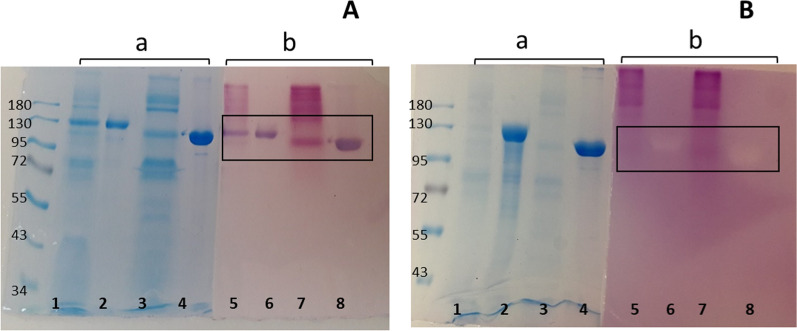
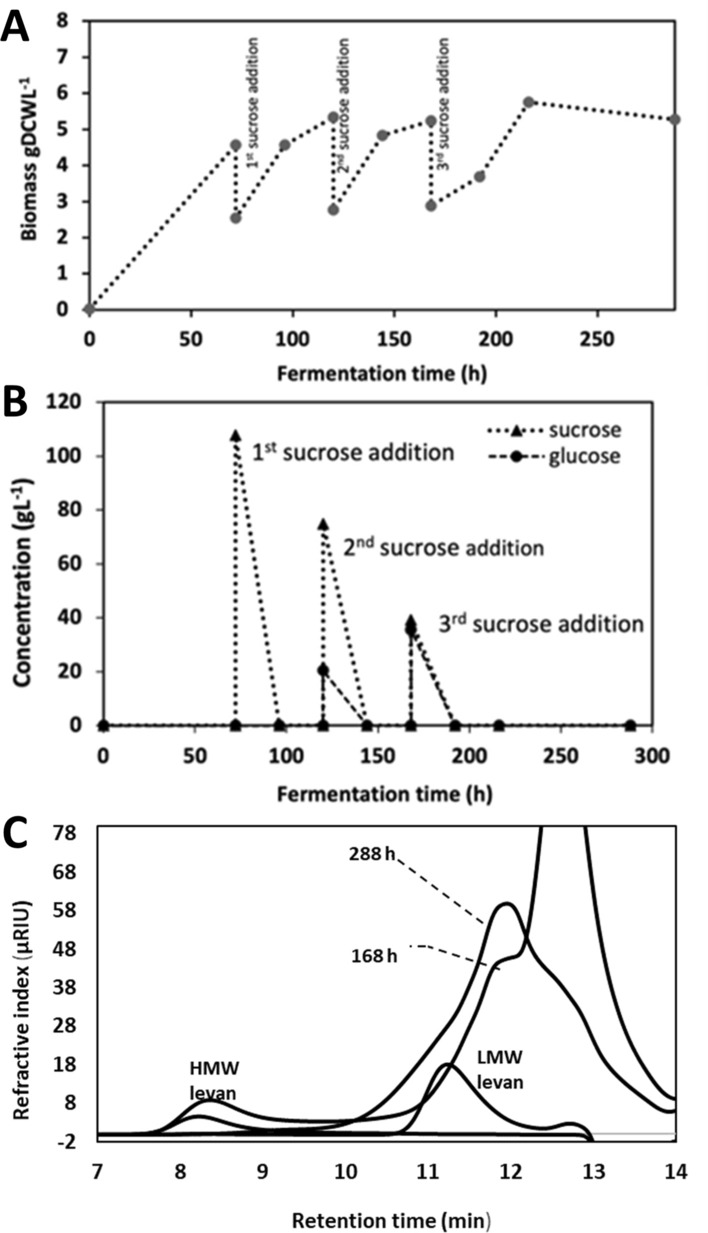
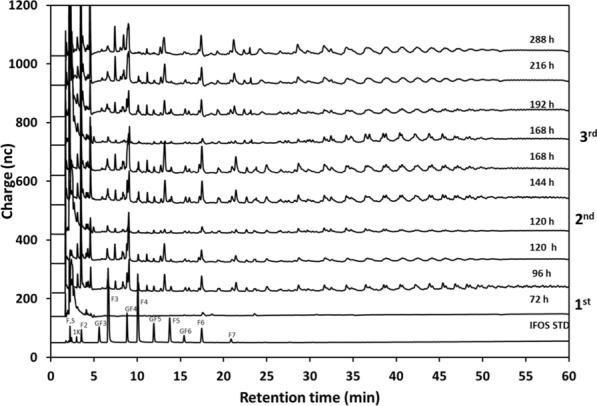
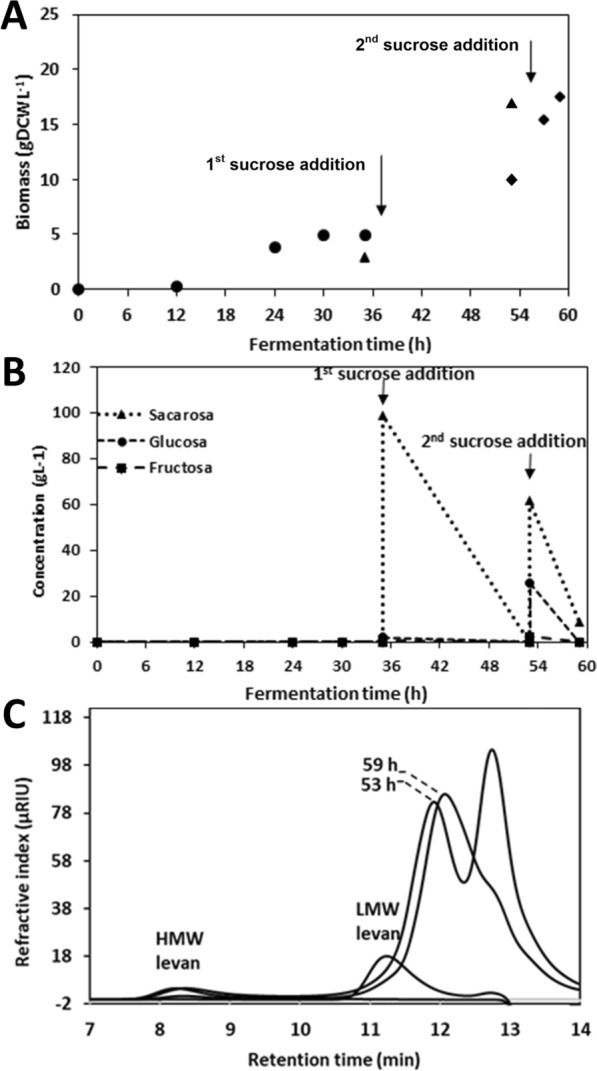
The expression of a fusion enzyme between Bacillus licheniformis endolevanase (LevB1) and B. subtilis levansucrase (SacB) in Pichia pastoris cultures, coupled with the simultaneous synthesis of L-FOS from sucrose and the elimination of the residual monosaccharides, in a single one-pot process was developed. The proof of concept at 250 mL flask-level, resulted in 8.62 g of monosaccharide-free L-FOS and 12.83 gDCW of biomass, after 3 successive sucrose additions (30 g in total), that is a 28.7% yield (w L-FOS/w sucrose) over a period of 288 h. At a 1.5 L bioreactor-level, growth considerably increased and, after 59 h and two sucrose additions, 72.9 g of monosaccharide-free L-FOS and 22.77 gDCW of biomass were obtained from a total of 160 g of sucrose fed, corresponding to a 45.5% yield (w L-FOS/w sucrose), 1.6 higher than the flask system. The L-FOS obtained at flask-level had a DP lower than 20 fructose units, while at bioreactor-level smaller oligosaccharides were obtained, with a DP lower than 10, as a consequence of the lower endolevanase activity in the flask-level.
We demonstrate here in a novel system, that P. pastoris cultures can simultaneously be used as comprehensive system to produce the enzyme and the enzymatic L-FOS synthesis with growth sustained by sucrose by-products. This system may be now the center of an optimization strategy for an efficient production of glucose and fructose free L-FOS, to make them available for their application as prebiotics. Besides, P. pastoris biomass also constitutes an interesting source of unicellular protein.
虽然莱鲍迪苷型低聚果糖(L-FOS)已被证明具有益生元特性,但尚未提出有效的大规模生产方法。一种替代方法依赖于从蔗糖同时合成莱鲍迪苷,然后进行内切莱鲍迪苷水解。为此,已经描述了几种选择,特别是通过在重组大肠杆菌中合成相应的酶。主要缺点仍然是酶生产需要 GRAS 微生物,但主要是消除葡萄糖和果糖,这是反应的副产物。
在毕赤酵母培养物中表达了芽孢杆菌licheniformis内切莱鲍迪苷酶(LevB1)和枯草芽孢杆菌蔗糖酶(SacB)的融合酶,并在单个一步法中从蔗糖同时合成 L-FOS 并消除残留的单糖。在 250 毫升瓶级的概念验证中,在 3 次蔗糖添加(共 30 克)后,得到 8.62 克无单糖的 L-FOS 和 12.83 克 DCW 生物质,这是 288 小时内 28.7%(w L-FOS/w 蔗糖)的收率。在 1.5 升生物反应器级,生长显著增加,在 59 小时和两次蔗糖添加后,从总共 160 克蔗糖中获得 72.9 克无单糖的 L-FOS 和 22.77 克 DCW 生物质,对应于 45.5%(w L-FOS/w 蔗糖)的收率,比瓶系统高 1.6。在瓶级获得的 L-FOS 的 DP 低于 20 个果糖单元,而在生物反应器级获得的较小低聚糖的 DP 低于 10,这是由于瓶级的内切莱鲍迪苷酶活性较低所致。
我们在这里在一个新的系统中证明,毕赤酵母培养物可以同时用作综合系统,通过蔗糖副产物的生长来生产酶和酶促 L-FOS 合成。该系统现在可能成为一种有效的葡萄糖和果糖无 L-FOS 生产的优化策略的中心,以使其可作为益生元使用。此外,毕赤酵母生物质也是单细胞蛋白的一个有趣来源。