Zhang Zhendong, Cai Bin, Sun Yanzhuan, Deng Haiyan, Wang Hongwei, Qiao Zengyong
Department of Cardiology, Anhui University of Science and Technology Affiliated Fengxian Hospital, Shanghai, China.
Department of Cardiology, Shanghai Fengxian District Central Hospital, Shanghai, China.
Front Cardiovasc Med. 2023 Jan 10;9:1076806. doi: 10.3389/fcvm.2022.1076806. eCollection 2022.
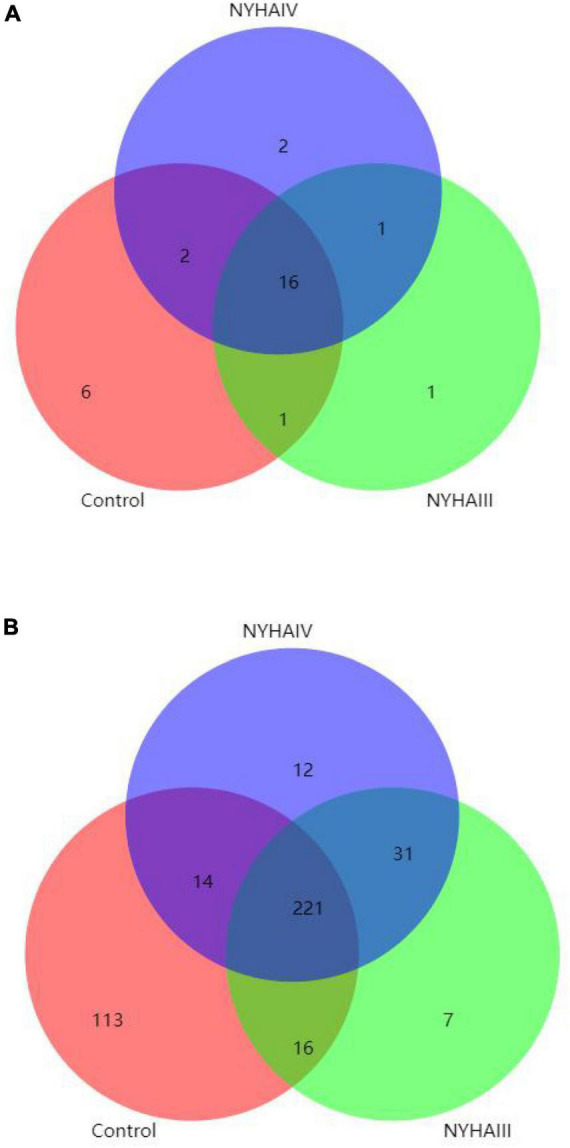
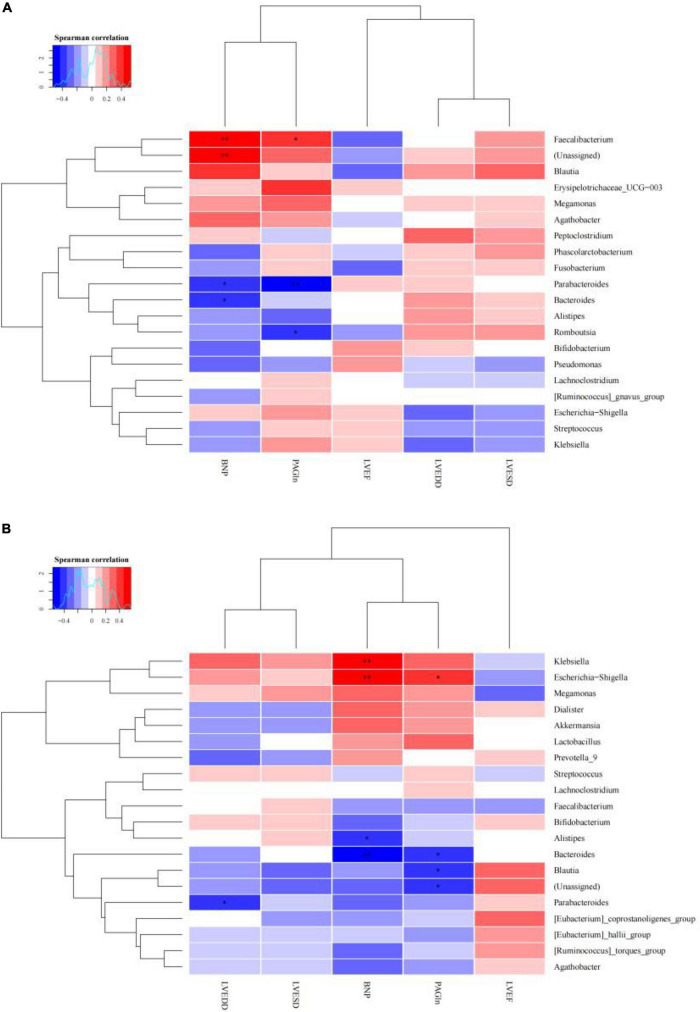
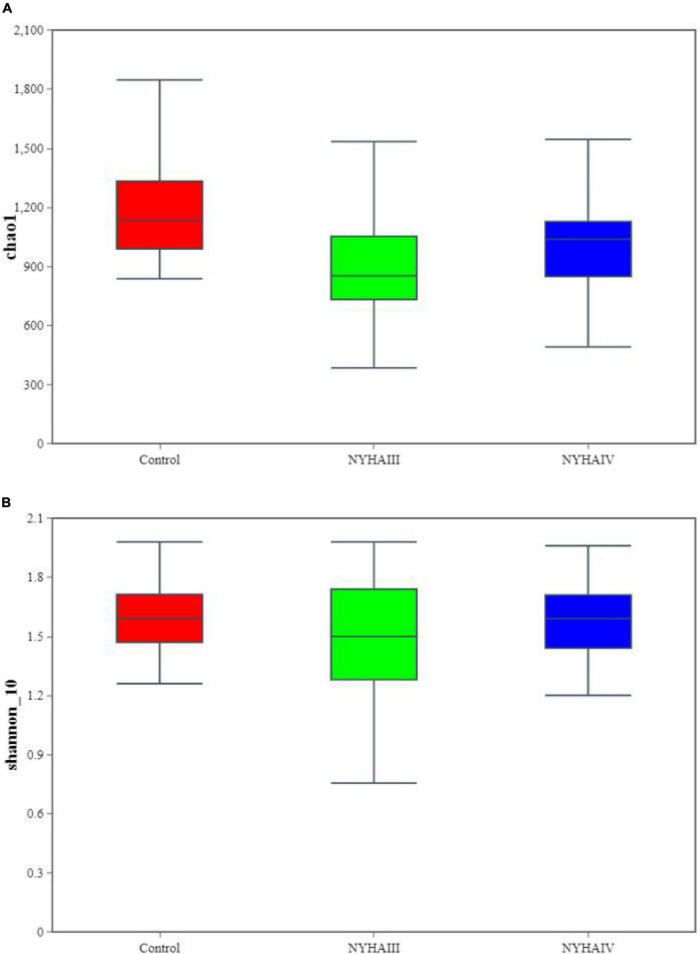
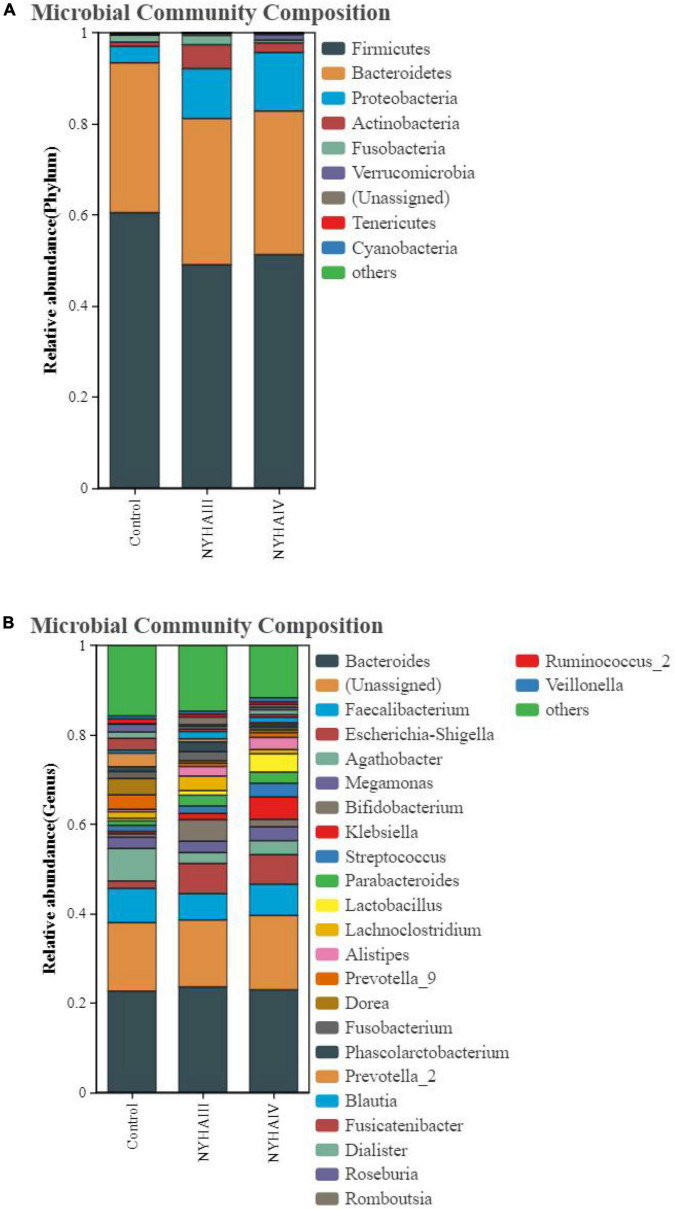
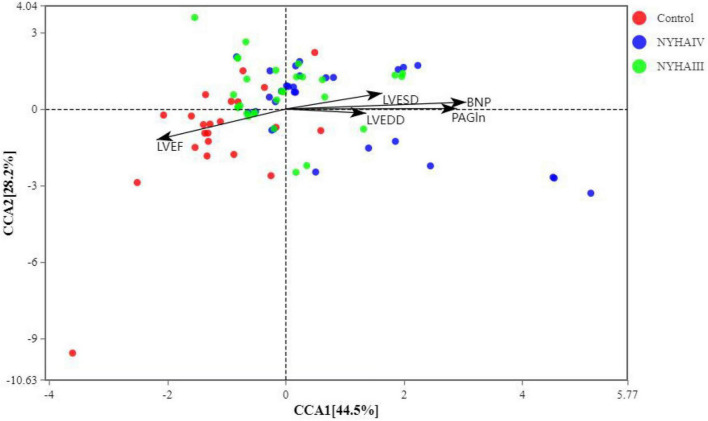
Chronic Heart Failure (CHF) is the end result of nearly all cardiovascular disease and is the leading cause of deaths worldwide. Studies have demonstrated that intestinal flora has a close relationship with the development of Cardiovascular Disease (CVD) and plays a vital role in the disease evolution process. Phenylacetylglutamine (PAGln) a metabolite of the intestinal flora, is one of the common chronic kidney disease toxins. Its concentrations in plasma were higher in patients with major adverse cardiovascular events (MACE) however, its variation in patients with various degrees of CHF has rarely been reported. Therefore, we collected stool and plasma samples from 22 healthy controls, 29 patients with NYHA Class III and 29 patients with NYHA Class IV CHF (NYHA stands for New York Heart Association) from the Department of Cardiology of Shanghai Fengxian District Central Hospital. Next, we analyzed these samples by performing bacterial 16S ribosomal RNA gene sequencing and liquid chromatography tandem mass spectrometry. The result shows: The Chao 1 index was significantly lower in both NYHA class III and NYHA class IV than it was in the control group. The beta diversity was substantially dissimilar across the three groups. The linear discriminant analysis effect size analysis (LEfSe) showed that the bacterial species with the largest differences were in control group, in NYHA class III, and in NYHA class IV. The concentration of PAGln was significantly different between CHF and control groups and increased with the severity of heart failure. Finally, the correlation analysis represented that and were negatively correlated to brain natriuretic peptide (BNP) and PAGln; and adversely associated with PAGln; was positively interrelated with BNP; - was positively correlated with PAGln and BNP; was contrasted with BNP; and was negatively correlated with the left ventricular end-diastolic diameter (LVEDD). This study presented that the intestinal flora and its metabolite PAGln were altered with different grades of CHF and illustrated the effects of the gut flora and its metabolite on CHF.
慢性心力衰竭(CHF)是几乎所有心血管疾病的最终结果,也是全球范围内主要的死亡原因。研究表明,肠道菌群与心血管疾病(CVD)的发展密切相关,并且在疾病演变过程中起着至关重要的作用。苯乙酰谷氨酰胺(PAGln)是肠道菌群的一种代谢产物,是常见的慢性肾病毒素之一。在发生主要不良心血管事件(MACE)的患者中,其血浆浓度较高,然而,其在不同程度CHF患者中的变化情况鲜有报道。因此,我们从上海市奉贤区中心医院心内科收集了22名健康对照者、29名纽约心脏协会(NYHA)心功能Ⅲ级患者和29名NYHA心功能Ⅳ级CHF患者的粪便和血浆样本。接下来,我们通过进行细菌16S核糖体RNA基因测序和液相色谱串联质谱分析这些样本。结果显示:NYHA心功能Ⅲ级和Ⅳ级患者的Chao 1指数均显著低于对照组。三组之间的β多样性存在显著差异。线性判别分析效应大小分析(LEfSe)表明,差异最大的细菌种类在对照组、NYHA心功能Ⅲ级组和NYHA心功能Ⅳ级组中各不相同。CHF组和对照组之间PAGln的浓度存在显著差异,并且随着心力衰竭严重程度的增加而升高。最后,相关性分析表明,[此处原文缺失具体内容]与脑钠肽(BNP)和PAGln呈负相关;[此处原文缺失具体内容]与PAGln呈负相关;[此处原文缺失具体内容]与BNP呈正相关;[此处原文缺失具体内容]与PAGln和BNP呈正相关;[此处原文缺失具体内容]与BNP呈相反关系;[此处原文缺失具体内容]与左心室舒张末期内径(LVEDD)呈负相关。本研究表明,肠道菌群及其代谢产物PAGln会随着CHF的不同分级而发生改变,并阐明了肠道菌群及其代谢产物对CHF的影响。