Department of Microbiology and Plant Pathology, University of California Riverside, Riverside, CA, 92507, USA.
BMC Plant Biol. 2023 Jan 30;23(1):60. doi: 10.1186/s12870-022-03977-z.
Plant growth promoting rhizobacteria (PGPR), such as Bradyrhizobium japonicum IRAT FA3, are able to improve seed germination and plant growth under various biotic and abiotic stress conditions, including high salinity stress. PGPR can affect plants' responses to stress via multiple pathways which are often interconnected but were previously thought to be distinct. Although the overall impacts of PGPR on plant growth and stress tolerance have been well documented, the underlying mechanisms are not fully elucidated. This work contributes to understanding how PGPR promote abiotic stress by revealing major plant pathways triggered by B. japonicum under salt stress.
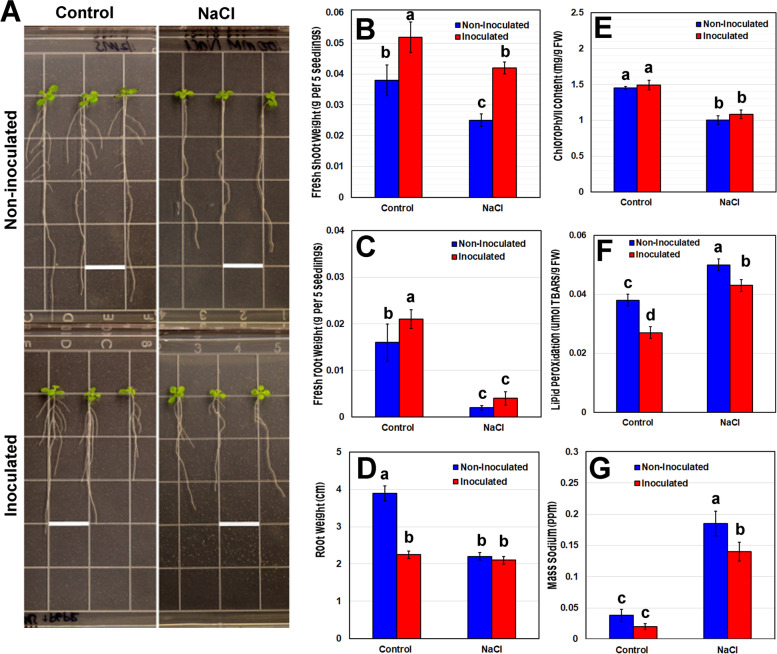
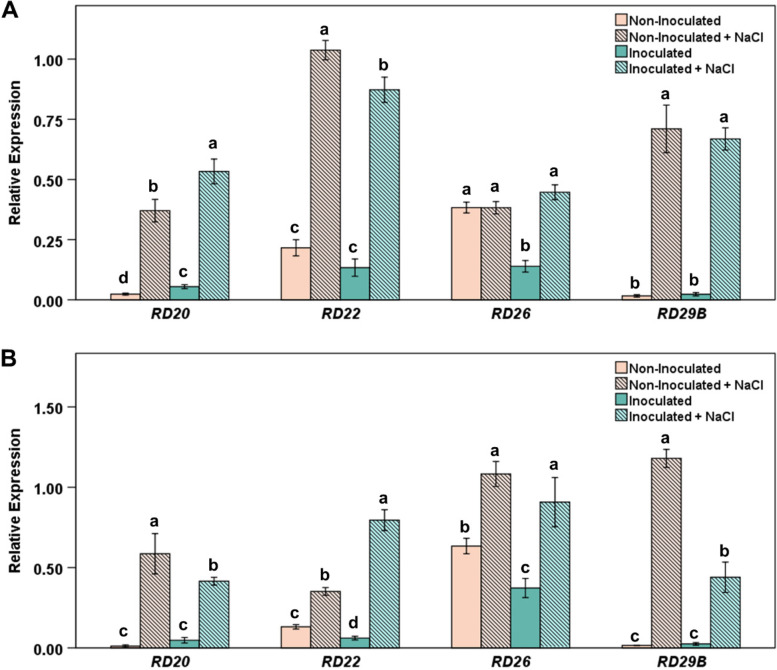
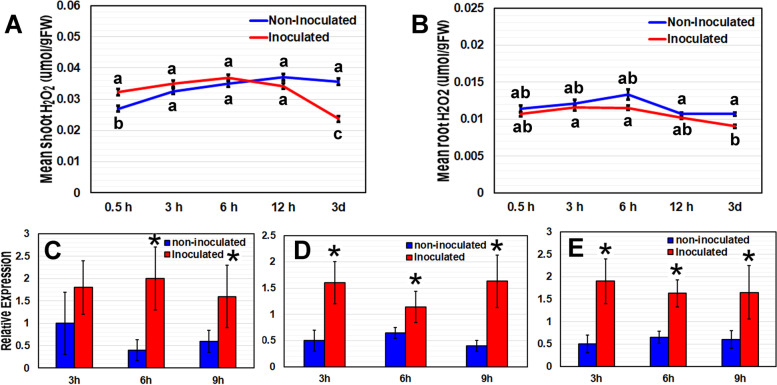
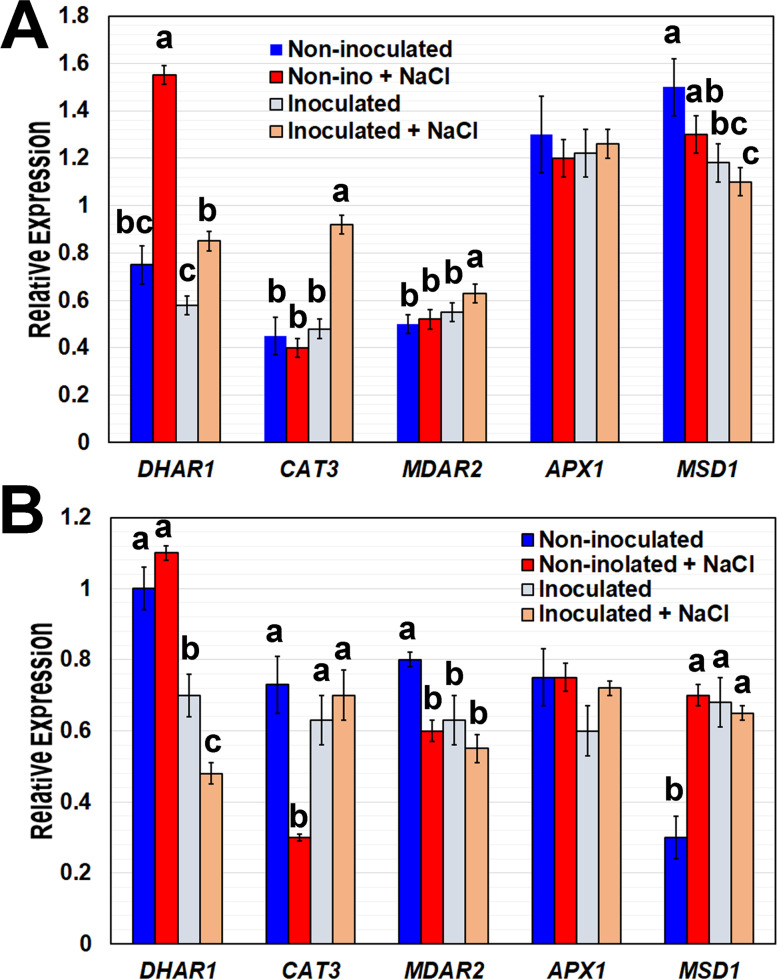
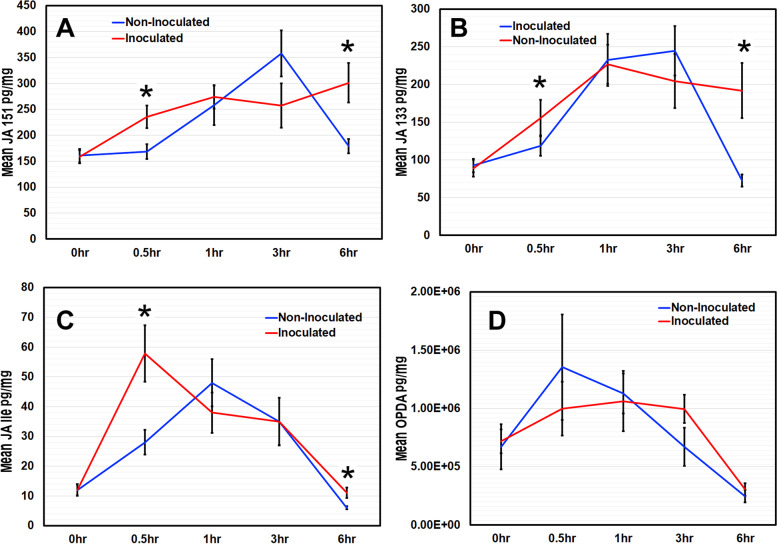
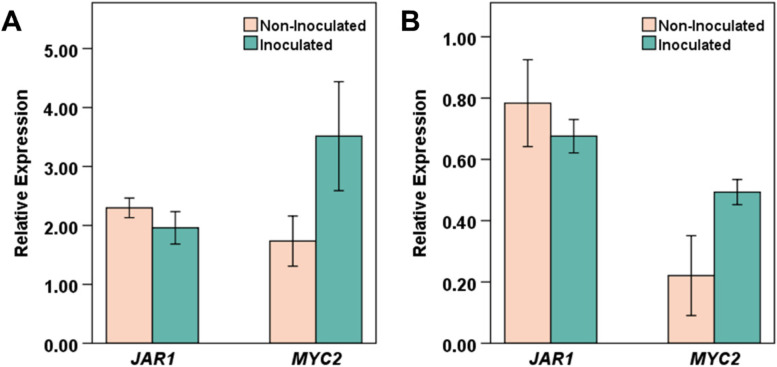
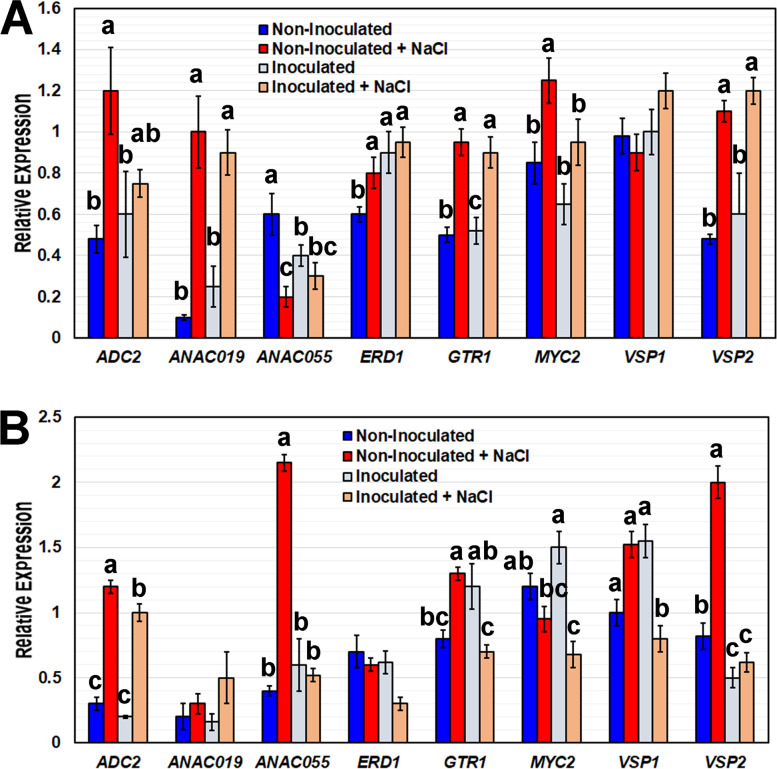
The plant growth-promoting rhizobacterial (PGPR) strain Bradyrhizobium japonicum IRAT FA3 reduced the levels of sodium in Arabidopsis thaliana by 37.7%. B. japonicum primed plants as it stimulated an increase in jasmonates (JA) and modulated hydrogen peroxide production shortly after inoculation. B. japonicum-primed plants displayed enhanced shoot biomass, reduced lipid peroxidation and limited sodium accumulation under salt stress conditions. Q(RT)-PCR analysis of JA and abiotic stress-related gene expression in Arabidopsis plants pretreated with B. japonicum and followed by six hours of salt stress revealed differential gene expression compared to non-inoculated plants. Response to Desiccation (RD) gene RD20 and reactive oxygen species scavenging genes CAT3 and MDAR2 were up-regulated in shoots while CAT3 and RD22 were increased in roots by B. japonicum, suggesting roles for these genes in B. japonicum-mediated salt tolerance. B. japonicum also influenced reductions of RD22, MSD1, DHAR and MYC2 in shoots and DHAR, ADC2, RD20, RD29B, GTR1, ANAC055, VSP1 and VSP2 gene expression in roots under salt stress.
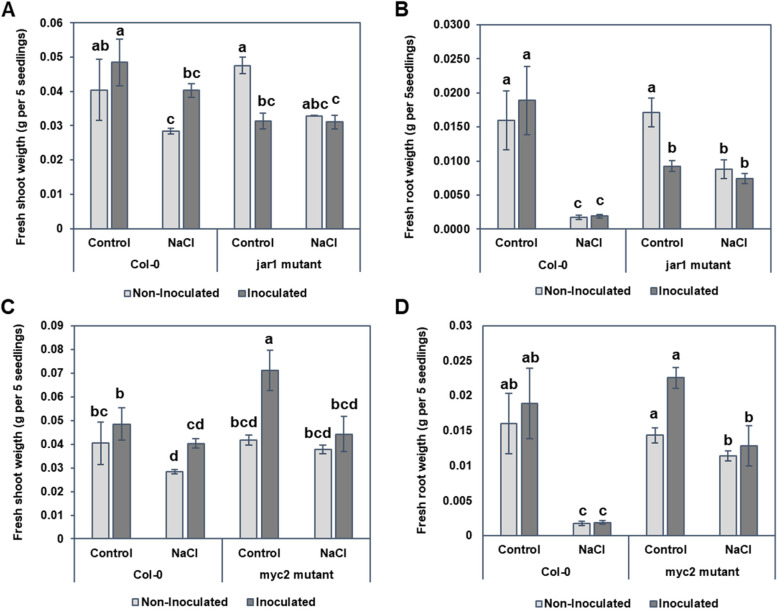
Our data showed that MYC2 and JAR1 are required for B. japonicum-induced shoot growth in both salt stressed and non-stressed plants. The observed microbially influenced reactions to salinity stress in inoculated plants underscore the complexity of the B. japonicum jasmonic acid-mediated plant response salt tolerance.
植物促生根际细菌(PGPR),如慢生根瘤菌 IRAT FA3,能够在各种生物和非生物胁迫条件下,包括高盐胁迫,提高种子发芽和植物生长。PGPR 可以通过多种途径影响植物对胁迫的反应,这些途径通常相互关联,但以前被认为是不同的。尽管 PGPR 对植物生长和胁迫耐受性的总体影响已经得到很好的记录,但潜在的机制尚未完全阐明。这项工作有助于了解 PGPR 如何通过揭示盐胁迫下慢生根瘤菌触发的主要植物途径来促进非生物胁迫。
植物促生根际细菌(PGPR)菌株慢生根瘤菌 IRAT FA3 通过 37.7%降低拟南芥中的钠离子水平。慢生根瘤菌刺激茉莉酸(JA)的增加,并在接种后不久调节过氧化氢的产生,从而使植物提前做好准备。在盐胁迫条件下,慢生根瘤菌预处理的植物表现出增加的地上生物量、减少的脂质过氧化和有限的钠离子积累。用慢生根瘤菌预处理并随后进行 6 小时盐胁迫的拟南芥植物中 JA 和非生物胁迫相关基因表达的 Q(RT)-PCR 分析显示与未接种植物相比基因表达的差异。在根中,响应干旱(RD)基因 RD20 和活性氧清除基因 CAT3 和 MDAR2 上调,而 CAT3 和 RD22 在根中上调,表明这些基因在慢生根瘤菌介导的耐盐性中发挥作用。慢生根瘤菌还影响盐胁迫下 RD22、MSD1、DHAR 和 MYC2 在地上部和 DHAR、ADC2、RD20、RD29B、GTR1、ANAC055、VSP1 和 VSP2 基因在根中的表达。
我们的数据表明,MYC2 和 JAR1 是慢生根瘤菌诱导盐胁迫下和非胁迫下植物地上部生长所必需的。在接种植物中观察到的受微生物影响的盐胁迫反应强调了慢生根瘤菌茉莉酸介导的植物耐盐反应的复杂性。