Formely: Instituto Superior Técnico, Universidade de Lisboa, Av. Rovisco Pais, 1049-001, Lisbon, Portugal.
CERENA/DER, Instituto Superior Técnico, Universidade de Lisboa, Av. Rovisco Pais, 1049-001, Lisbon, Portugal.
Int J Health Geogr. 2023 Jan 29;22(1):4. doi: 10.1186/s12942-022-00322-3.
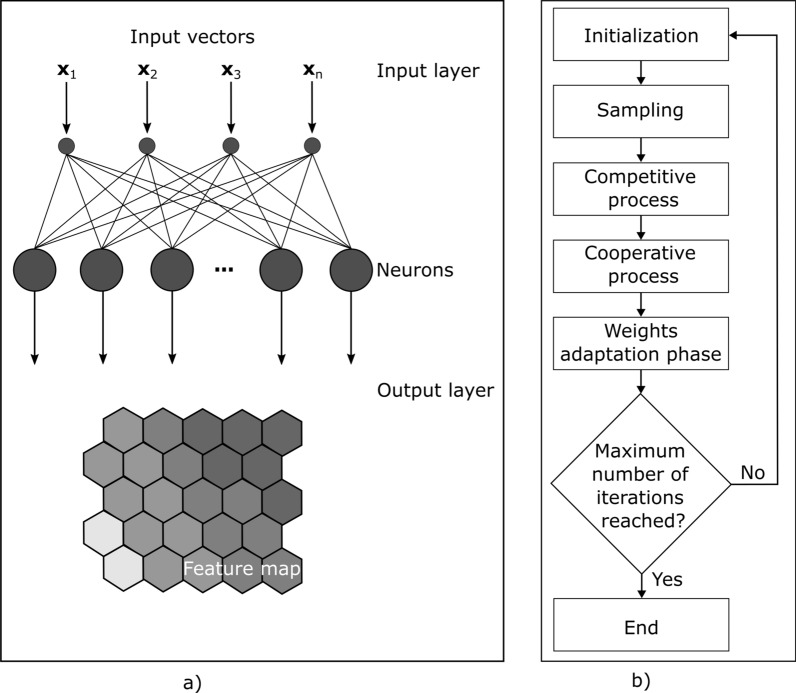
Self-Organizing Maps (SOM) are an unsupervised learning clustering and dimensionality reduction algorithm capable of mapping an initial complex high-dimensional data set into a low-dimensional domain, such as a two-dimensional grid of neurons. In the reduced space, the original complex patterns and their interactions can be better visualized, interpreted and understood.
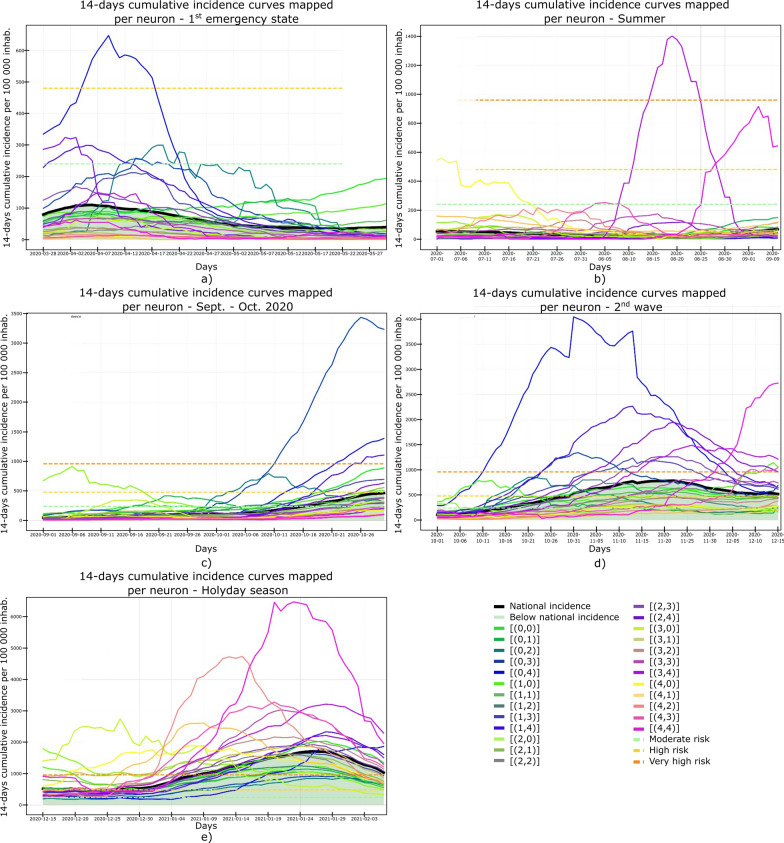
We use SOM to simultaneously couple the spatial and temporal domains of the COVID-19 evolution in the 278 municipalities of mainland Portugal during the first year of the pandemic. Temporal 14-days cumulative incidence time series along with socio-economic and demographic indicators per municipality were analyzed with SOM to identify regions of the country with similar behavior and infer the possible common origins of the incidence evolution.
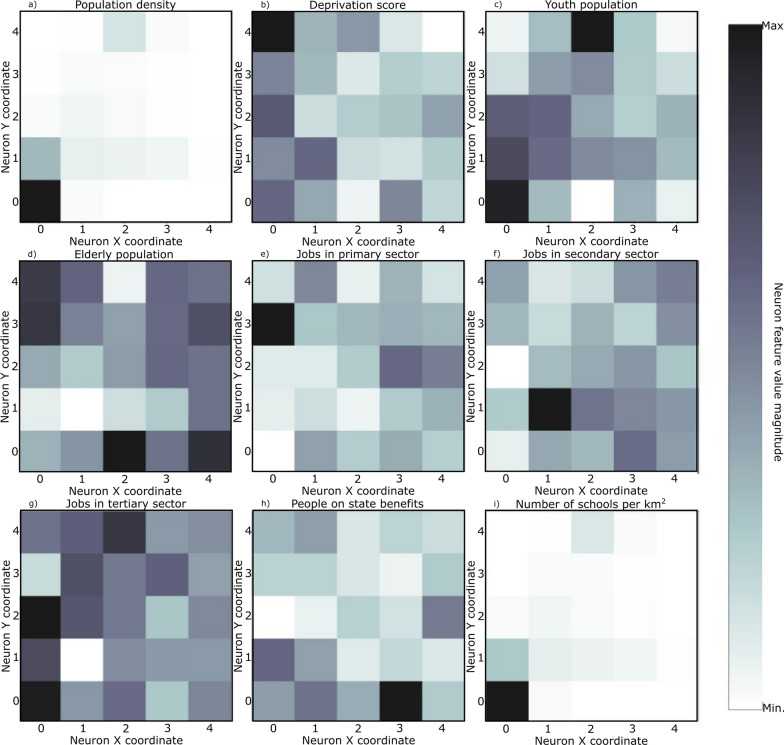
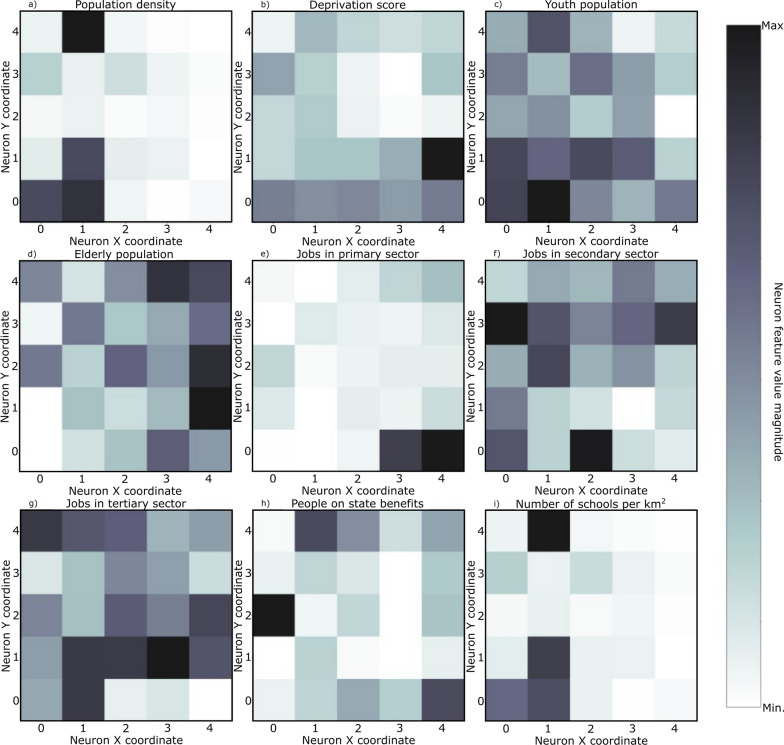
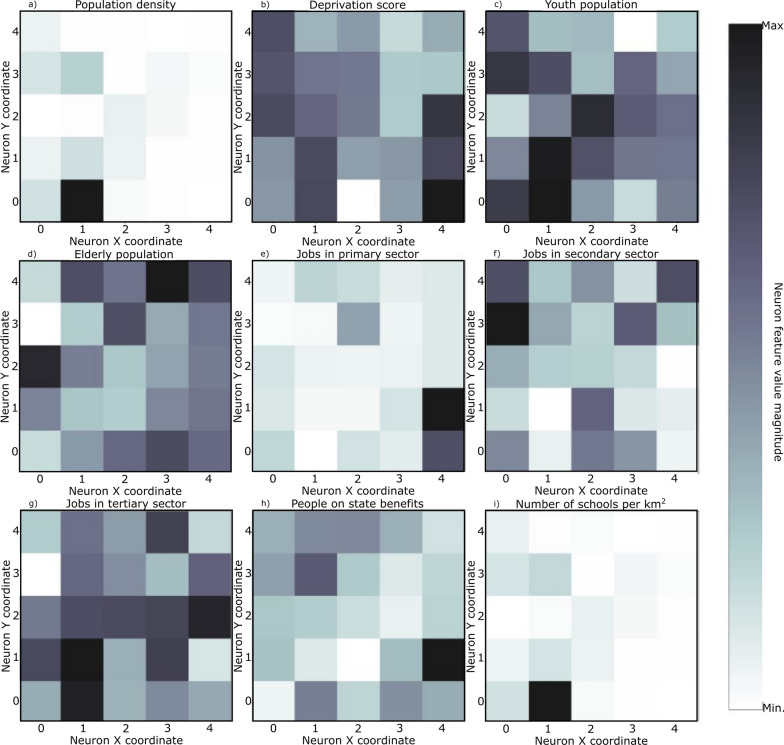
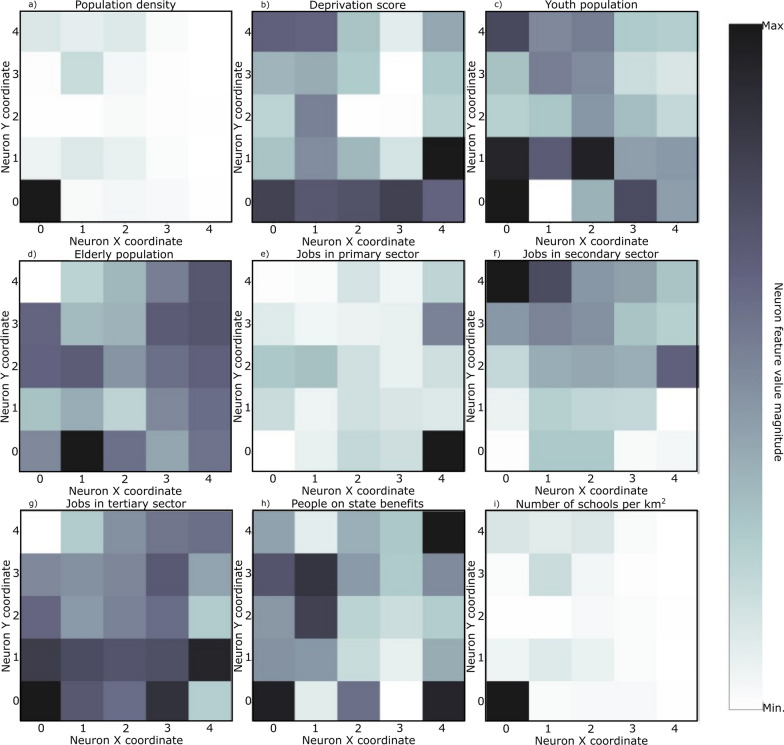
The results show how neighbor municipalities tend to share a similar behavior of the disease, revealing the strong spatiotemporal relationship of the COVID-19 spreading beyond the administrative borders of each municipality. Additionally, we demonstrate how local socio-economic and demographic characteristics evolved as determinants of COVID-19 transmission, during the 1st wave school density per municipality was more relevant, where during 2nd wave jobs in the secondary sector and the deprivation score were more relevant.
The results show that SOM can be an effective tool to analysing the spatiotemporal behavior of COVID-19 and synthetize the history of the disease in mainland Portugal during the period in analysis. While SOM have been applied to diverse scientific fields, the application of SOM to study the spatiotemporal evolution of COVID-19 is still limited. This work illustrates how SOM can be used to describe the spatiotemporal behavior of epidemic events. While the example shown herein uses 14-days cumulative incidence curves, the same analysis can be performed using other relevant data such as mortality data, vaccination rates or even infection rates of other disease of infectious nature.
自组织映射(SOM)是一种无监督学习聚类和降维算法,能够将初始复杂的高维数据集映射到低维域,例如神经元的二维网格。在降维空间中,可以更好地可视化、解释和理解原始复杂模式及其相互作用。
我们使用 SOM 同时耦合 COVID-19 在葡萄牙大陆 278 个直辖市第一年的演变的时空域。对每个直辖市的时空 14 天累计发病率时间序列以及社会经济和人口指标进行 SOM 分析,以识别具有相似行为的国家区域,并推断发病率演变的可能共同起源。
结果表明,相邻直辖市往往具有相似的疾病行为,揭示了 COVID-19 传播超越每个直辖市行政边界的强时空关系。此外,我们还展示了当地社会经济和人口特征如何作为 COVID-19 传播的决定因素演变,在第一波期间,每个直辖市的学校密度更为重要,而在第二波期间,次要部门的工作和剥夺分数更为重要。
结果表明,SOM 可以成为分析 COVID-19 时空行为并综合分析分析期间葡萄牙大陆疾病历史的有效工具。虽然 SOM 已应用于多个科学领域,但 SOM 应用于研究 COVID-19 的时空演变仍然有限。这项工作说明了如何使用 SOM 来描述传染病事件的时空行为。虽然此处所示的示例使用了 14 天的累计发病率曲线,但可以使用其他相关数据(例如死亡率数据、疫苗接种率甚至其他传染病的感染率)进行相同的分析。