Department of Human Genetics, University of Utah.
Genome Biol Evol. 2023 Feb 3;15(2). doi: 10.1093/gbe/evad011.
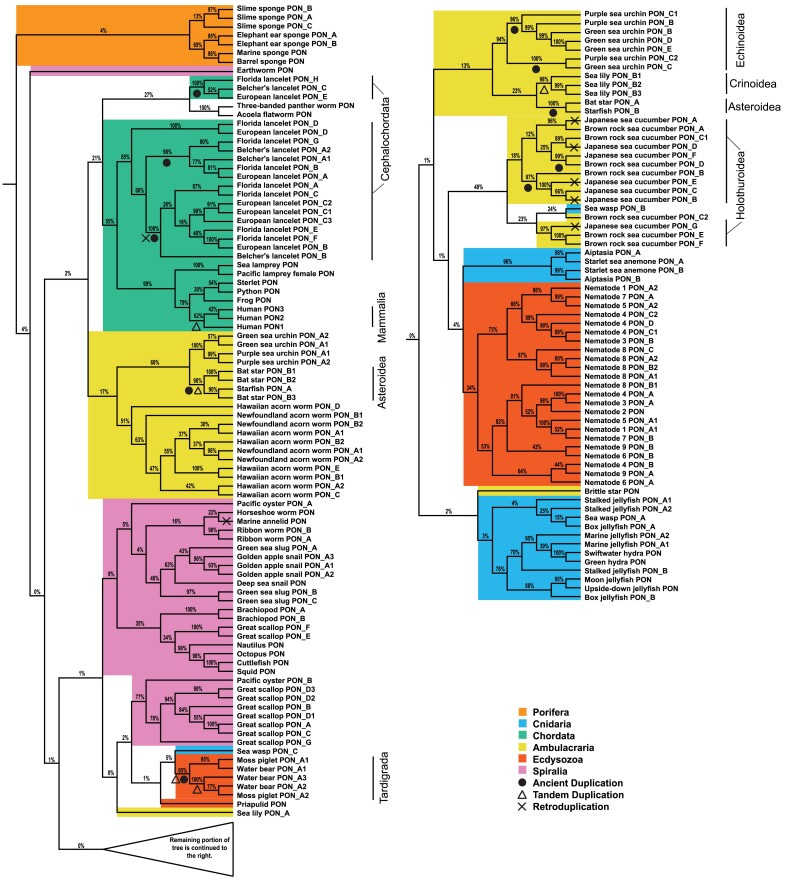
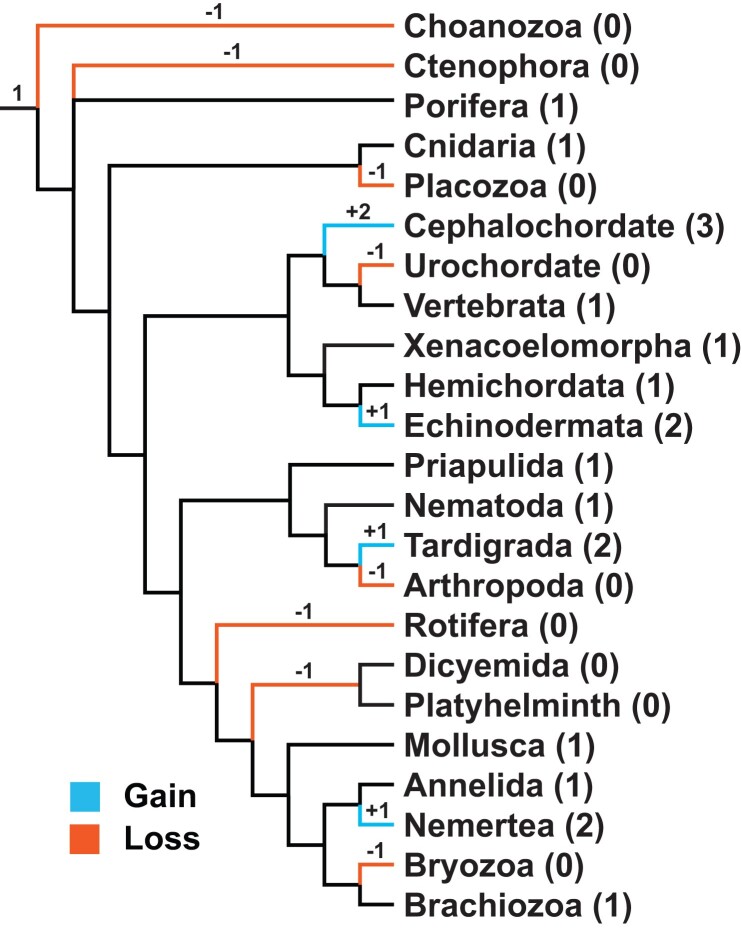
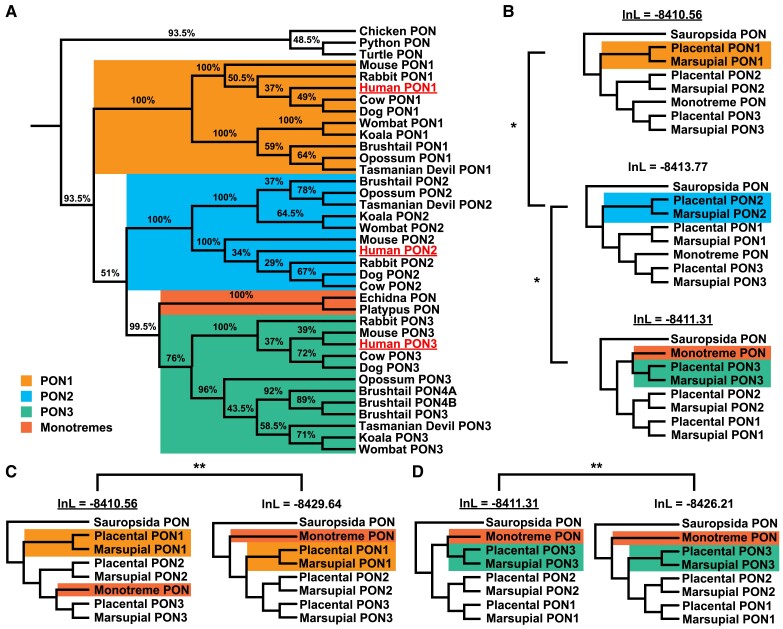
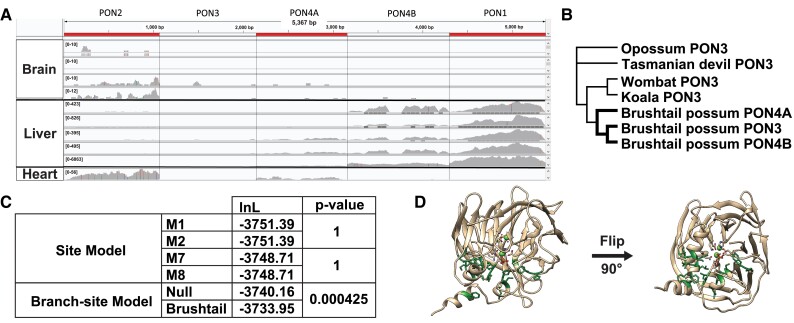
Change in gene family size has been shown to facilitate adaptation to different selective pressures. This includes gene duplication to increase dosage or diversification of enzymatic substrates and gene deletion due to relaxed selection. We recently found that the PON1 gene, an enzyme with arylesterase and lactonase activity, was lost repeatedly in different aquatic mammalian lineages, suggesting that the PON gene family is responsive to environmental change. We further investigated if these fluctuations in gene family size were restricted to mammals and approximately when this gene family was expanded within mammals. Using 112 metazoan protein models, we explored the evolutionary history of the PON family to characterize the dynamic evolution of this gene family. We found that there have been multiple, independent expansion events in tardigrades, cephalochordates, and echinoderms. In addition, there have been partial gene loss events in monotremes and sea cucumbers and what appears to be complete loss in arthropods, urochordates, platyhelminths, ctenophores, and placozoans. In addition, we show the mammalian expansion to three PON paralogs occurred in the ancestor of all mammals after the divergence of sauropsida but before the divergence of monotremes from therians. We also provide evidence of a novel PON expansion within the brushtail possum. In the face of repeated expansions and deletions in the context of changing environments, we suggest a range of selective pressures, including pathogen infection and mitigation of oxidative damage, are likely influencing the diversification of this dynamic gene family across metazoa.
基因家族大小的变化已被证明有助于适应不同的选择压力。这包括基因复制以增加酶的底物的剂量或多样化,以及由于选择放松导致的基因缺失。我们最近发现,PON1 基因(一种具有芳基酯酶和内酯酶活性的酶)在不同的水生哺乳动物谱系中多次丢失,这表明 PON 基因家族对环境变化有反应。我们进一步研究了这些基因家族大小的波动是否仅限于哺乳动物,以及这个基因家族在哺乳动物中大约何时扩张。我们使用 112 种后生动物蛋白模型,探索了 PON 家族的进化历史,以描述这个基因家族的动态进化。我们发现,在缓步动物、头索动物和棘皮动物中已经发生了多次独立的扩张事件。此外,在单孔目动物和海参中发生了部分基因丢失事件,而在节肢动物、尾索动物、扁形动物、栉水母和扁形动物中似乎发生了完全丢失事件。此外,我们还表明,哺乳动物中三个 PON 基因的扩张发生在所有哺乳动物的祖先中,在蜥形类动物分化之后,但在单孔目动物与合弓类动物分化之前。我们还提供了在帚尾袋貂中存在一个新的 PON 扩张的证据。面对环境变化下的反复扩张和缺失,我们认为一系列选择压力,包括病原体感染和氧化损伤的缓解,可能会影响这个动态基因家族在后生动物中的多样化。