Qingdao Nucleic Acid Rapid Testing International Science and Technology Cooperation Base, College of Life Sciences; Department of Pathogenic Biology, School of Basic Medicine, Department of Clinical Laboratory, the Affiliated Hospital of Qingdao University, Qingdao University, Qingdao, 266071, People's Republic of China.
Shandong Provincial Key Laboratory of Biochemical Engineering, Qingdao Nucleic Acid Rapid Detection Engineering Research Center, College of Marine Science and Biological Engineering, Qingdao University of Science and Technology, Qingdao, 266042, People's Republic of China.
Curr Microbiol. 2023 Feb 4;80(3):97. doi: 10.1007/s00284-023-03198-z.
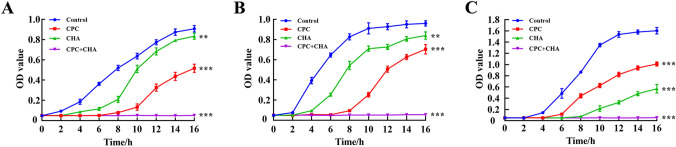
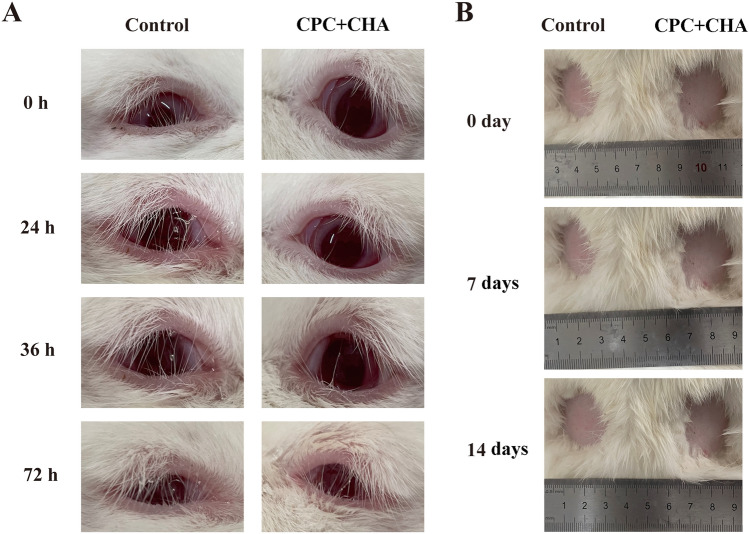
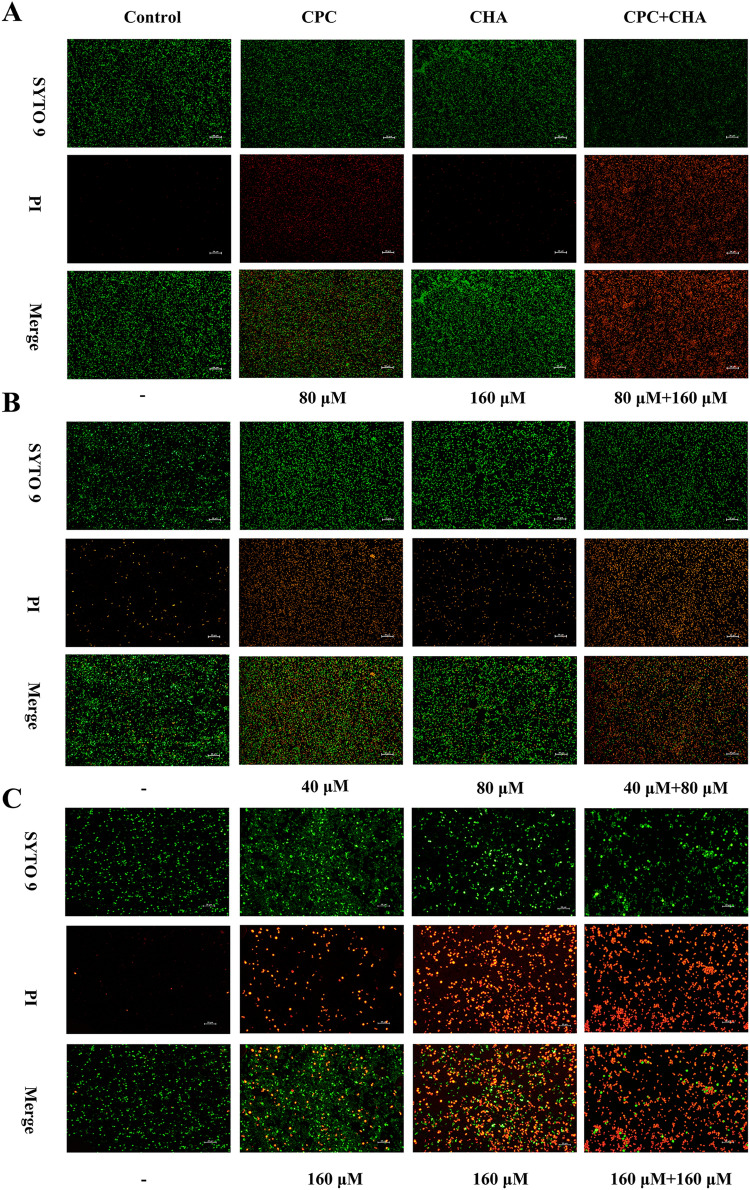
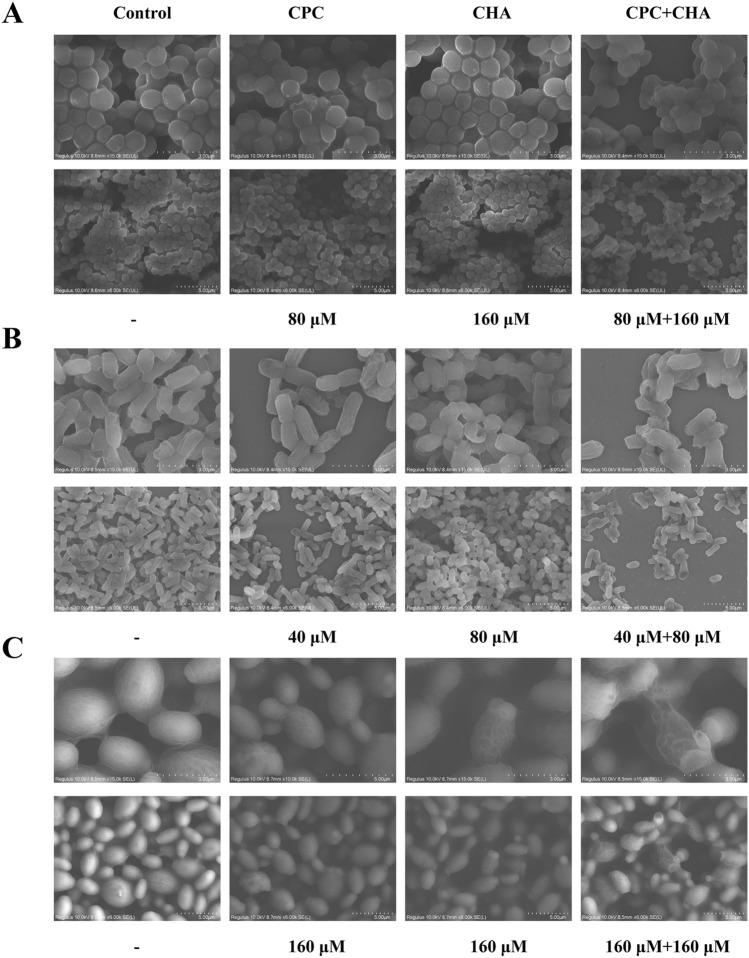
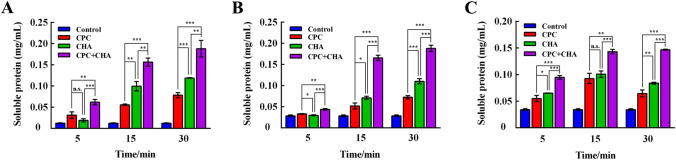
Combined use of the present antimicrobial drugs has been proved to be an alternative approach for antimicrobial agents' development since the co-existed of the drugs working in different mechanism have been demonstrated potentially enhance their antimicrobial activity. In this work, antibacterial and antifungal activity of the cetylpyridinium chloride (CPC)/chlorhexidine acetate (CHA) combination was evaluated for the first time, while a universal concentration for the rapid killing of gram-positive/gram-negative bacteria and fungi was also proposed. The minimum inhibitory concentrations (MIC) of CPC and CHA used alone or in combination were first measured, showing that the combined treatment decreased the MIC against tested gram-positive/gram-negative bacteria and fungi to 1/8-1/2. Growth curve assays demonstrated CPC and CHA had dynamic combined effects against the tested microorganisms at the concentration equal to MIC. Besides, combined use of these two drugs could also enhance their biocidal activity, which was illustrated by fluorescence microscopy and SEM images, as well as soluble protein measurement. More importantly, in vitro acute eye and skin irritation tests showed short-term contact with CPC/CHA combination would not cause any damage to mammalian mucosa and skin. In a word, CPC/CHA combination exhibited broad-spectrum antibacterial and antifungal activity against tested gram-positive/gram-negative bacteria and fungi while without any acute irritation to mammalian mucosa and skin, providing a new perspective on the selection of personal disinfectants.
联合使用目前的抗菌药物已被证明是一种替代抗菌药物开发的方法,因为已经证明共存于不同作用机制的药物可能会增强它们的抗菌活性。在这项工作中,首次评估了氯化十六烷基吡啶(CPC)/醋酸氯己定(CHA)联合的抗菌和抗真菌活性,同时还提出了一种快速杀死革兰氏阳性/革兰氏阴性细菌和真菌的通用浓度。首先测量了单独使用或联合使用 CPC 和 CHA 的最小抑菌浓度(MIC),结果表明联合治疗将对测试的革兰氏阳性/革兰氏阴性细菌和真菌的 MIC 降低到 1/8-1/2。生长曲线测定表明,在等于 MIC 的浓度下,CPC 和 CHA 对测试微生物具有动态的联合作用。此外,这两种药物的联合使用还可以增强它们的杀菌活性,这可以通过荧光显微镜和 SEM 图像以及可溶性蛋白质测量来证明。更重要的是,体外急性眼和皮肤刺激试验表明,与 CPC/CHA 联合短期接触不会对哺乳动物黏膜和皮肤造成任何损害。总之,CPC/CHA 联合对测试的革兰氏阳性/革兰氏阴性细菌和真菌表现出广谱的抗菌和抗真菌活性,而对哺乳动物黏膜和皮肤没有任何急性刺激,为选择个人消毒剂提供了新的视角。