RNA Group, Department of Biochemistry and Functional Genomics, Université de Sherbrooke, Sherbrooke, Québec, Canada J1E 4K8.
RNA Group, Department of Biochemistry and Functional Genomics, Université de Sherbrooke, Sherbrooke, Québec, Canada J1E 4K8
RNA. 2023 May;29(5):644-662. doi: 10.1261/rna.079294.122. Epub 2023 Feb 8.
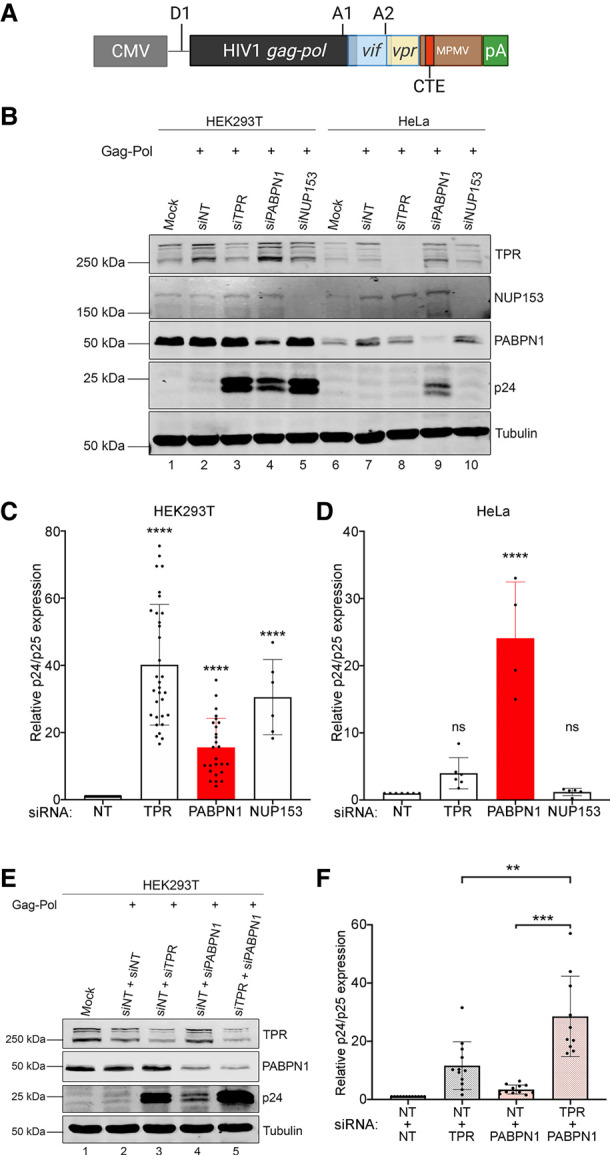
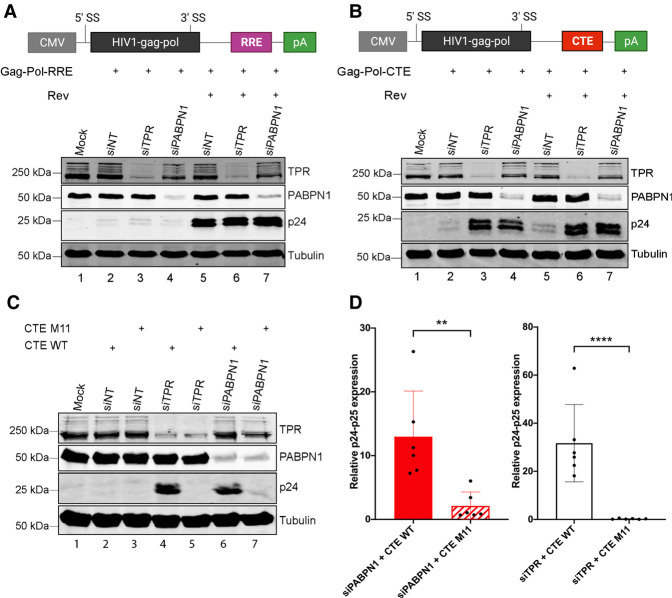
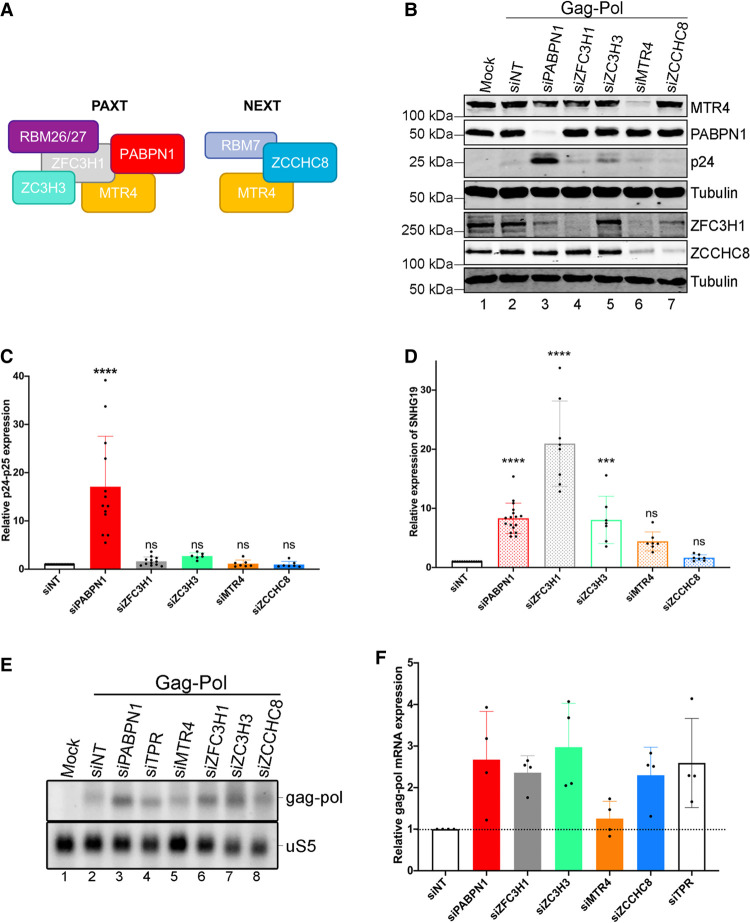
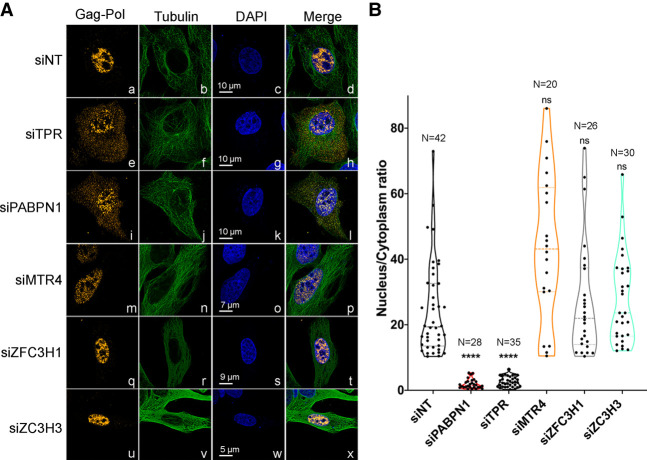
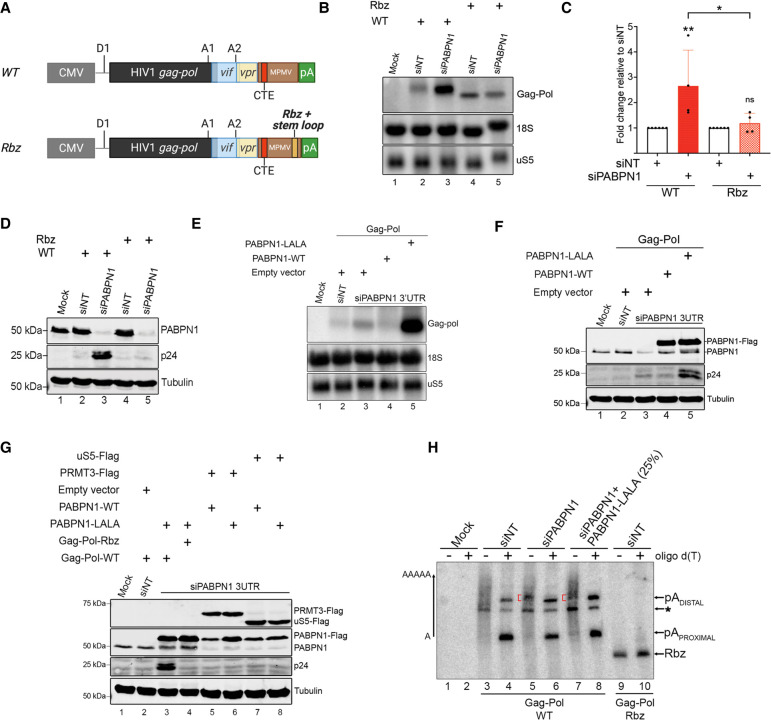
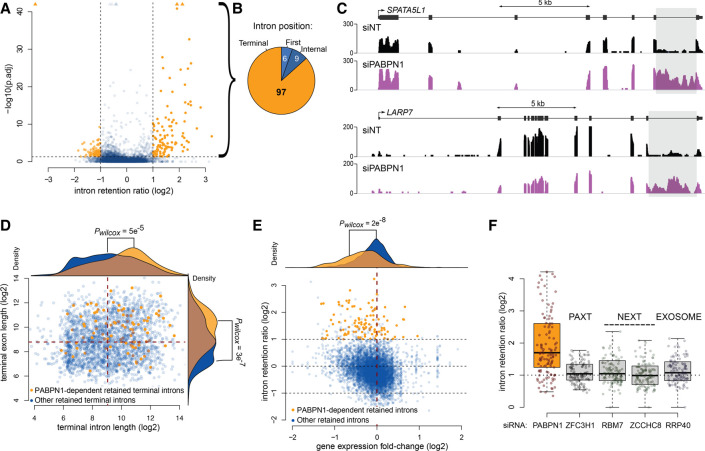
Intron retention is a type of alternative splicing where one or more introns remain unspliced in a polyadenylated transcript. Although many viral systems are known to translate proteins from mRNAs with retained introns, restriction mechanisms generally prevent export and translation of incompletely spliced mRNAs. Here, we provide evidence that the human nuclear poly(A)-binding protein, PABPN1, functions in such restrictions. Using a reporter construct in which nuclear export of an incompletely spliced mRNA is enhanced by a viral constitutive transport element (CTE), we show that PABPN1 depletion results in a significant increase in export and translation from the unspliced CTE-containing transcript. Unexpectedly, we find that inactivation of poly(A)-tail exosome targeting by depletion of PAXT components had no effect on export and translation of the unspliced reporter mRNA, suggesting a mechanism largely independent of nuclear RNA decay. Interestingly, a PABPN1 mutant selectively defective in stimulating poly(A) polymerase elongation strongly enhanced the expression of the unspliced, but not of intronless, reporter transcripts. Analysis of RNA-seq data also revealed that PABPN1 controls the expression of many human genes via intron retention. Notably, PABPN1-dependent intron retention events mostly affected 3'-terminal introns and were insensitive to PAXT and NEXT deficiencies. Our findings thus disclose a role for PABPN1 in restricting nuclear export of intron-retained transcripts and reinforce the interdependence between terminal intron splicing, 3' end processing, and polyadenylation.
内含子保留是一种选择性剪接形式,其中一个或多个内含子在多聚腺苷酸化转录本中保持未剪接。尽管许多病毒系统被认为可以从带有保留内含子的 mRNA 翻译蛋白质,但限制机制通常会阻止不完全剪接的 mRNA 的输出和翻译。在这里,我们提供了证据表明人类核多聚(A)结合蛋白 PABPN1 在这种限制中起作用。使用一种报告构建体,其中核输出不完全剪接的 mRNA 通过病毒组成型转运元件(CTE)增强,我们表明 PABPN1 耗竭导致未剪接 CTE 含有的转录本的输出和翻译显著增加。出乎意料的是,我们发现通过 PAXT 成分的耗竭使聚(A)尾外切体靶向失活对未剪接报告 mRNA 的输出和翻译没有影响,这表明一种在很大程度上独立于核 RNA 降解的机制。有趣的是,一种选择性地在刺激聚(A)聚合酶延伸方面有缺陷的 PABPN1 突变体强烈增强了未剪接的但不是无内含子的报告转录物的表达。对 RNA-seq 数据的分析还表明,PABPN1 通过内含子保留控制许多人类基因的表达。值得注意的是,PABPN1 依赖性内含子保留事件主要影响 3'-末端内含子,并且对 PAXT 和 NEXT 缺乏不敏感。因此,我们的发现揭示了 PABPN1 在限制内含子保留转录本的核输出中的作用,并加强了末端内含子剪接、3'端加工和聚腺苷酸化之间的相互依赖性。