Quraish Reeshan Ul, Hirahata Tetsuyuki, Quraish Afraz Ul, Ul Quraish Shahan
Hirahata Gene Therapy Laboratory, HIC Clinic, Tokyo, Japan.
Cancer Inform. 2023 Feb 1;22:11769351221150772. doi: 10.1177/11769351221150772. eCollection 2023.
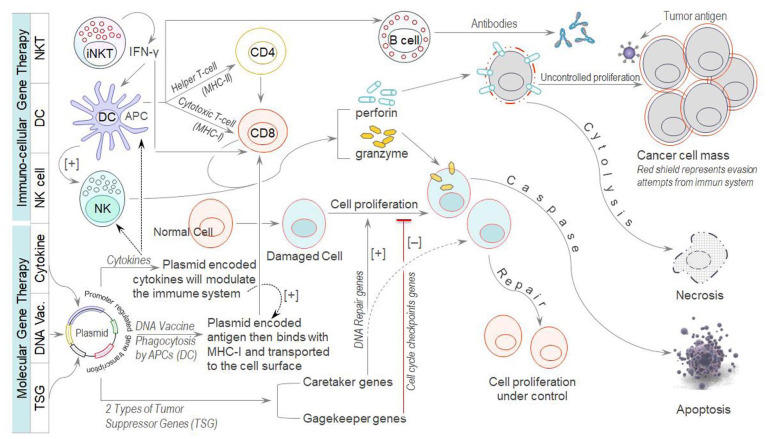
Genomic instability is considered a fundamental factor involved in any neoplastic disease. Consequently, the genetically unstable cells contribute to intratumoral genetic heterogeneity and phenotypic diversity of cancer. These genetic alterations can be detected by several diagnostic techniques of molecular biology and the detection of alteration in genomic integrity may serve as reliable genetic molecular markers for the early detection of cancer or cancer-related abnormal changes in the body cells. These genetic molecular markers can detect cancer earlier than any other method of cancer diagnosis, once a tumor is diagnosed, then replacement or therapeutic manipulation of these cancer-related abnormal genetic changes can be possible, which leads toward effective and target-specific cancer treatment and in many cases, personalized treatment of cancer could be performed without the adverse effects of chemotherapy and radiotherapy. In this review, we describe how these genetic molecular markers can be detected and the possible ways for the application of this gene diagnosis for gene therapy that can attack cancerous cells, directly or indirectly, which lead to overall improved management and quality of life for a cancer patient.
基因组不稳定被认为是任何肿瘤性疾病所涉及的一个基本因素。因此,基因不稳定的细胞导致肿瘤内的遗传异质性和癌症的表型多样性。这些基因改变可以通过几种分子生物学诊断技术检测到,而基因组完整性改变的检测可作为癌症早期检测或体细胞中癌症相关异常变化的可靠基因分子标记。这些基因分子标记比任何其他癌症诊断方法都能更早地检测到癌症,一旦诊断出肿瘤,那么对这些癌症相关异常基因变化进行替代或治疗性操作就成为可能,这将导向有效且靶向性的癌症治疗,并且在许多情况下,可以进行癌症的个性化治疗而无需化疗和放疗的副作用。在这篇综述中,我们描述了如何检测这些基因分子标记以及将这种基因诊断应用于基因治疗的可能途径,这种基因治疗可以直接或间接地攻击癌细胞,从而全面改善癌症患者的管理和生活质量。