School of Life Sciences, Northwestern Polytechnical University, Xi'an 710072, China.
State Key Laboratory of Crop Stress Adaptation and Improvement, School of Life Sciences, Henan University, Kaifeng 475004, China.
Int J Mol Sci. 2023 Jan 18;24(3):1898. doi: 10.3390/ijms24031898.
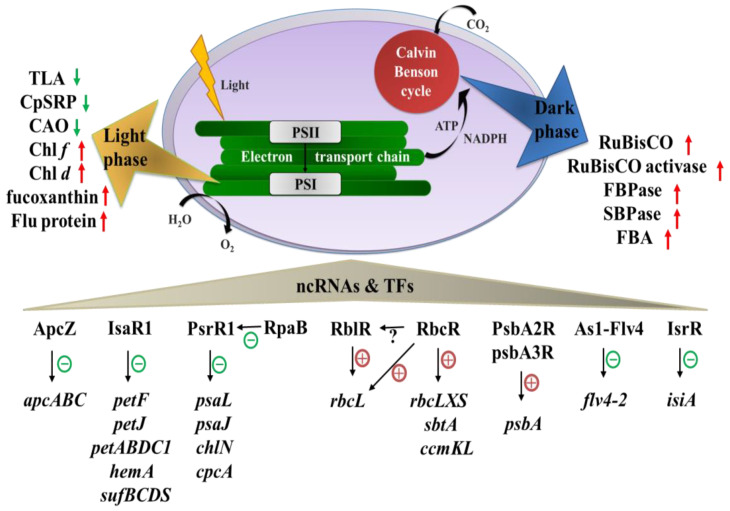
Even though sunlight energy far outweighs the energy required by human activities, its utilization is a key goal in the field of renewable energies. Microalgae have emerged as a promising new and sustainable feedstock for meeting rising food and feed demand. Because traditional methods of microalgal improvement are likely to have reached their limits, genetic engineering is expected to allow for further increases in the photosynthesis and productivity of microalgae. Understanding the mechanisms that control photosynthesis will enable researchers to identify targets for genetic engineering and, in the end, increase biomass yield, offsetting the costs of cultivation systems and downstream biomass processing. This review describes the molecular events that happen during photosynthesis and microalgal productivity through genetic engineering and discusses future strategies and the limitations of genetic engineering in microalgal productivity. We highlight the major achievements in manipulating the fundamental mechanisms of microalgal photosynthesis and biomass production, as well as promising approaches for making significant contributions to upcoming microalgal-based biotechnology.
尽管太阳能远远超过人类活动所需的能量,但它的利用是可再生能源领域的一个关键目标。微藻作为一种有前途的新型可持续饲料原料,能够满足不断增长的粮食和饲料需求。由于传统的微藻改良方法可能已经达到了极限,因此遗传工程有望进一步提高微藻的光合作用和生产力。了解控制光合作用的机制将使研究人员能够确定遗传工程的目标,最终提高生物量产量,抵消培养系统和下游生物量加工的成本。本综述描述了通过遗传工程提高微藻生产力和光合作用的分子事件,并讨论了未来的策略和遗传工程在微藻生产力方面的局限性。我们强调了操纵微藻光合作用和生物量生产基本机制的主要成就,以及为即将到来的基于微藻的生物技术做出重大贡献的有前途的方法。