School of Life Sciences, Tsinghua University, Beijing, 100084, China.
State Key Laboratory of Proteomics, Beijing Proteome Research Center, National Center for Protein Sciences (The PHOENIX center, Beijing), Beijing Institute of Lifeomics, Beijing, 102206, China.
Nat Commun. 2023 Feb 14;14(1):835. doi: 10.1038/s41467-023-35797-6.
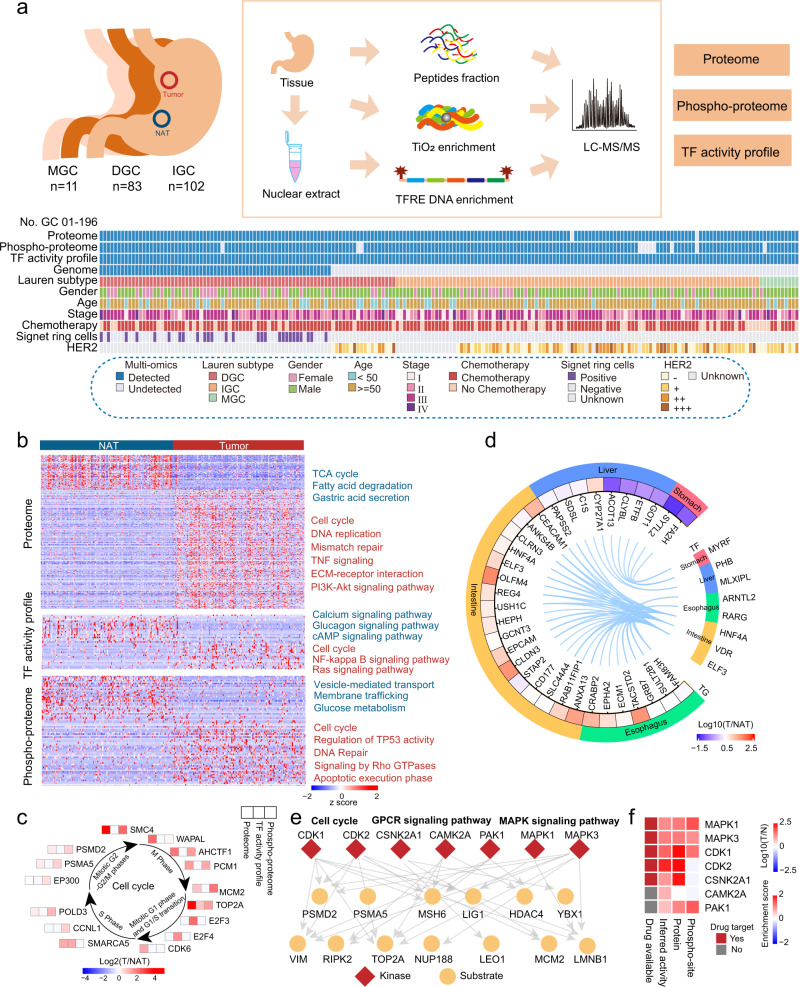
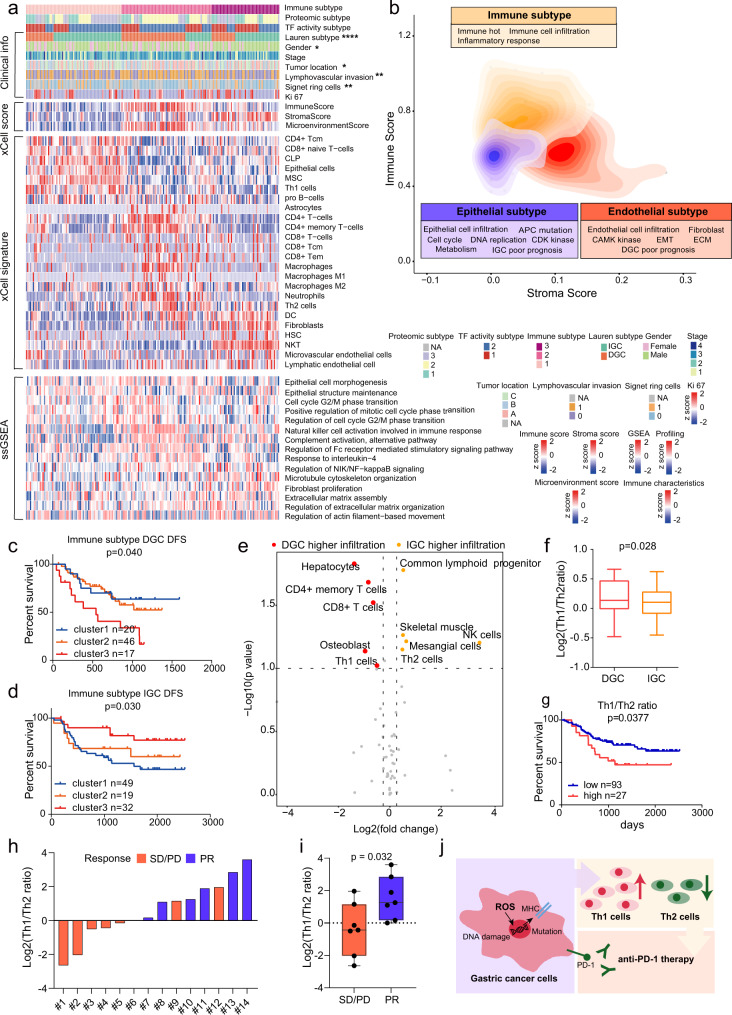
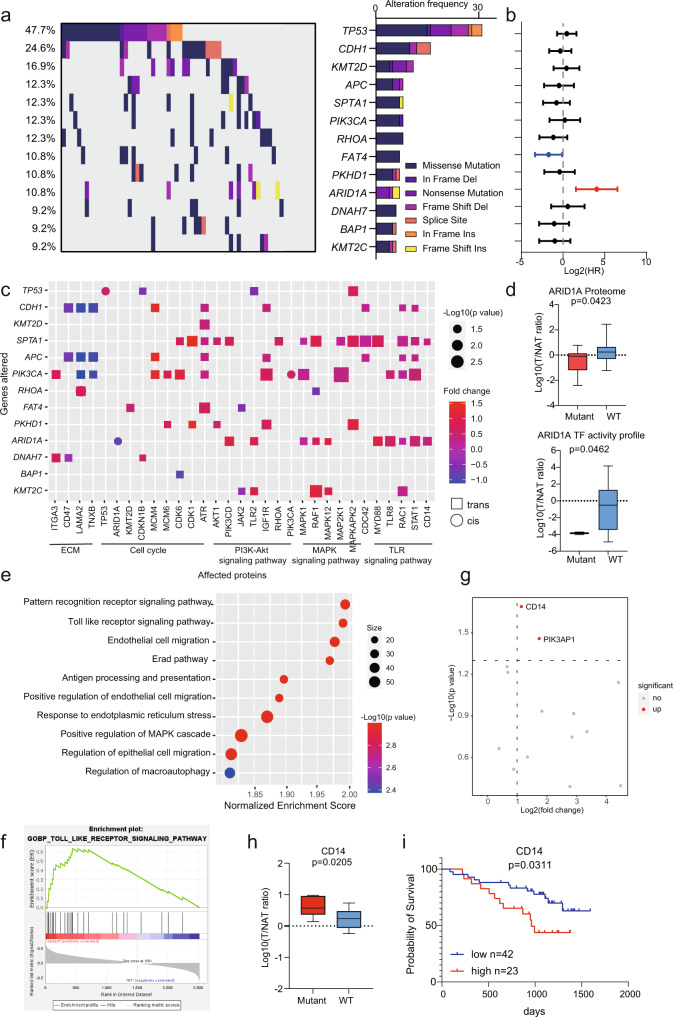
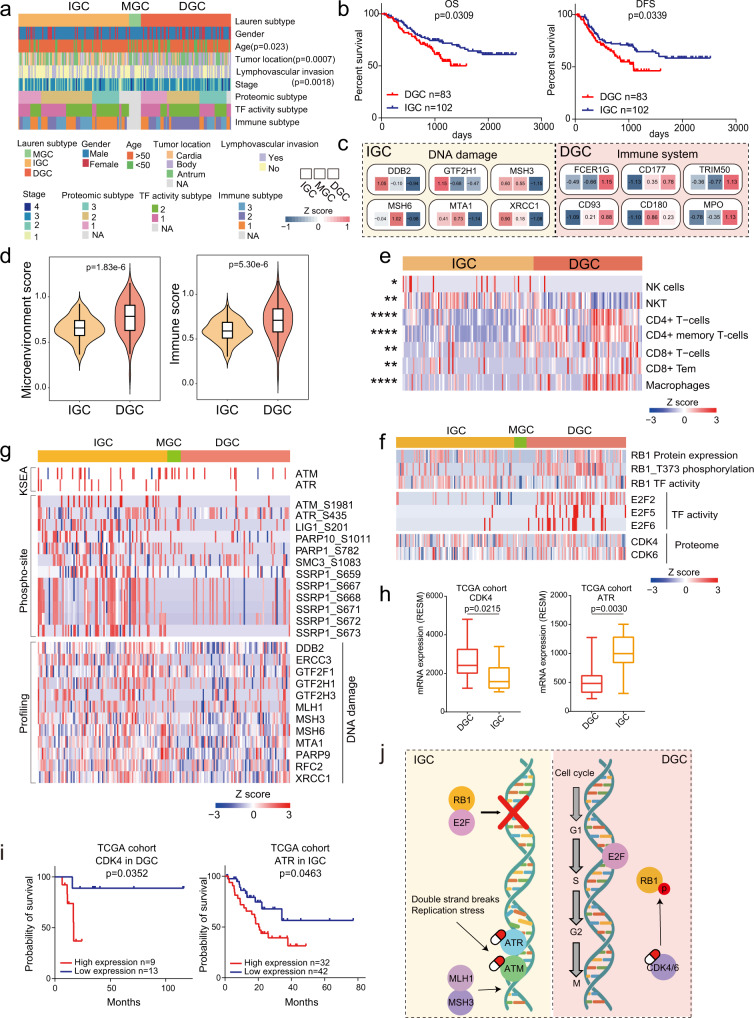
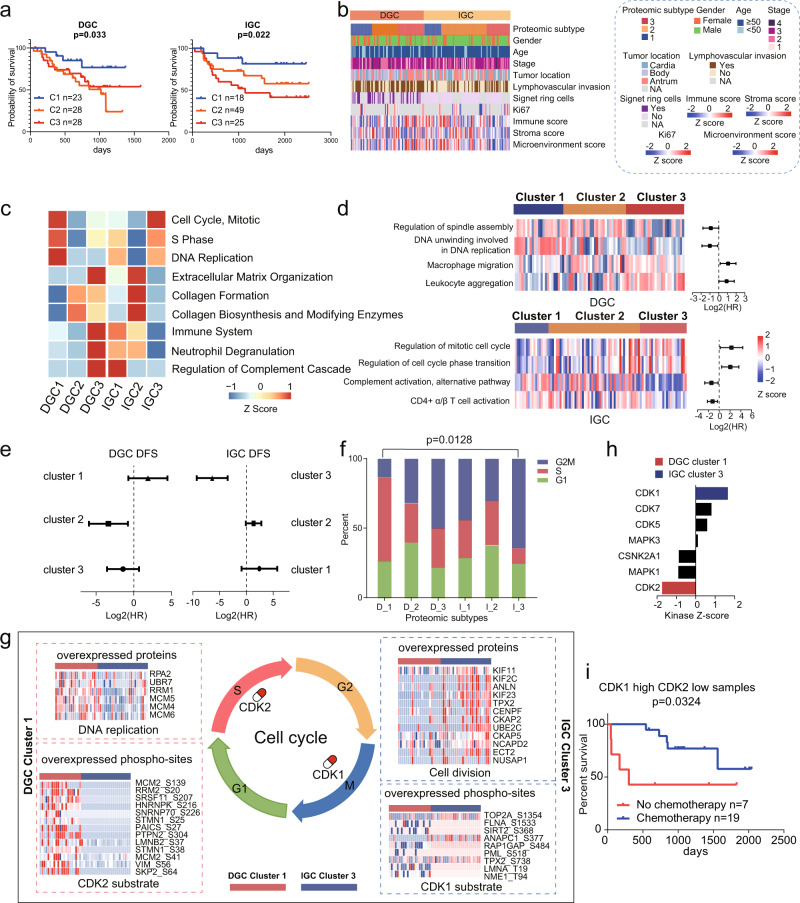
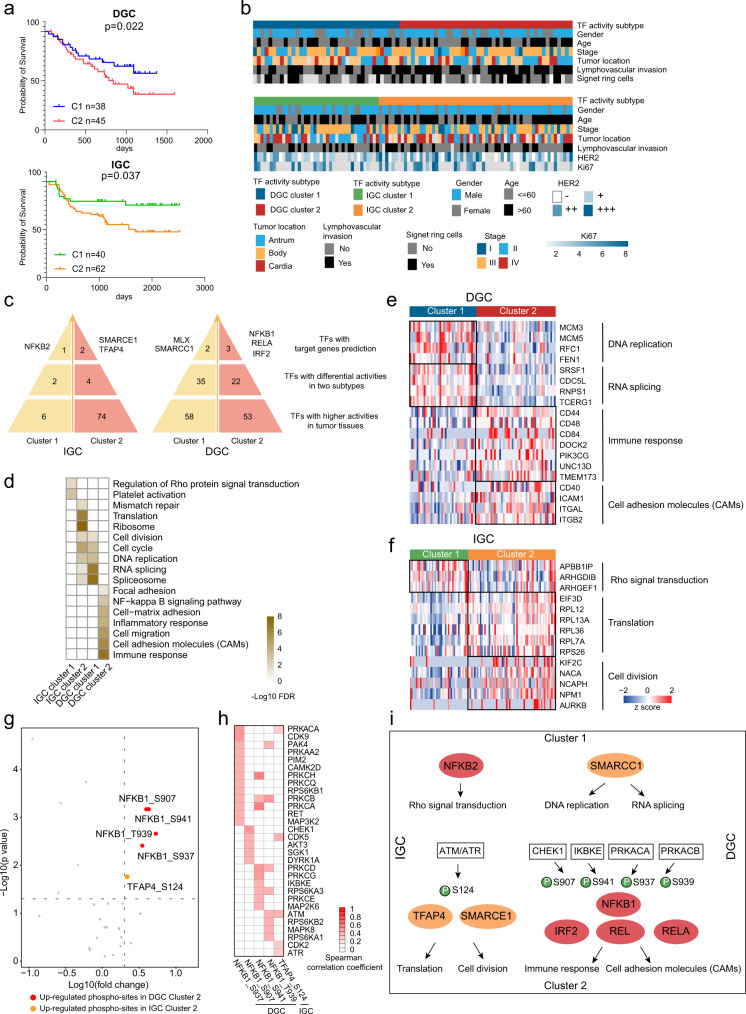
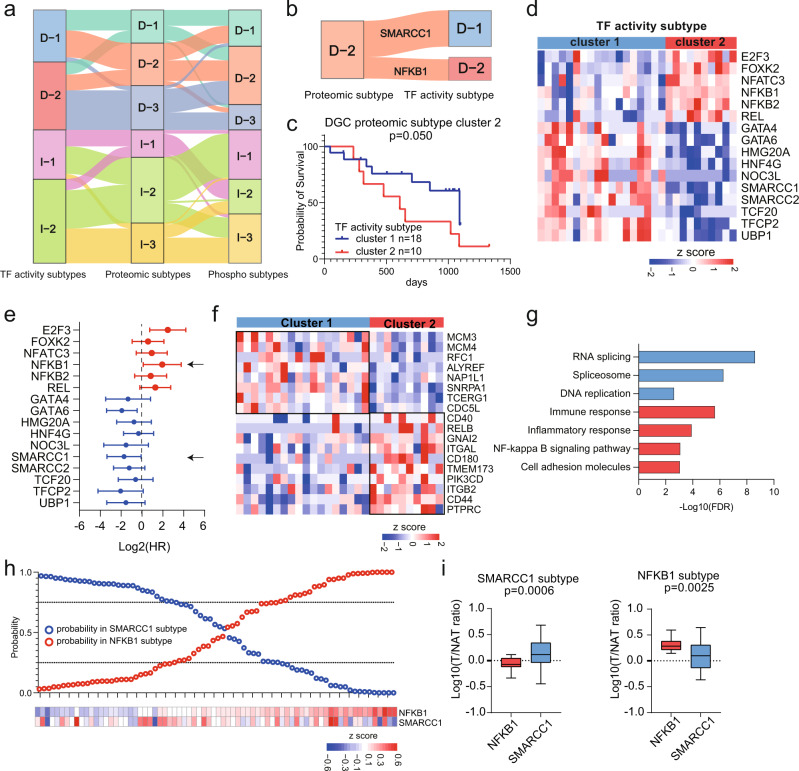
Diffuse-type gastric cancer (DGC) and intestinal-type gastric cancer (IGC) are the major histological types of gastric cancer (GC). The molecular mechanism underlying DGC and IGC differences are poorly understood. In this research, we carry out multilevel proteomic analyses, including proteome, phospho-proteome, and transcription factor (TF) activity profiles, of 196 cases covering DGC and IGC in Chinese patients. Integrative proteogenomic analysis reveals ARIDIA mutation associated with opposite prognostic effects between DGC and IGC, via diverse influences on their corresponding proteomes. Systematical comparison and consensus clustering analysis identify three subtypes of DGC and IGC, respectively, based on distinct patterns of the cell cycle, extracellular matrix organization, and immune response-related proteins expression. TF activity-based subtypes demonstrate that the disease progressions of DGC and IGC were regulated by SWI/SNF and NFKB complexes. Furthermore, inferred immune cell infiltration and immune clustering show Th1/Th2 ratio is an indicator for immunotherapeutic effectiveness, which is validated in an independent GC anti-PD1 therapeutic patient group. Our multilevel proteomic analyses enable a more comprehensive understanding of GC and can further advance the precision medicine.
弥漫型胃癌(DGC)和肠型胃癌(IGC)是胃癌(GC)的主要组织学类型。弥漫型胃癌和肠型胃癌差异的分子机制尚不清楚。在这项研究中,我们对包括 196 例中国患者的 DGC 和 IGC 在内的病例进行了多层次蛋白质组学分析,包括蛋白质组、磷酸化蛋白质组和转录因子(TF)活性谱分析。整合蛋白质基因组分析揭示了 ARIDIA 突变与 DGC 和 IGC 之间相反的预后效应相关,通过对其相应蛋白质组的不同影响。系统比较和共识聚类分析分别确定了三种 DGC 和 IGC 亚型,基于细胞周期、细胞外基质组织和免疫反应相关蛋白表达的不同模式。基于 TF 活性的亚型表明,DGC 和 IGC 的疾病进展受 SWI/SNF 和 NFKB 复合物调节。此外,推断的免疫细胞浸润和免疫聚类表明 Th1/Th2 比值是免疫治疗效果的一个指标,在一个独立的 GC 抗 PD1 治疗患者组中得到了验证。我们的多层次蛋白质组学分析使我们能够更全面地了解 GC,并进一步推进精准医学。