Department of Computer Science, School of Mathematical and Computer Sciences, Heriot-Watt University, Edinburgh, UK.
Division of Pathology, Centre for Comparative Pathology, Edinburgh Cancer Research Centre, Institute of Cancer and Genetics, University of Edinburgh, Crewe Road, Edinburgh, EH4 2XU, UK.
BMC Med Inform Decis Mak. 2023 Feb 15;23(1):36. doi: 10.1186/s12911-023-02111-9.
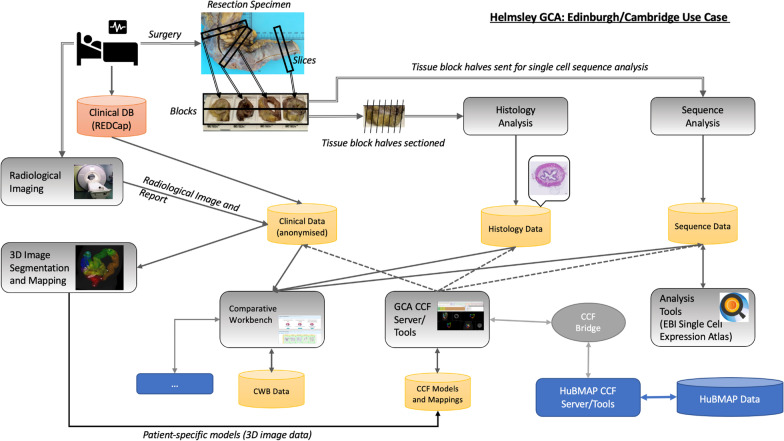
The Human Cell Atlas resource will deliver single cell transcriptome data spatially organised in terms of gross anatomy, tissue location and with images of cellular histology. This will enable the application of bioinformatics analysis, machine learning and data mining revealing an atlas of cell types, sub-types, varying states and ultimately cellular changes related to disease conditions. To further develop the understanding of specific pathological and histopathological phenotypes with their spatial relationships and dependencies, a more sophisticated spatial descriptive framework is required to enable integration and analysis in spatial terms.
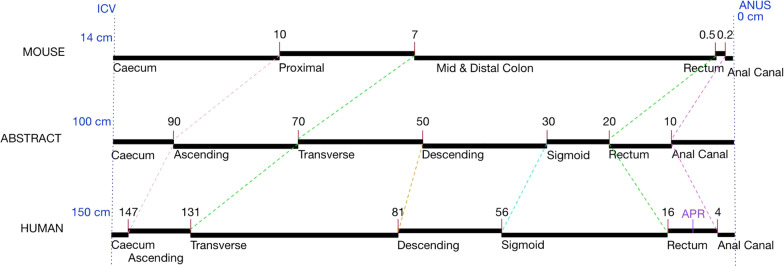
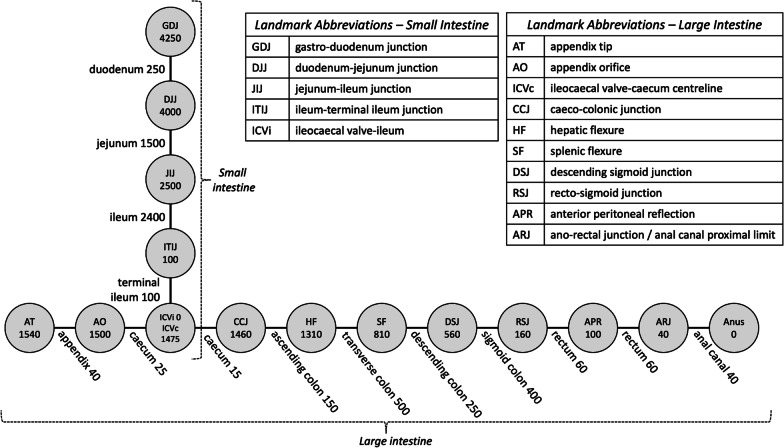
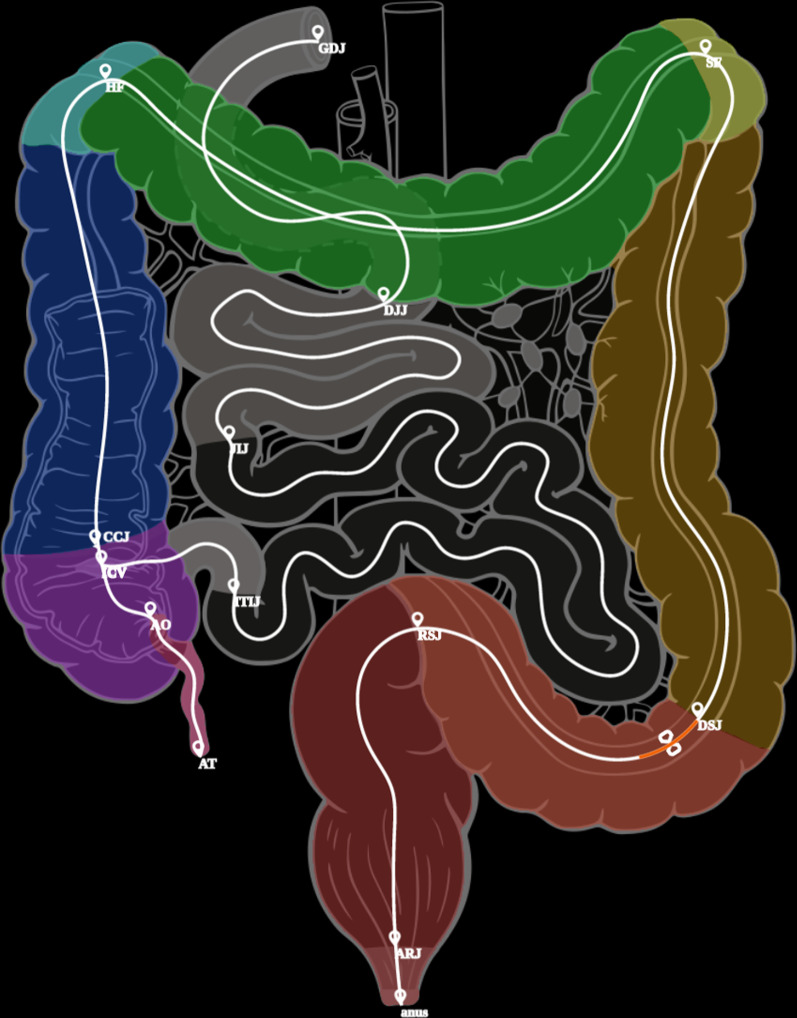
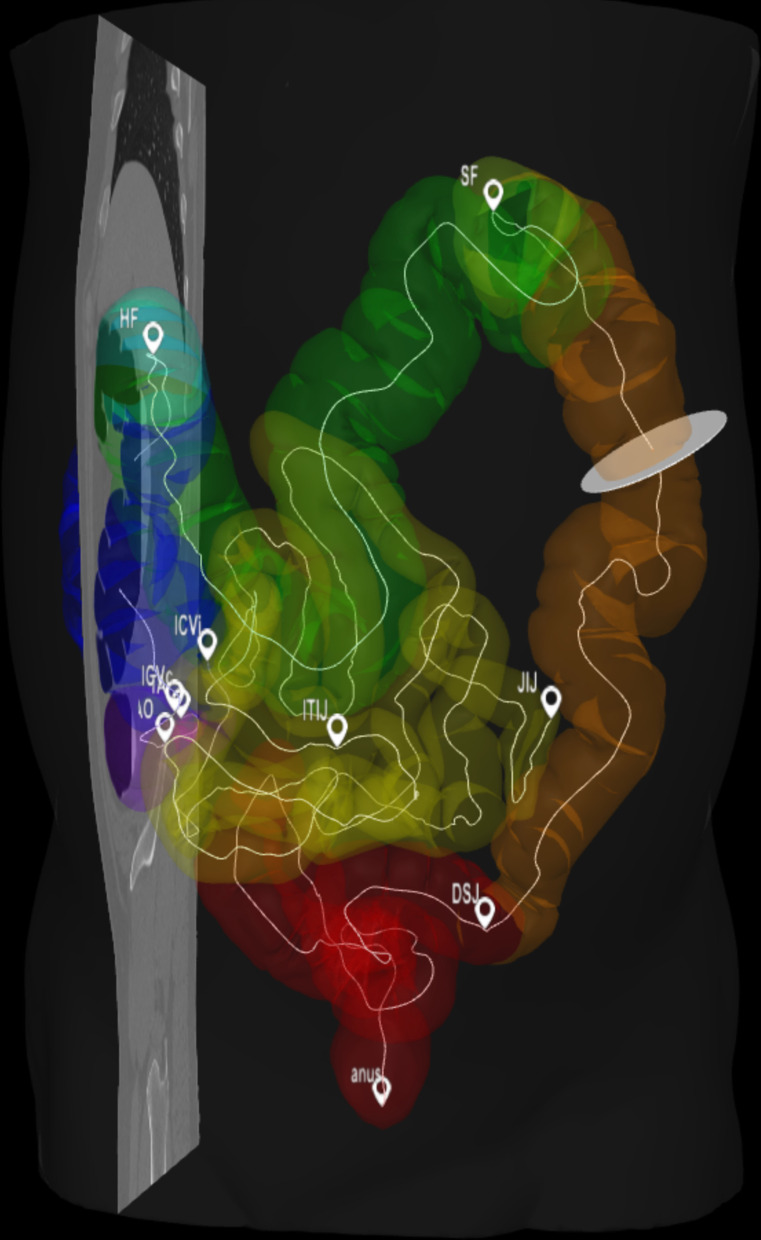
We describe a conceptual coordinate model for the Gut Cell Atlas (small and large intestines). Here, we focus on a Gut Linear Model (1-dimensional representation based on the centreline of the gut) that represents the location semantics as typically used by clinicians and pathologists when describing location in the gut. This knowledge representation is based on a set of standardised gut anatomy ontology terms describing regions in situ, such as ileum or transverse colon, and landmarks, such as ileo-caecal valve or hepatic flexure, together with relative or absolute distance measures. We show how locations in the 1D model can be mapped to and from points and regions in both a 2D model and 3D models, such as a patient's CT scan where the gut has been segmented.
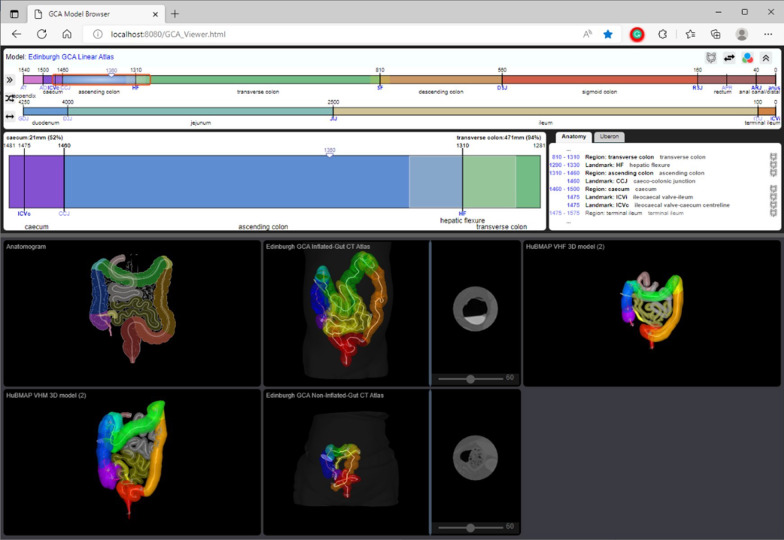
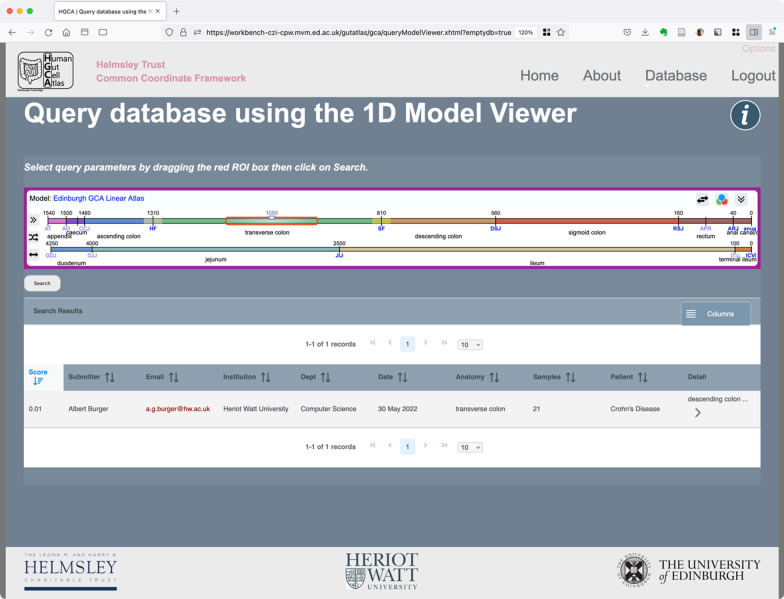
The outputs of this work include 1D, 2D and 3D models of the human gut, delivered through publicly accessible Json and image files. We also illustrate the mappings between models using a demonstrator tool that allows the user to explore the anatomical space of the gut. All data and software is fully open-source and available online.
Small and large intestines have a natural "gut coordinate" system best represented as a 1D centreline through the gut tube, reflecting functional differences. Such a 1D centreline model with landmarks, visualised using viewer software allows interoperable translation to both a 2D anatomogram model and multiple 3D models of the intestines. This permits users to accurately locate samples for data comparison.
人类细胞图谱资源将提供根据大体解剖、组织位置以及细胞组织学图像组织的单细胞转录组数据。这将使生物信息学分析、机器学习和数据挖掘得以应用,揭示细胞类型、亚型、不同状态的图谱,并最终揭示与疾病状况相关的细胞变化。为了进一步了解具有空间关系和依赖性的特定病理和组织病理学表型,需要更复杂的空间描述框架来实现空间方面的集成和分析。
我们描述了肠道细胞图谱(小肠和大肠)的概念坐标模型。在这里,我们专注于肠道线性模型(基于肠道中心线的一维表示),它代表了临床医生和病理学家在描述肠道位置时通常使用的位置语义。这种知识表示基于一组标准化的肠道解剖学本体术语,描述了原位区域,如回肠或横结肠,以及地标,如回盲瓣或肝曲,以及相对或绝对距离测量。我们展示了如何将一维模型中的位置映射到二维和三维模型(如肠道已分割的患者 CT 扫描)中的点和区域,以及如何将其反向映射。
这项工作的输出包括通过可公开访问的 Json 和图像文件提供的一维、二维和三维人类肠道模型。我们还使用演示工具说明了模型之间的映射,该工具允许用户探索肠道的解剖空间。所有数据和软件均完全开源,并可在线获取。
小肠和大肠具有天然的“肠道坐标”系统,最好用穿过肠道管的一维中心线表示,反映了功能差异。这种带有地标、使用查看器软件可视化的一维中心线模型可以与二维解剖图模型和多个肠道三维模型进行互操作转换。这允许用户准确定位样本以进行数据比较。