Menzies Centre for Health Policy and Economics, Faculty of Medicine and Health, School of Public Health, The University of Sydney, Sydney, Australia.
Health Care Management, College of Business Government and Law, Flinders University, Adelaide, Australia.
BMC Public Health. 2023 Feb 20;23(1):363. doi: 10.1186/s12889-023-15241-6.
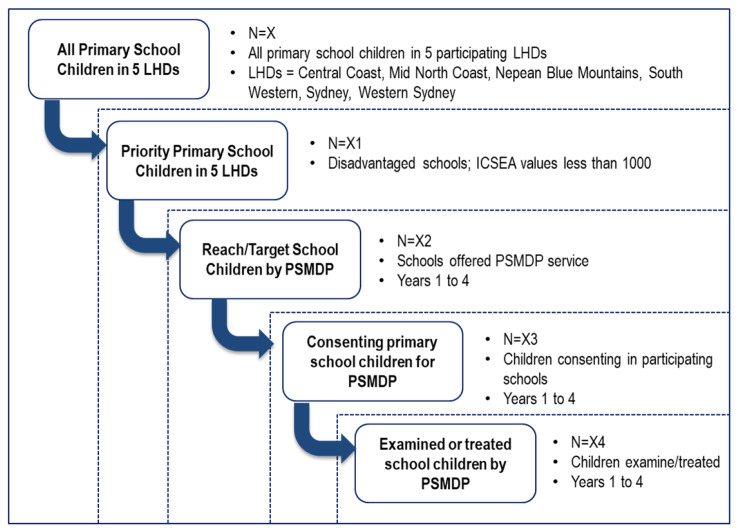
Socioeconomically disadvantaged children are disproportionately affected by oral disease. Mobile dental services help underserved communities overcome barriers to accessing health care, including time, geography, and trust. The NSW Health Primary School Mobile Dental Program (PSMDP) is designed to provide diagnostic and preventive dental services to children at their schools. The PSMDP is mainly targeted toward high-risk children and priority populations. This study aims to evaluate the program's performance across five local health districts (LHDs) where the program is being implemented.
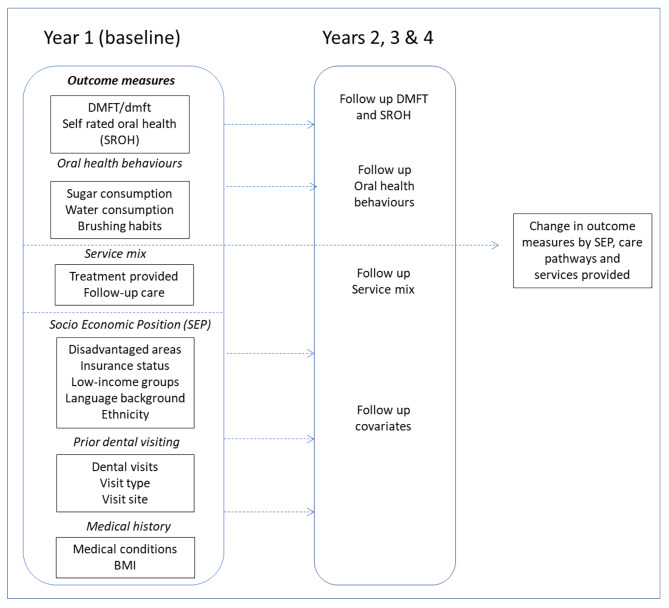
The evaluation will use routinely collected administrative data, along with other program-specific data sources, from the district public oral health services to conduct a statistical analysis that determines the reach and uptake of the program, its effectiveness, and the associated costs and cost-consequences. The PSMDP evaluation program utilises data from Electronic Dental Records (EDRs) and other data sources, including patient demographics, service mix, general health, oral health clinical data and risk factor information. The overall design includes cross-sectional and longitudinal components. The design combines comprehensive output monitoring across the five participating LHDs and investigates the associations between socio-demographic factors, service patterns and health outcomes. Time series analysis using difference-in-difference estimation will be conducted across the four years of the program, involving services, risk factors, and health outcomes. Comparison groups will be identified via propensity matching across the five participating LHDs. An economic analysis will estimate the costs and cost-consequences for children who participate in the program versus the comparison group.
The use of EDRs for oral health services evaluation research is a relatively new approach, and the evaluation works within the limitations and strengths of utilising administrative datasets. The study will also provide avenues to improve the quality of data collected and system-level improvements to better enable future services to be aligned with disease prevalence and population needs.
社会经济处于不利地位的儿童受到口腔疾病的影响不成比例。移动牙科服务帮助服务不足的社区克服获得医疗保健的障碍,包括时间、地理位置和信任。新南威尔士州卫生署(NSW Health)小学流动牙科计划(PSMDP)旨在为学校的儿童提供诊断和预防牙科服务。PSMDP 主要针对高风险儿童和优先人群。本研究旨在评估该计划在实施该计划的五个地方卫生区(LHD)的表现。
该评估将使用常规收集的行政数据以及来自地区公共口腔卫生服务的其他特定于计划的数据来源,进行统计分析,以确定该计划的覆盖范围和参与度、其有效性以及相关成本和成本后果。PSMDP 评估计划利用电子牙科记录(EDR)和其他数据源的数据,包括患者人口统计学、服务组合、一般健康状况、口腔健康临床数据和风险因素信息。总体设计包括横断面和纵向部分。该设计结合了五个参与 LHD 的全面产出监测,并调查了社会人口统计学因素、服务模式和健康结果之间的关联。计划的四年内将使用差异中的差异估计进行时间序列分析,涉及服务、风险因素和健康结果。将通过五个参与的 LHD 进行倾向匹配来确定对照组。经济分析将估计参与该计划的儿童与对照组相比的成本和成本后果。
电子牙科记录在口腔健康服务评估研究中的使用是一种相对较新的方法,该评估在利用行政数据集的局限性和优势范围内开展工作。该研究还将提供改善数据收集质量和系统水平改进的途径,以便更好地使未来的服务与疾病流行率和人口需求保持一致。