Sanz Leandro R D, Laureys Steven, Gosseries Olivia
Coma Science Group, GIGA Consciousness, University of Liège, Liège, Belgium.
Centre du Cerveau, University Hospital of Liège, Liège, Belgium.
Int J Clin Health Psychol. 2023 Jul-Sep;23(3):100370. doi: 10.1016/j.ijchp.2023.100370. Epub 2023 Feb 3.
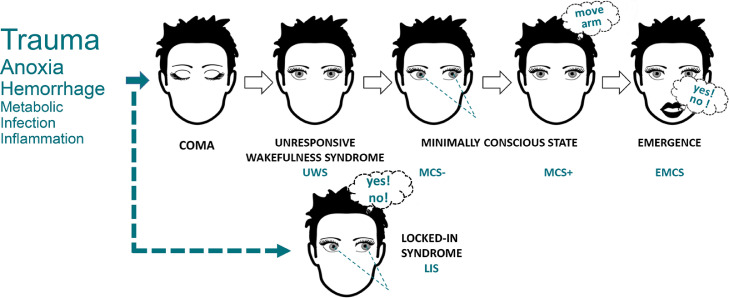
Understanding the mechanisms underlying human consciousness is pivotal to improve the prognostication and treatment of severely brain-injured patients. Consciousness remains an elusive concept and the identification of its neural correlates is an active subject of research, however recent neuroscientific advances have allowed scientists to better characterize disorders of consciousness. These breakthroughs question the historical nomenclature and our current management of post-comatose patients.
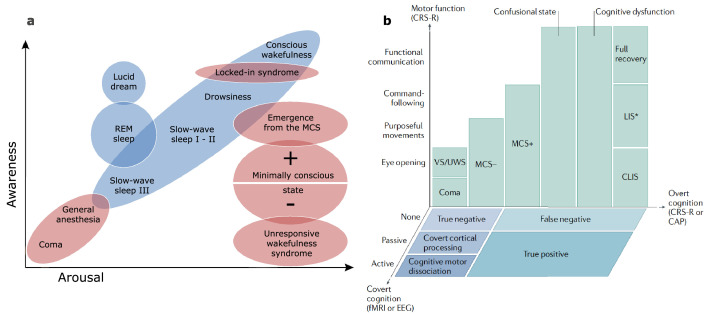
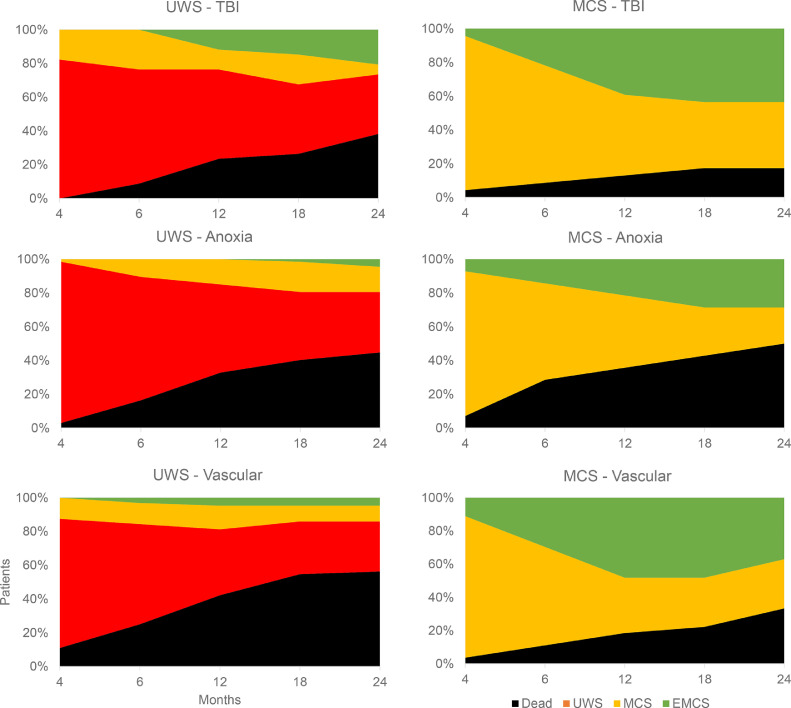
This review examines the contribution of consciousness neurosciences to the current clinical management of severe brain injury. It investigates the major impact of consciousness disorders on healthcare systems, the scientific frameworks employed to identify their neural correlates and how evidence-based data from neuroimaging research have reshaped the landscape of post-coma care in recent years.
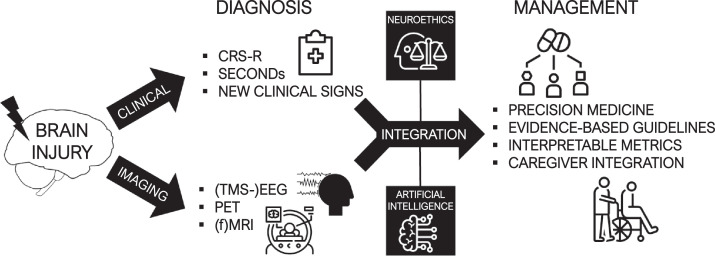
Our increased ability to detect behavioral and neurophysiological signatures of consciousness has led to significant changes in taxonomy and clinical practice. We advocate for a multimodal framework for the management of severely brain-injured patients based on precision medicine and evidence-based decisions, integrating epidemiology, health economics and neuroethics.
Major progress in brain imaging and clinical assessment have opened the door to a new era of post-coma care based on standardized neuroscientific evidence. We highlight its implications in clinical applications and call for improved collaborations between researchers and clinicians to better translate findings to the bedside.
了解人类意识背后的机制对于改善重型颅脑损伤患者的预后和治疗至关重要。意识仍然是一个难以捉摸的概念,确定其神经关联是一个活跃的研究课题,然而最近的神经科学进展使科学家能够更好地描述意识障碍。这些突破对历史命名法以及我们目前对昏迷后患者的管理提出了质疑。
本综述探讨了意识神经科学对当前重型颅脑损伤临床管理的贡献。它研究了意识障碍对医疗系统的主要影响、用于确定其神经关联的科学框架,以及近年来神经影像学研究的循证数据如何重塑了昏迷后护理的格局。
我们检测意识行为和神经生理特征的能力增强,导致了分类学和临床实践的重大变化。我们倡导基于精准医学和循证决策,整合流行病学、卫生经济学和神经伦理学,建立一个用于管理重型颅脑损伤患者的多模式框架。
脑成像和临床评估的重大进展开启了一个基于标准化神经科学证据的昏迷后护理新时代。我们强调其在临床应用中的意义,并呼吁研究人员和临床医生加强合作,以便更好地将研究结果转化到床边。