Department of Nutrition and Food Safety, Zhejiang Provincial Center for Disease Control and Prevention, Hangzhou, China.
Front Public Health. 2023 Feb 1;11:1127925. doi: 10.3389/fpubh.2023.1127925. eCollection 2023.
infection is a common cause of bacterial foodborne diseases (FBDs) globally. In this study, we aimed to explore the epidemiological and etiological characteristics of infection from 2012-2021 in Zhejiang Province, China.
Descriptive statistical methods were used to analyze the data reported by the Centers for Disease Control and Prevention at all levels in Zhejiang Province through the China National Foodborne Diseases Surveillance Network from 2012-2021.
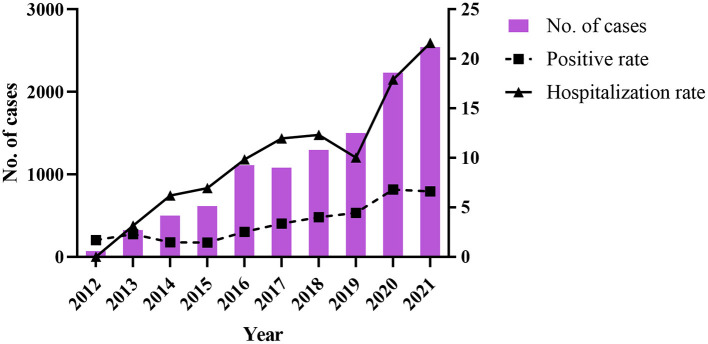
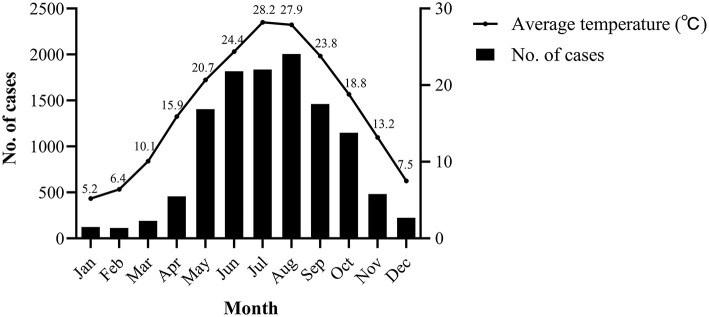
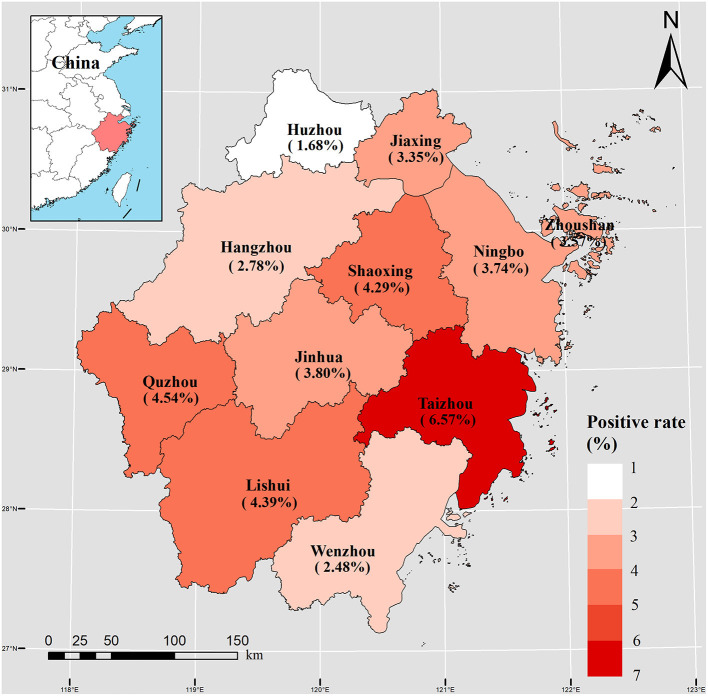
A total of 11,269 cases were reported, with an average positive rate of 3.65%, including 1,614 hospitalizations. A significant seasonal trend was observed for cases, with the highest rate over the summer period, peaking from May to October, accounting for 77.96%. The results indicated a higher positive rate among respondents aged 0-4 years, especially for the scattered children ( < 0.05). The highest number of infections were caused due to contaminated fruit and fruit products. Households (54.69%) had the most common exposure settings. Serotypes analysis revealed that (36.07%), (15.17%), and (6.05%) were the dominant strains among the 173 serotypes. Diarrhea, abdominal pain, fever, nausea, and vomiting were the main symptoms of these serotypes.
FBDs caused by are important issues for public health in Zhejiang Province, and there is a need to focus on the epidemiological and etiological characteristics to control infections.
感染是全球细菌性食源性疾病(FBD)的常见原因。本研究旨在探讨 2012-2021 年浙江省 感染的流行病学和病原学特征。
采用描述性统计方法,对 2012-2021 年通过中国国家食源性疾病监测网络,由浙江省各级疾病预防控制中心报告的数据进行分析。
共报告 11269 例病例,平均阳性率为 3.65%,包括 1614 例住院病例。病例呈显著季节性趋势,夏季发病率最高,从 5 月到 10 月达到高峰,占 77.96%。结果表明,0-4 岁组的阳性率较高,尤其是散居儿童(<0.05)。感染的主要来源是受污染的水果和水果产品。家庭(54.69%)是最常见的暴露场所。血清型分析显示,(36.07%)、(15.17%)和(6.05%)是 173 种血清型中的优势菌株。腹泻、腹痛、发热、恶心和呕吐是这些血清型的主要症状。
浙江省由 引起的 FBD 对公共卫生是一个重要问题,需要关注其流行病学和病原学特征,以控制 感染。