Straczkiewicz Marcin, Huang Emily J, Onnela Jukka-Pekka
Department of Biostatistics, Harvard University, Boston, MA, 02115, USA.
Department of Statistical Sciences, Wake Forest University, Winston Salem, NC, 27106, USA.
NPJ Digit Med. 2023 Feb 23;6(1):29. doi: 10.1038/s41746-022-00745-z.
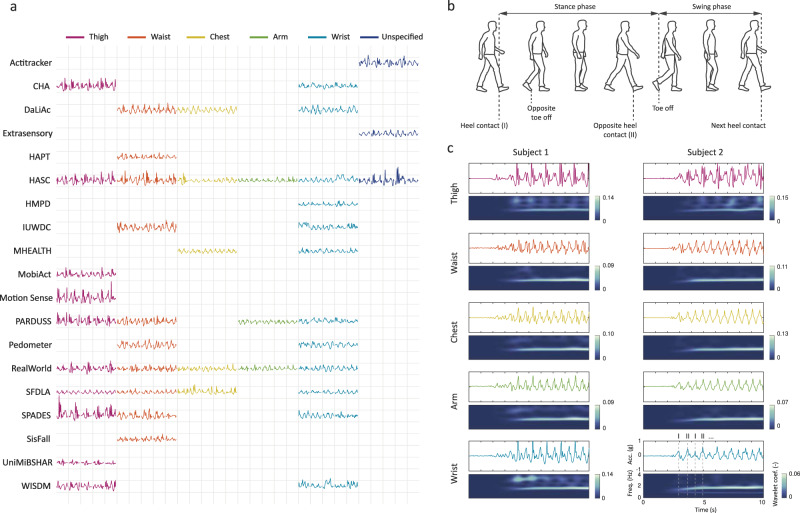
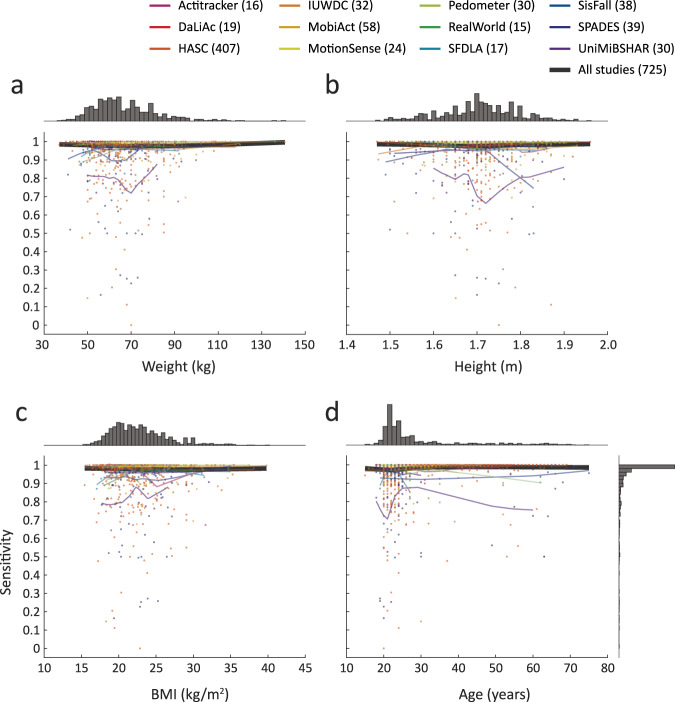
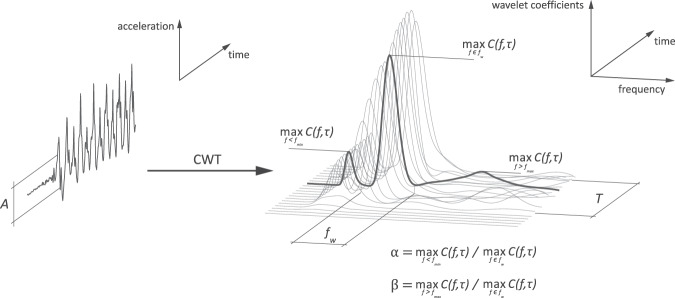
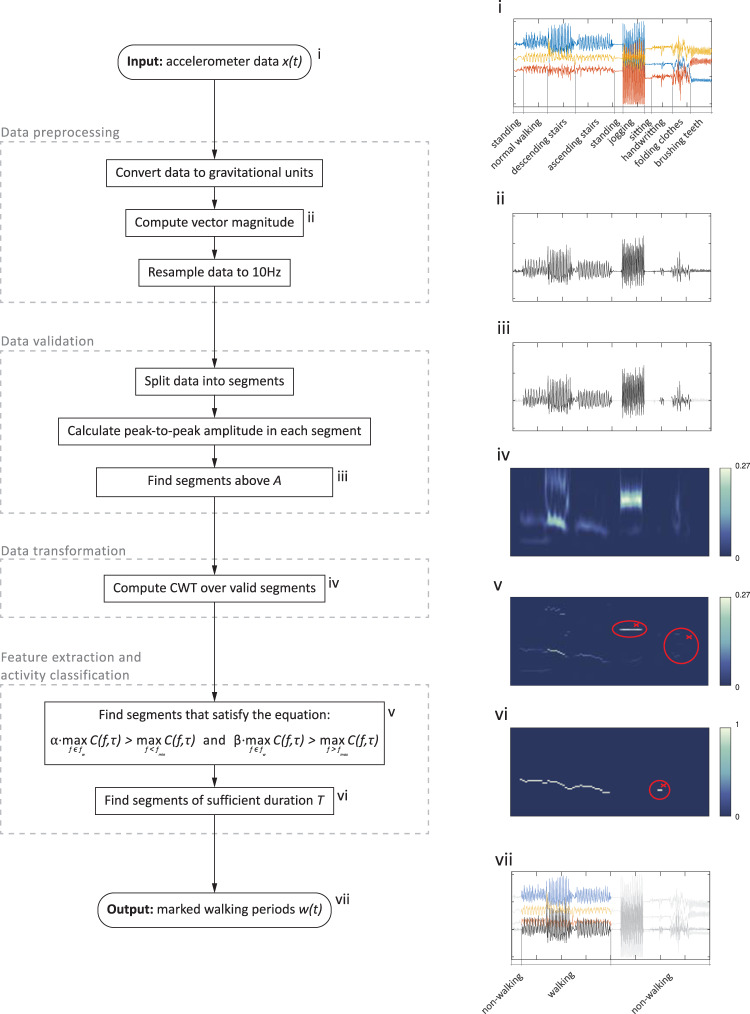
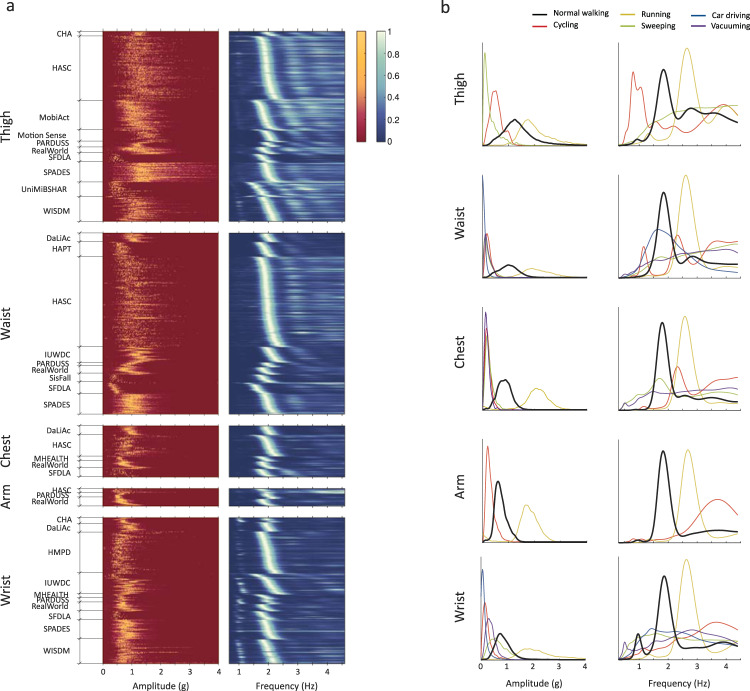
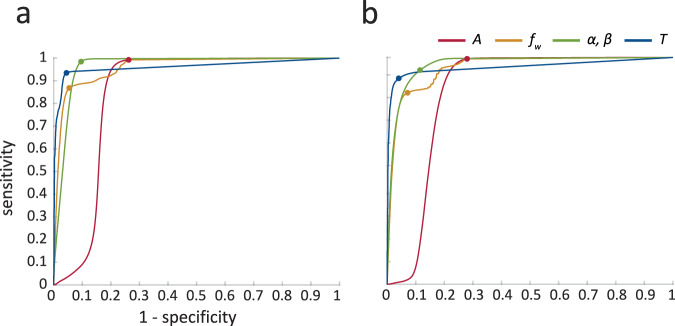
The ubiquity of personal digital devices offers unprecedented opportunities to study human behavior. Current state-of-the-art methods quantify physical activity using "activity counts," a measure which overlooks specific types of physical activities. We propose a walking recognition method for sub-second tri-axial accelerometer data, in which activity classification is based on the inherent features of walking: intensity, periodicity, and duration. We validate our method against 20 publicly available, annotated datasets on walking activity data collected at various body locations (thigh, waist, chest, arm, wrist). We demonstrate that our method can estimate walking periods with high sensitivity and specificity: average sensitivity ranged between 0.92 and 0.97 across various body locations, and average specificity for common daily activities was typically above 0.95. We also assess the method's algorithmic fairness to demographic and anthropometric variables and measurement contexts (body location, environment). Finally, we release our method as open-source software in Python and MATLAB.
个人数字设备的普及为研究人类行为提供了前所未有的机会。当前的先进方法使用“活动计数”来量化身体活动,这一测量方法忽略了特定类型的身体活动。我们提出了一种针对亚秒级三轴加速度计数据的步行识别方法,其中活动分类基于步行的固有特征:强度、周期性和持续时间。我们针对20个公开可用的、带有注释的数据集进行了验证,这些数据集是关于在身体各个部位(大腿、腰部、胸部、手臂、手腕)收集的步行活动数据。我们证明,我们的方法能够以高灵敏度和特异性估计步行时间段:在各个身体部位,平均灵敏度在0.92至0.97之间,常见日常活动的平均特异性通常高于0.95。我们还评估了该方法对人口统计学和人体测量学变量以及测量环境(身体部位、环境)的算法公平性。最后,我们将我们的方法作为开源软件以Python和MATLAB形式发布。