Zhang Shuangyan, Ru Xiaoshang, Zhang Libin, Gonçalves David, Yang Hongsheng, Xu Jialei
CAS Key Laboratory of Marine Ecology and Environmental Sciences, Institute of Oceanology, Chinese Academy of Sciences, Qingdao 266071, China.
Laboratory for Marine Ecology and Environmental Science, Qingdao National Laboratory for Marine Science and Technology, Qingdao 266237, China.
Biology (Basel). 2023 Jan 29;12(2):212. doi: 10.3390/biology12020212.
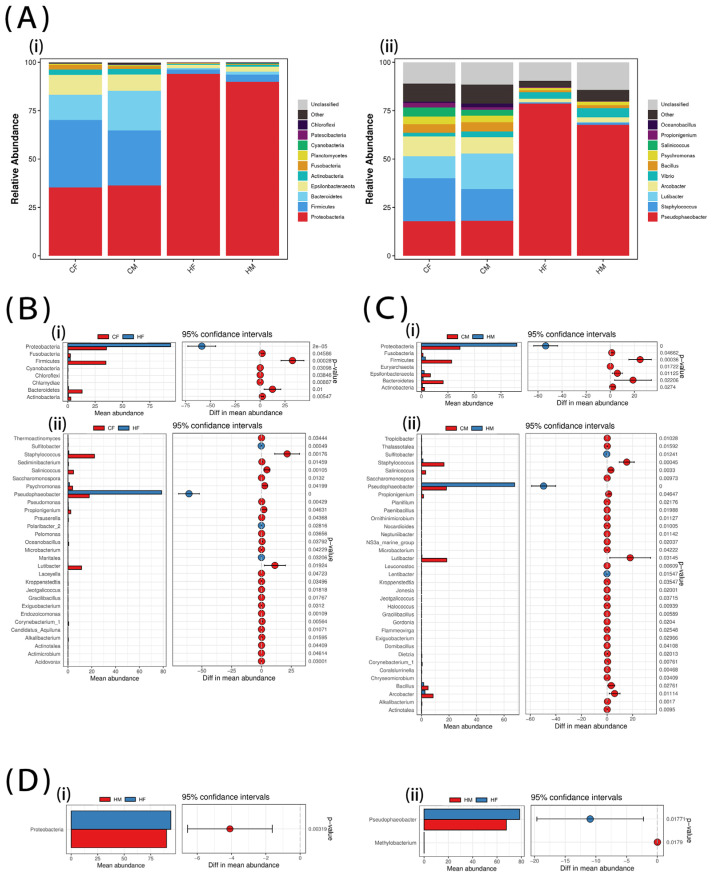
Parental nutrient reserves are directly related to reproductive performance in sea cucumbers. This study focused on the lipid requirements of male and female sea cucumbers during the reproductive stage and analyzed their physiological responses to a high-fat diet (HFD). The intestinal lipid metabolites and microbiome profile changed significantly in animals fed with the HFD, as given by an upregulation of metabolites related to lipid metabolism and an increase in the predominance of Proteobacteria in the microbiome, respectively. The metabolic responses of male and female sea cucumbers to the HFD differed, which in turn could have triggered sex-related differences in the intestinal microbiome. These results suggest that the lipid content in diets can be differentially adjusted for male and female sea cucumbers to improve nutrition and promote reproduction. This data contributes to a better understanding of the reproductive biology and sex differences of sea cucumbers.
亲体营养储备与海参的繁殖性能直接相关。本研究聚焦于海参繁殖期雌雄个体的脂质需求,并分析了它们对高脂饮食(HFD)的生理反应。喂食HFD的动物肠道脂质代谢产物和微生物组谱发生了显著变化,分别表现为脂质代谢相关代谢产物上调以及微生物组中变形菌门优势度增加。雌雄海参对HFD的代谢反应不同,这反过来可能引发了肠道微生物组的性别相关差异。这些结果表明,可针对雌雄海参分别调整饮食中的脂质含量,以改善营养状况并促进繁殖。该数据有助于更好地理解海参的生殖生物学和性别差异。