Luiz Hugo, Oliveira Pinho Jacinta, Gaspar Maria Manuela
Research Institute for Medicines (iMed.ULisboa), Faculty of Pharmacy, Universidade de Lisboa, 1649-003 Lisboa, Portugal.
Biomedicines. 2023 Feb 2;11(2):435. doi: 10.3390/biomedicines11020435.
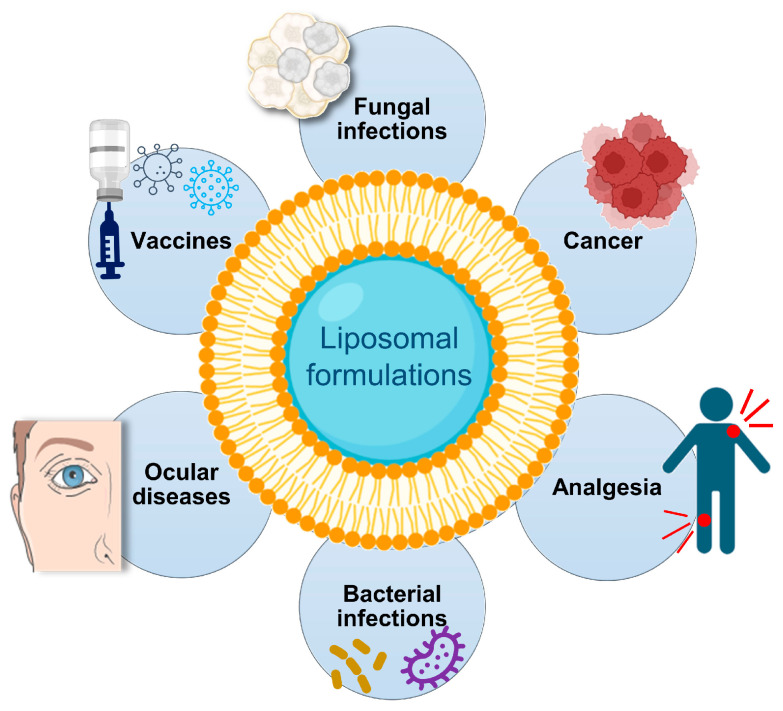
Nanomedicine, a promising area of medicine, employs nanosized tools for the diagnosis, prevention, and treatment of disease. Particularly, liposomes, lipid-based nanovesicles, are currently one of the most successful nanosystems, with extensive applications in the clinic and an increasing pipeline of products in preclinical and clinical development. These versatile nanotechnological tools are biocompatible and biodegradable, and can load a variety of molecules and, ultimately, improve the therapeutic performance of drugs while minimizing undesired side effects. In this review, we provide a brief description on liposomes' composition and classification and mainly focus on their clinical use in various areas, including disease management (e.g., cancer, fungal and bacterial infections, ocular pathologies), analgesia, vaccination, diagnostics, and immunosuppression in organ transplantation. Herein are described examples of current liposomal products already in the clinic, as well as the most recent clinical trials involving liposomes as effective and safe nanomedicine tools.
纳米医学是一个很有前景的医学领域,它使用纳米级工具来诊断、预防和治疗疾病。特别是脂质体,一种基于脂质的纳米囊泡,目前是最成功的纳米系统之一,在临床上有广泛应用,并且在临床前和临床开发阶段的产品管线也在不断增加。这些多功能的纳米技术工具具有生物相容性和可生物降解性,能够装载多种分子,并最终在将不良副作用降至最低的同时提高药物的治疗效果。在这篇综述中,我们简要介绍了脂质体的组成和分类,并主要关注它们在各个领域的临床应用,包括疾病管理(如癌症、真菌和细菌感染、眼部疾病)、镇痛、疫苗接种、诊断以及器官移植中的免疫抑制。本文介绍了目前已在临床应用的脂质体产品实例,以及涉及脂质体作为有效且安全的纳米医学工具的最新临床试验。