• 文献检索
  • 文档翻译
  • 深度研究
  • 学术资讯
  • Suppr Zotero 插件Zotero 插件
  • 邀请有礼
  • 套餐&价格
  • 历史记录
应用&插件
Suppr Zotero 插件Zotero 插件浏览器插件Mac 客户端Windows 客户端微信小程序
定价
高级版会员购买积分包购买API积分包
服务
文献检索文档翻译深度研究API 文档MCP 服务
关于我们
关于 Suppr公司介绍联系我们用户协议隐私条款
关注我们

Suppr 超能文献

核心技术专利:CN118964589B侵权必究
粤ICP备2023148730 号-1Suppr @ 2026

文献检索

告别复杂PubMed语法,用中文像聊天一样搜索,搜遍4000万医学文献。AI智能推荐,让科研检索更轻松。

立即免费搜索

文件翻译

保留排版,准确专业,支持PDF/Word/PPT等文件格式,支持 12+语言互译。

免费翻译文档

深度研究

AI帮你快速写综述,25分钟生成高质量综述,智能提取关键信息,辅助科研写作。

立即免费体验

基孔肯雅病毒及其包膜蛋白 E2 诱导小鼠痛觉过敏:抗 E2 单克隆抗体和靶向 TRPV1 的抑制作用。

Chikungunya Virus and Its Envelope Protein E2 Induce Hyperalgesia in Mice: Inhibition by Anti-E2 Monoclonal Antibodies and by Targeting TRPV1.

机构信息

Laboratory of Pain, Inflammation, Neuropathy, and Cancer, Department of Pathology, Londrina State University, Londrina 86057-970, PR, Brazil.

Laboratory of Molecular Virology, Carlos Chagas Institute/Fiocruz PR, Curitiba 81310-020, PR, Brazil.

出版信息

Cells. 2023 Feb 9;12(4):556. doi: 10.3390/cells12040556.

DOI:10.3390/cells12040556
PMID:36831223
原文链接:https://pmc.ncbi.nlm.nih.gov/articles/PMC9954636/
Abstract

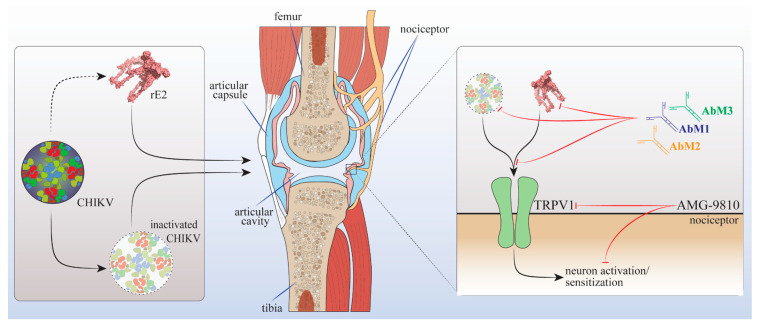
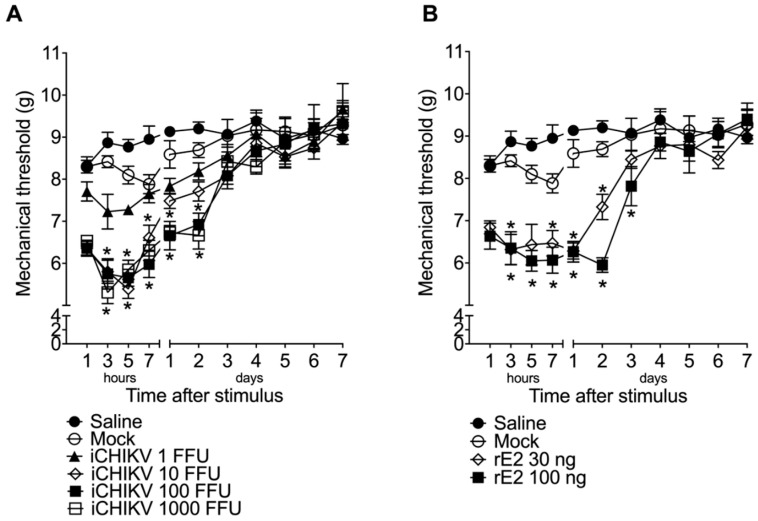
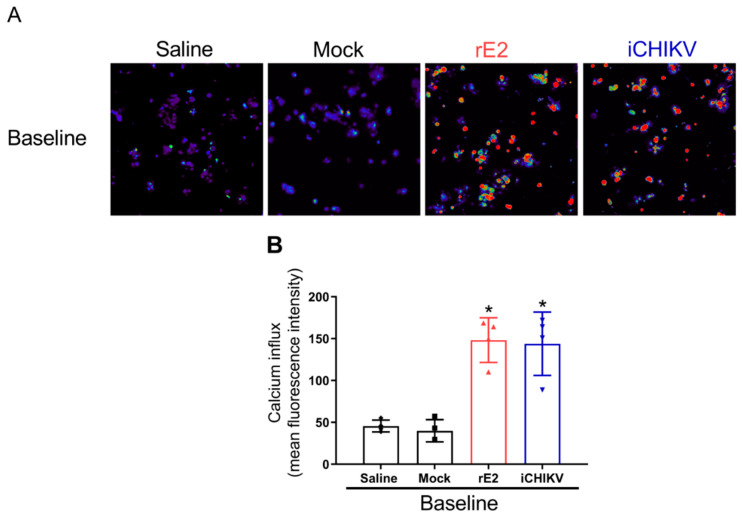
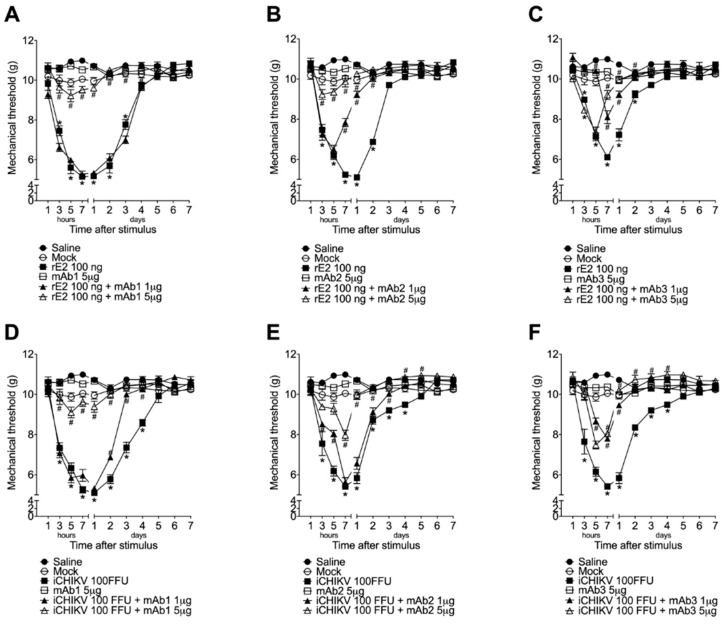
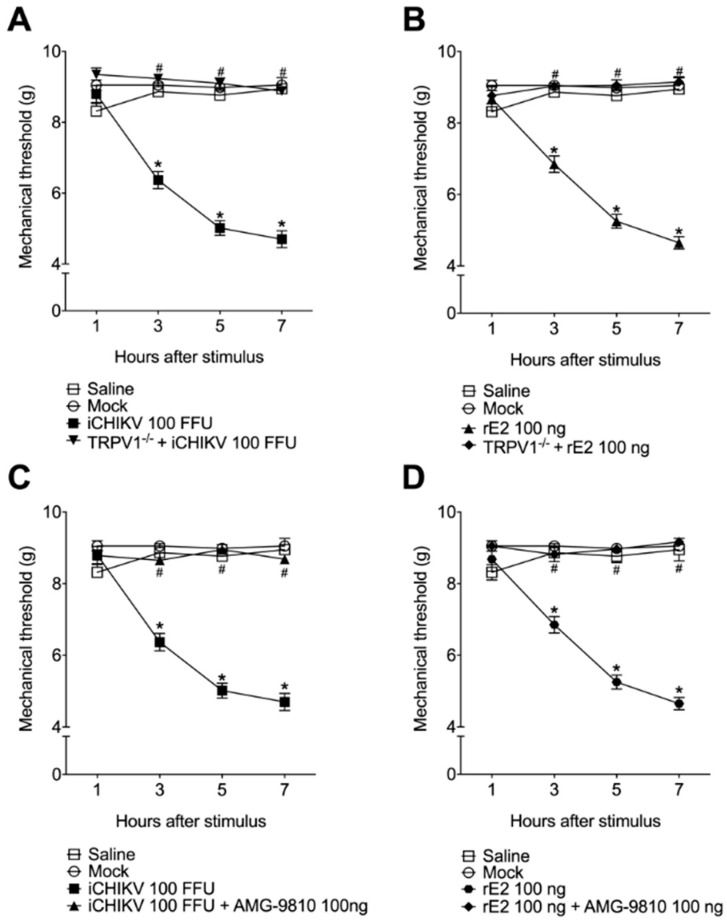
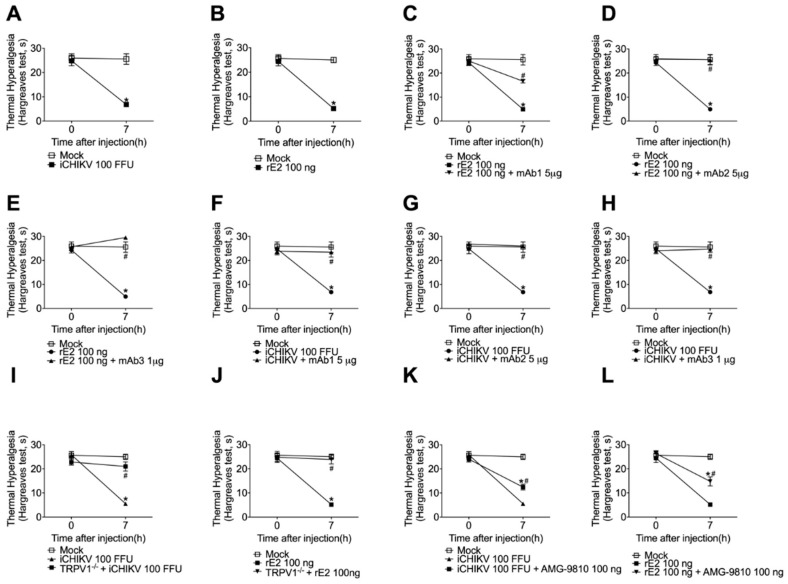
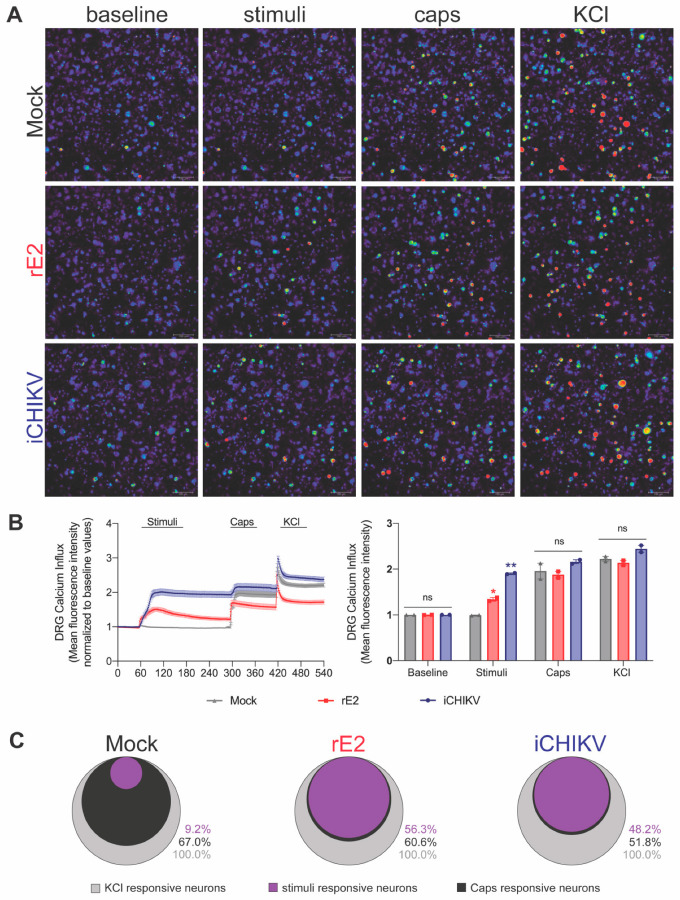
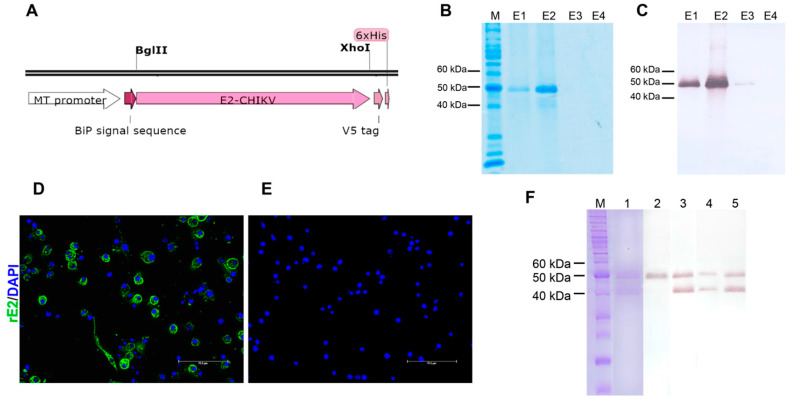
Chikungunya virus is an arthropod-borne infectious agent that causes Chikungunya fever disease. About 90% of the infected patients experience intense polyarthralgia, affecting mainly the extremities but also the large joints such as the knees. Chronic disease symptoms persist for months, even after clearance of the virus from the blood. Envelope proteins stimulate the immune response against the Chikungunya virus, becoming an important therapeutic target. We inactivated the Chikungunya virus (iCHIKV) and produced recombinant E2 (rE2) protein and three different types of anti-rE2 monoclonal antibodies. Using these tools, we observed that iCHIKV and rE2 protein induced mechanical hyperalgesia (electronic aesthesiometer test) and thermal hyperalgesia (Hargreaves test) in mice. These behavioral results were accompanied by the activation of dorsal root ganglia (DRG) neurons in mice, as observed by calcium influx. Treatment with three different types of anti-rE2 monoclonal antibodies and absence or blockade (AMG-9810 treatment) of transient receptor potential vanilloid 1 (TRPV1) channel diminished mechanical and thermal hyperalgesia in mice. iCHIKV and rE2 activated TRPV1+ mouse DRG neurons in vitro, demonstrating their ability to activate nociceptor sensory neurons directly. Therefore, our mouse data demonstrate that targeting E2 CHIKV protein with monoclonal antibodies and inhibiting TRPV1 channels are reasonable strategies to control CHIKV pain.

摘要

基孔肯雅热病毒是一种节肢动物传播的传染性病原体,可引起基孔肯雅热疾病。约 90%的感染患者会出现剧烈的多关节炎,主要影响四肢,但也会影响膝盖等大关节。慢性疾病症状会持续数月,即使病毒从血液中清除后也是如此。包膜蛋白刺激针对基孔肯雅热病毒的免疫反应,成为重要的治疗靶点。我们使基孔肯雅热病毒(iCHIKV)失活,并产生重组 E2(rE2)蛋白和三种不同类型的抗-rE2 单克隆抗体。使用这些工具,我们观察到 iCHIKV 和 rE2 蛋白在小鼠中诱导机械性痛觉过敏(电子压痛计测试)和热痛觉过敏(Hargreaves 测试)。这些行为结果伴随着小鼠背根神经节(DRG)神经元的激活,如钙内流观察到的那样。用三种不同类型的抗-rE2 单克隆抗体和瞬时受体电位香草酸 1(TRPV1)通道的缺失或阻断(AMG-9810 治疗)处理,可减轻小鼠的机械性和热痛觉过敏。iCHIKV 和 rE2 在体外激活 TRPV1+小鼠 DRG 神经元,证明它们能够直接激活伤害感受器感觉神经元。因此,我们的小鼠数据表明,用单克隆抗体靶向 E2 基孔肯雅热病毒蛋白和抑制 TRPV1 通道是控制基孔肯雅热疼痛的合理策略。
https://cdn.ncbi.nlm.nih.gov/pmc/blobs/3448/9954636/0b0d831874b5/cells-12-00556-g008.jpg
https://cdn.ncbi.nlm.nih.gov/pmc/blobs/3448/9954636/55d915650029/cells-12-00556-g001.jpg
https://cdn.ncbi.nlm.nih.gov/pmc/blobs/3448/9954636/51b97a85c39d/cells-12-00556-g002.jpg
https://cdn.ncbi.nlm.nih.gov/pmc/blobs/3448/9954636/495c485bd319/cells-12-00556-g003.jpg
https://cdn.ncbi.nlm.nih.gov/pmc/blobs/3448/9954636/b5557b614c41/cells-12-00556-g004.jpg
https://cdn.ncbi.nlm.nih.gov/pmc/blobs/3448/9954636/c11119264fb2/cells-12-00556-g005.jpg
https://cdn.ncbi.nlm.nih.gov/pmc/blobs/3448/9954636/eda811610f9f/cells-12-00556-g006.jpg
https://cdn.ncbi.nlm.nih.gov/pmc/blobs/3448/9954636/72c61a65bc67/cells-12-00556-g007.jpg
https://cdn.ncbi.nlm.nih.gov/pmc/blobs/3448/9954636/0b0d831874b5/cells-12-00556-g008.jpg
https://cdn.ncbi.nlm.nih.gov/pmc/blobs/3448/9954636/55d915650029/cells-12-00556-g001.jpg
https://cdn.ncbi.nlm.nih.gov/pmc/blobs/3448/9954636/51b97a85c39d/cells-12-00556-g002.jpg
https://cdn.ncbi.nlm.nih.gov/pmc/blobs/3448/9954636/495c485bd319/cells-12-00556-g003.jpg
https://cdn.ncbi.nlm.nih.gov/pmc/blobs/3448/9954636/b5557b614c41/cells-12-00556-g004.jpg
https://cdn.ncbi.nlm.nih.gov/pmc/blobs/3448/9954636/c11119264fb2/cells-12-00556-g005.jpg
https://cdn.ncbi.nlm.nih.gov/pmc/blobs/3448/9954636/eda811610f9f/cells-12-00556-g006.jpg
https://cdn.ncbi.nlm.nih.gov/pmc/blobs/3448/9954636/72c61a65bc67/cells-12-00556-g007.jpg
https://cdn.ncbi.nlm.nih.gov/pmc/blobs/3448/9954636/0b0d831874b5/cells-12-00556-g008.jpg

相似文献

1
Chikungunya Virus and Its Envelope Protein E2 Induce Hyperalgesia in Mice: Inhibition by Anti-E2 Monoclonal Antibodies and by Targeting TRPV1.基孔肯雅病毒及其包膜蛋白 E2 诱导小鼠痛觉过敏:抗 E2 单克隆抗体和靶向 TRPV1 的抑制作用。
Cells. 2023 Feb 9;12(4):556. doi: 10.3390/cells12040556.
2
Anti-Chikungunya Virus Monoclonal Antibody That Inhibits Viral Fusion and Release.抗基孔肯雅病毒单克隆抗体抑制病毒融合和释放。
J Virol. 2020 Sep 15;94(19). doi: 10.1128/JVI.00252-20.
3
A small antigenic determinant of the Chikungunya virus E2 protein is sufficient to induce neutralizing antibodies which are partially protective in mice.基孔肯雅病毒E2蛋白的一个小抗原决定簇足以诱导产生中和抗体,这些抗体在小鼠中具有部分保护作用。
PLoS Negl Trop Dis. 2015 Apr 23;9(4):e0003684. doi: 10.1371/journal.pntd.0003684. eCollection 2015 Apr.
4
Monoclonal antibody targeting chikungunya virus envelope 1 protein inhibits virus release.靶向基孔肯雅病毒包膜 1 蛋白的单克隆抗体抑制病毒释放。
Virology. 2014 Sep;464-465:111-117. doi: 10.1016/j.virol.2014.05.038. Epub 2014 Jul 24.
5
Exposure of epitope residues on the outer face of the chikungunya virus envelope trimer determines antibody neutralizing efficacy.基孔肯雅病毒包膜三聚体外侧表位残基的暴露决定抗体中和效力。
J Virol. 2014 Dec;88(24):14364-79. doi: 10.1128/JVI.01943-14. Epub 2014 Oct 1.
6
Development of a Specific CHIKV-E2 Monoclonal Antibody for Chikungunya Diagnosis.开发用于基孔肯雅热诊断的特异性 CHIKV-E2 单克隆抗体。
Virol Sin. 2019 Oct;34(5):563-571. doi: 10.1007/s12250-019-00135-y. Epub 2019 Jun 18.
7
Inhibition of transient receptor potential vanilloid 1 (TRPV1) channel regulates chikungunya virus infection in macrophages.瞬时受体电位香草酸亚型 1(TRPV1)通道的抑制作用可调节巨噬细胞中的基孔肯雅病毒感染。
Arch Virol. 2021 Jan;166(1):139-155. doi: 10.1007/s00705-020-04852-8. Epub 2020 Oct 30.
8
A potent neutralizing IgM mAb targeting the N218 epitope on E2 protein protects against Chikungunya virus pathogenesis.一种靶向E2蛋白上N218表位的强效中和性IgM单克隆抗体可预防基孔肯雅病毒发病。
MAbs. 2015;7(6):1178-94. doi: 10.1080/19420862.2015.1083664. Epub 2015 Aug 25.
9
A neutralizing monoclonal antibody targeting the acid-sensitive region in chikungunya virus E2 protects from disease.一种针对基孔肯雅病毒 E2 中酸敏感区域的中和单克隆抗体可预防疾病。
PLoS Negl Trop Dis. 2013 Sep 12;7(9):e2423. doi: 10.1371/journal.pntd.0002423. eCollection 2013.
10
Structural basis of Chikungunya virus inhibition by monoclonal antibodies.基孔肯雅病毒抑制的结构基础:单克隆抗体的作用。
Proc Natl Acad Sci U S A. 2020 Nov 3;117(44):27637-27645. doi: 10.1073/pnas.2008051117. Epub 2020 Oct 21.

引用本文的文献

1
Role of TRPV1 and TRPA1 nociceptive neurons in delayed-onset muscle soreness: inhibition by hesperidin methyl chalcone.瞬时受体电位香草酸亚型1(TRPV1)和锚蛋白1(TRPA1)伤害性神经元在延迟性肌肉酸痛中的作用:橙皮素甲基查耳酮的抑制作用
Inflammopharmacology. 2025 Apr 26. doi: 10.1007/s10787-025-01762-6.
2
Chikungunya Particle and RNA Induce Mechanical and Heat Hypersensitivities in a TRPV1-Dependent Manner.基孔肯雅病毒颗粒和RNA以TRPV1依赖的方式诱导机械性和热超敏反应。
Biomolecules. 2025 Jan 23;15(2):171. doi: 10.3390/biom15020171.
3
Chikungunya virus vaccine: a decade of progress solving epidemiological dilemma, emerging concepts, and immunological interventions.

本文引用的文献

1
Nociception and pain in humans lacking a functional TRPV1 channel.人类中缺乏功能性 TRPV1 通道的伤害感受和疼痛。
J Clin Invest. 2023 Feb 1;133(3):e153558. doi: 10.1172/JCI153558.
2
Tumour necrosis factor plays a deleterious role in the pathogenesis of chikungunya virus infection.肿瘤坏死因子在基孔肯雅病毒感染的发病机制中起有害作用。
Immunology. 2023 Mar;168(3):444-458. doi: 10.1111/imm.13583. Epub 2022 Nov 14.
3
Human Stem Cell-Derived TRPV1-Positive Sensory Neurons: A New Tool to Study Mechanisms of Sensitization.人源干细胞衍生的 TRPV1 阳性感觉神经元:研究致敏机制的新工具。
基孔肯雅病毒疫苗:解决流行病学困境、新出现概念及免疫干预措施的十年进展
Front Microbiol. 2024 Jul 22;15:1413250. doi: 10.3389/fmicb.2024.1413250. eCollection 2024.
4
From defense to offense: Modulating toll-like receptors to combat arbovirus infections.从防御到进攻:调节 Toll 样受体以对抗虫媒病毒感染。
Hum Vaccin Immunother. 2024 Dec 31;20(1):2306675. doi: 10.1080/21645515.2024.2306675. Epub 2024 Jan 23.
5
Stem cells and pain.干细胞与疼痛。
World J Stem Cells. 2023 Dec 26;15(12):1035-1062. doi: 10.4252/wjsc.v15.i12.1035.
Cells. 2022 Sep 17;11(18):2905. doi: 10.3390/cells11182905.
4
Mosquito-bite infection of humanized mice with chikungunya virus produces systemic disease with long-term effects.基孔肯雅病毒感染人源化小鼠可导致全身性疾病,并产生长期影响。
PLoS Negl Trop Dis. 2021 Jun 9;15(6):e0009427. doi: 10.1371/journal.pntd.0009427. eCollection 2021 Jun.
5
Thermal Hyperalgesia and Mechanical Allodynia Elicited by Histamine and Non-histaminergic Itch Mediators: Respective Involvement of TRPV1 and TRPA1.组胺和非组胺能瘙痒介质引发的热痛觉过敏和机械性异常性疼痛:TRPV1和TRPA1的各自作用
Neuroscience. 2020 Nov 21;449:35-45. doi: 10.1016/j.neuroscience.2020.09.048. Epub 2020 Oct 1.
6
The specialised pro-resolving lipid mediator maresin 1 reduces inflammatory pain with a long-lasting analgesic effect.马尿酸 1 是一种具有特殊作用的促解决脂质介质,它具有持久的镇痛作用,可减轻炎症性疼痛。
Br J Pharmacol. 2019 Jun;176(11):1728-1744. doi: 10.1111/bph.14647. Epub 2019 Apr 15.
7
Mechanisms underlying mechanical sensitization induced by complement C5a: the roles of macrophages, TRPV1, and calcitonin gene-related peptide receptors.机械敏感化的机制由补体 C5a 诱导:巨噬细胞、TRPV1 和降钙素基因相关肽受体的作用。
Pain. 2019 Mar;160(3):702-711. doi: 10.1097/j.pain.0000000000001449.
8
Naringenin mitigates titanium dioxide (TiO)-induced chronic arthritis in mice: role of oxidative stress, cytokines, and NFκB.柚皮素减轻二氧化钛(TiO)诱导的小鼠慢性关节炎:氧化应激、细胞因子和 NFκB 的作用。
Inflamm Res. 2018 Dec;67(11-12):997-1012. doi: 10.1007/s00011-018-1195-y. Epub 2018 Oct 28.
9
The TRPV4 channel links calcium influx to DDX3X activity and viral infectivity.TRPV4 通道将钙内流与 DDX3X 活性和病毒感染力联系起来。
Nat Commun. 2018 Jun 13;9(1):2307. doi: 10.1038/s41467-018-04776-7.
10
Staphylococcus aureus produces pain through pore-forming toxins and neuronal TRPV1 that is silenced by QX-314.金黄色葡萄球菌通过形成孔的毒素和神经元 TRPV1 产生疼痛,QX-314 可沉默该神经元。
Nat Commun. 2018 Jan 2;9(1):37. doi: 10.1038/s41467-017-02448-6.