Division of Hematology/Oncology, Department of Medicine, Lifespan Health System, Providence, RI 02903, USA.
Legorreta Cancer Center, Brown University, Providence, RI 02903, USA.
Int J Mol Sci. 2023 Feb 20;24(4):4238. doi: 10.3390/ijms24044238.
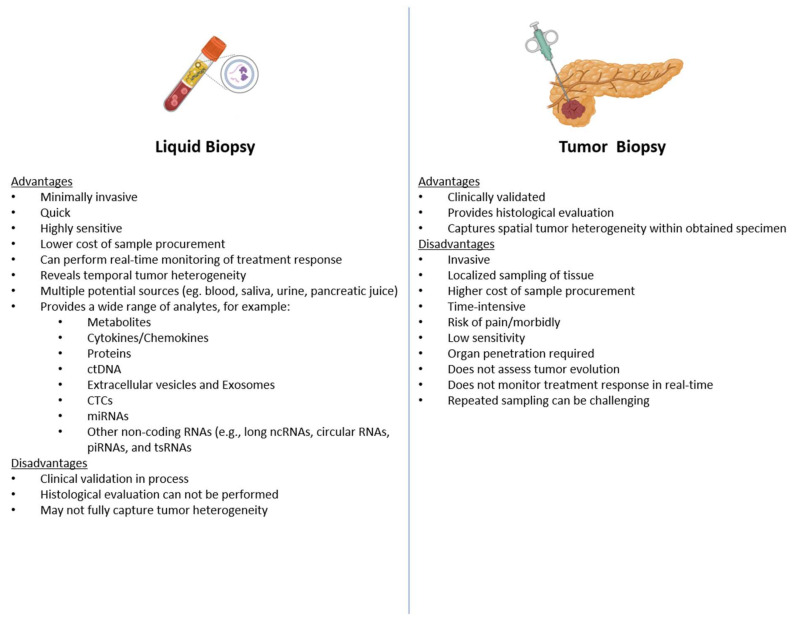
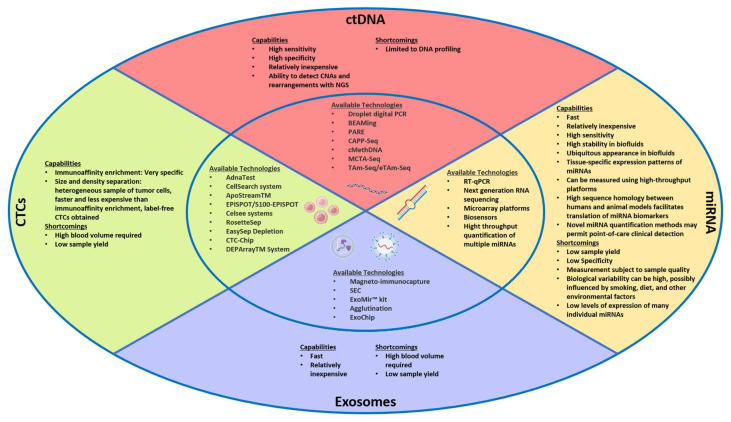
Pancreatic cancer is a highly aggressive malignancy with a climbing incidence. The majority of cases are detected late, with incurable locally advanced or metastatic disease. Even in individuals who undergo resection, recurrence is unfortunately very common. There is no universally accepted screening modality for the general population and diagnosis, evaluation of treatment response, and detection of recurrence relies primarily on the use of imaging. Identification of minimally invasive techniques to help diagnose, prognosticate, predict response or resistance to therapy, and detect recurrence are desperately needed. Liquid biopsies represent an emerging group of technologies which allow for non-invasive serial sampling of tumor material. Although not yet approved for routine use in pancreatic cancer, the increasing sensitivity and specificity of contemporary liquid biopsy platforms will likely change clinical practice in the near future. In this review, we discuss the recent technological advances in liquid biopsy, focusing on circulating tumor DNA, exosomes, microRNAs, and circulating tumor cells.
胰腺癌是一种侵袭性很强的恶性肿瘤,发病率呈上升趋势。大多数病例发现较晚,局部晚期或转移性疾病无法治愈。即使是接受手术切除的患者,复发也很常见。目前尚无广泛接受的用于普通人群的筛查方法,诊断、评估治疗反应和检测复发主要依赖于影像学检查。因此,迫切需要识别微创技术来帮助诊断、预后、预测对治疗的反应或耐药性,以及检测复发。液体活检是一组新兴技术,可实现对肿瘤物质的非侵入性连续采样。虽然液体活检目前尚未被批准用于胰腺癌的常规使用,但当代液体活检平台的灵敏度和特异性的不断提高,可能会在不久的将来改变临床实践。在这篇综述中,我们讨论了液体活检的最新技术进展,重点介绍了循环肿瘤 DNA、外泌体、microRNAs 和循环肿瘤细胞。