Crosbie Eric, Gomes Fabio S, Olvera Jasmine, Rincón-Gallardo Patiño Sofía, Hoeper Samantha, Carriedo Angela
School of Public Health, University of Nevada Reno, Reno, NV, USA.
Ozmen Institute for Global Studies, University of Nevada Reno, Reno, NV, USA.
Lancet Reg Health Am. 2022 Dec 1;18:100400. doi: 10.1016/j.lana.2022.100400. eCollection 2023 Feb.
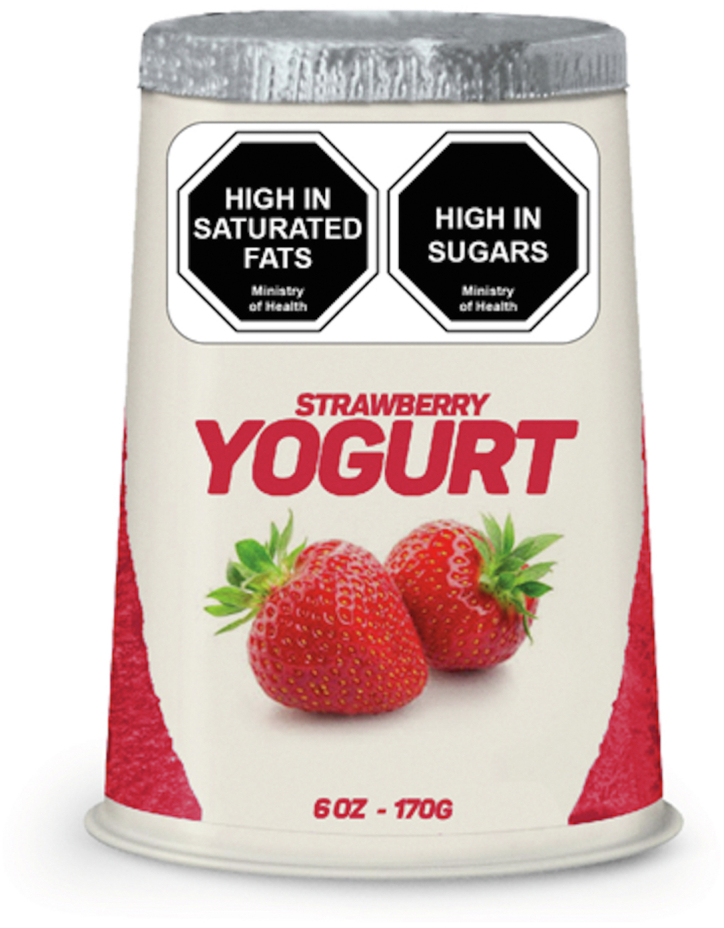
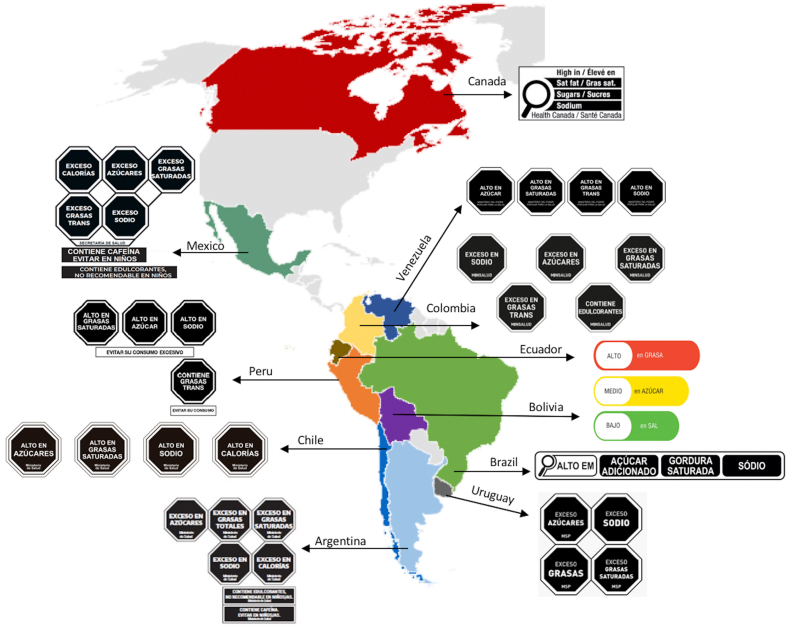
Poor nutrition is one of the leading causes of non-communicable diseases (NCDs), especially in the WHO Region of the Americas (AMRO). In response, international organisations recommend front-of-pack nutrition labelling (FOPNL) systems that present nutrition information clearly to help consumers make healthier choices. In AMRO, all 35 countries have discussed FOPNL, 30 countries have formally introduced FOPNL, eleven have adopted FOPNL, and seven countries (Argentina, Chile, Ecuador, Mexico, Peru, Uruguay and Venezuela) have implemented FOPNL. FOPNL has gradually spread and evolved to better protect health by increasingly adopting larger warning labels, contrasting background devices for better salience, using "excess" instead of "high in" to improve efficacy, and adopting the Pan American Health Organization's (PAHO) Nutrient Profile Model to better define nutrient thresholds. Early evidence illustrates successful compliance, decreased purchases and product reformulation. Governments still discussing and waiting to implement FOPNL should follow these best practices to help reduce poor nutrition related NCDs. .
营养不良是非传染性疾病(NCDs)的主要原因之一,尤其是在世卫组织美洲区域(AMRO)。作为回应,国际组织推荐采用包装正面营养标签(FOPNL)系统,该系统能清晰呈现营养信息,以帮助消费者做出更健康的选择。在美洲区域,所有35个国家都已讨论过FOPNL,30个国家已正式引入FOPNL,11个国家已采用FOPNL,还有7个国家(阿根廷、智利、厄瓜多尔、墨西哥、秘鲁、乌拉圭和委内瑞拉)已实施FOPNL。FOPNL已逐渐传播并不断演变,通过越来越多地采用更大的警示标签、使用对比鲜明的背景设计以提高显著性、用“过量”取代“高含量”以提高效果,以及采用泛美卫生组织(PAHO)的营养成分模型来更好地界定营养阈值,从而更好地保护健康。早期证据表明,FOPNL在合规性、减少购买量和产品重新配方方面取得了成功。仍在讨论并等待实施FOPNL的政府应遵循这些最佳做法,以帮助减少与营养不良相关的非传染性疾病。