Kondakova Elena V, Filat'eva Anastasia E, Lobanova Nadezhda A, Nagaev Egor I, Sarimov Ruslan M, Gudkov Sergey V, Vedunova Maria V
Institute of Biology and Biomedicine, Lobachevsky State University of Nizhny Novgorod, Nizhny Novgorod, Russia.
Branch FESFARM NN, Nizhny Novgorod, Russia.
Front Med (Lausanne). 2023 Feb 10;10:1098324. doi: 10.3389/fmed.2023.1098324. eCollection 2023.
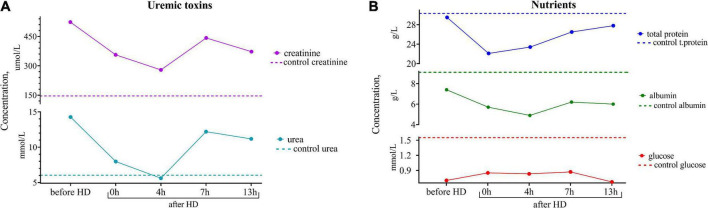
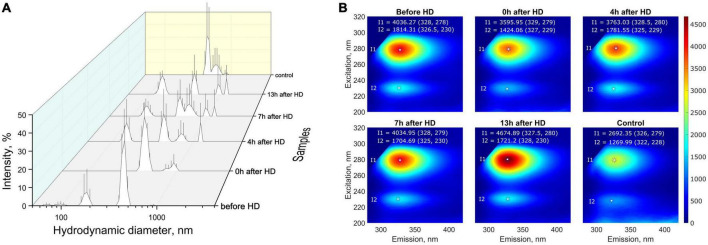
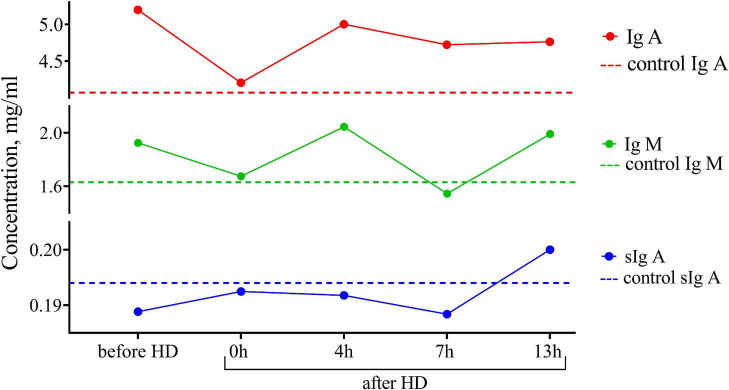
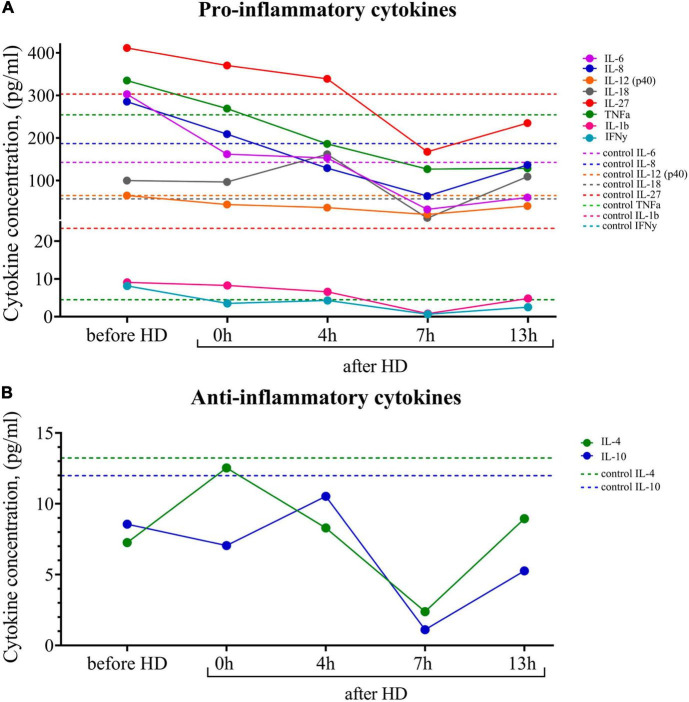
This case report highlights the benefit or harm of breastfeeding in a patient with Kidney Failure with Replacement Therapy (KFRT) undergoing program hemodialysis. This is a unique clinical case, as pregnancy and successful delivery are rare in this group of females. With a favorable outcome, the possibility of breastfeeding is especially relevant for doctors and the mother. The patient was a 31-year-old female who was diagnosed in 2017 with end-stage renal disease associated with chronic glomerulonephritis. Against the background of hemodialysis, pregnancy, accompanied by polyhydramnios, anemia, and secondary arterial hypertension, occurred in 2021. At 37 weeks, a healthy, full-term baby girl was born, and breastfeeding was started. In this study, we conducted a detailed analysis of toxic substances and immunologically significant proteins using high-tech analysis methods. In addition, we studied different portions of milk before and after hemodialysis at different time intervals. After a wide range of experiments, our study did not reveal an optimal time interval for breastfeeding a baby. Despite the decrease in the level of the major uremic toxins 4 h after the hemodialysis procedure, their level remained high. In addition, the content of nutrients did not reach acceptable limits and the immune status was characterized as pro-inflammatory. In our opinion, breastfeeding is not advisable for this group of patients since the concentration of nutrients is low, and the content of toxic substances exceeds the permissible limits. In this clinical case, the patient decided to stop breastfeeding one month after delivery due to insufficient breast milk and the inability to express it in a certain period of time.
本病例报告强调了在接受计划性血液透析的肾衰竭替代疗法(KFRT)患者中母乳喂养的益处或危害。这是一个独特的临床病例,因为在这组女性中怀孕并成功分娩很少见。鉴于良好的结局,母乳喂养的可能性对医生和母亲来说尤为重要。该患者为一名31岁女性,2017年被诊断为与慢性肾小球肾炎相关的终末期肾病。在血液透析的背景下,2021年发生了妊娠,伴有羊水过多、贫血和继发性动脉高血压。37周时,一名健康的足月女婴出生,并开始母乳喂养。在本研究中,我们使用高科技分析方法对有毒物质和具有免疫意义的蛋白质进行了详细分析。此外,我们研究了血液透析前后不同时间间隔的不同乳汁成分。经过广泛的实验,我们的研究没有发现母乳喂养婴儿的最佳时间间隔。尽管血液透析后4小时主要尿毒症毒素水平有所下降,但其水平仍然很高。此外,营养成分含量未达到可接受的限度,免疫状态呈促炎特征。我们认为,对于这组患者不建议进行母乳喂养,因为营养成分浓度低,有毒物质含量超过允许限度。在这个临床病例中,患者在分娩后一个月因母乳不足且在一定时间内无法挤出乳汁而决定停止母乳喂养。