Department of Pathology, University of New Mexico School of Medicine, Albuquerque, New Mexico.
Comprehensive Cancer Center, University of New Mexico, Albuquerque, New Mexico.
Cancer Res Commun. 2023 Feb 22;3(2):309-324. doi: 10.1158/2767-9764.CRC-22-0300. eCollection 2023 Feb.
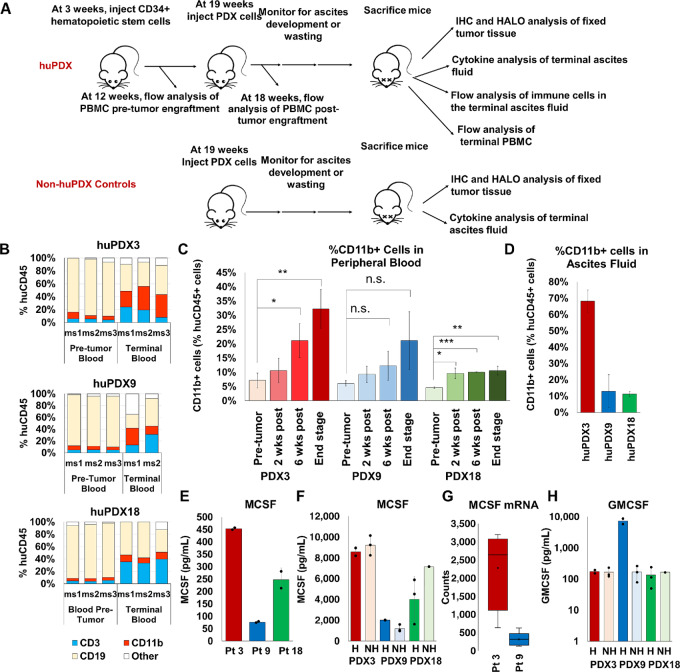
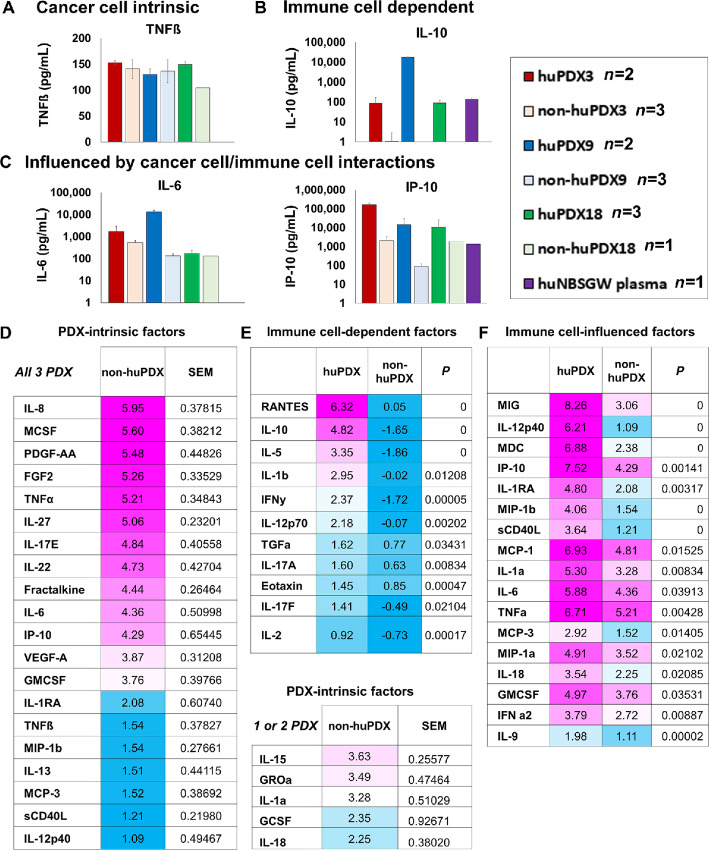
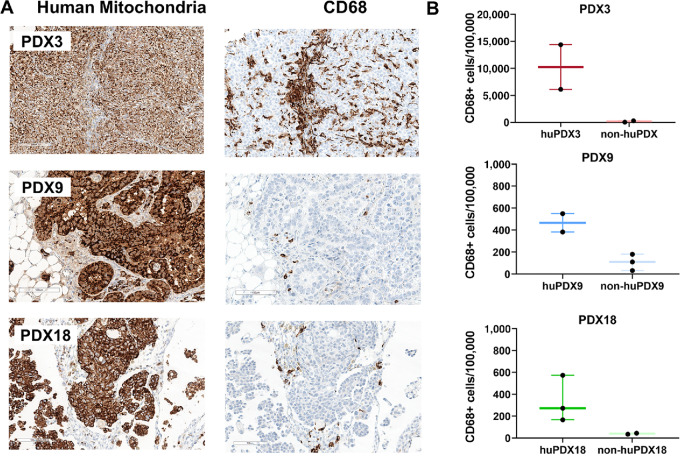
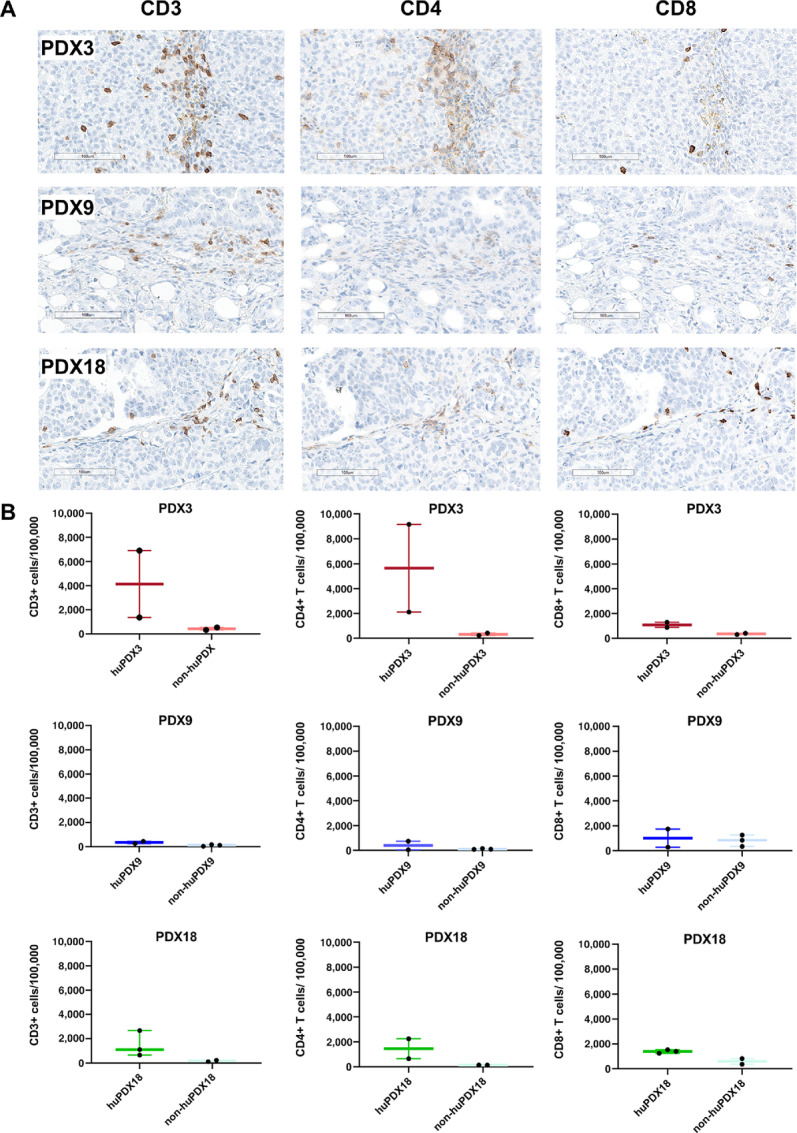
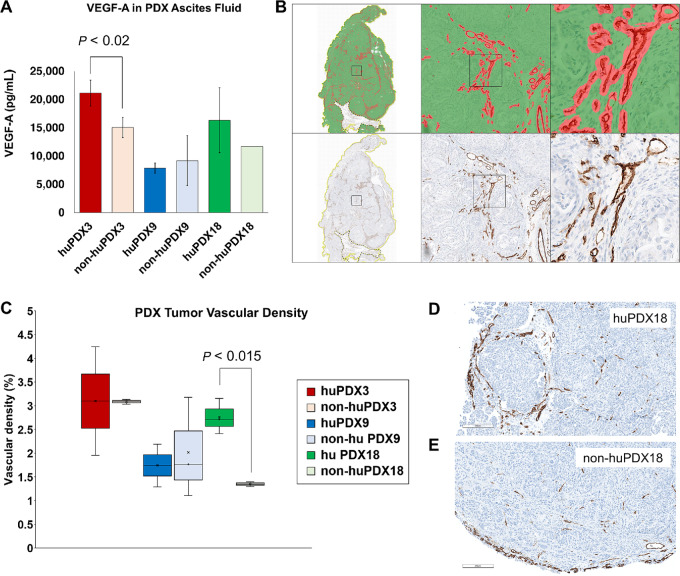
The importance of the immune microenvironment in ovarian cancer progression, metastasis, and response to therapies has become increasingly clear, especially with the new emphasis on immunotherapies. To leverage the power of patient-derived xenograft (PDX) models within a humanized immune microenvironment, three ovarian cancer PDXs were grown in humanized NBSGW (huNBSGW) mice engrafted with human CD34 cord blood-derived hematopoietic stem cells. Analysis of cytokine levels in the ascites fluid and identification of infiltrating immune cells in the tumors demonstrated that these humanized PDX (huPDX) established an immune tumor microenvironment similar to what has been reported for patients with ovarian cancer. The lack of human myeloid cell differentiation has been a major setback for humanized mouse models, but our analysis shows that PDX engraftment increases the human myeloid population in the peripheral blood. Analysis of cytokines within the ascites fluid of huPDX revealed high levels of human M-CSF, a key myeloid differentiation factor as well as other elevated cytokines that have previously been identified in ovarian cancer patient ascites fluid including those involved in immune cell differentiation and recruitment. Human tumor-associated macrophages and tumor-infiltrating lymphocytes were detected within the tumors of humanized mice, demonstrating immune cell recruitment to tumors. Comparison of the three huPDX revealed certain differences in cytokine signatures and in the extent of immune cell recruitment. Our studies show that huNBSGW PDX models reconstitute important aspects of the ovarian cancer immune tumor microenvironment, which may recommend these models for preclinical therapeutic trials.
huPDX models are ideal preclinical models for testing novel therapies. They reflect the genetic heterogeneity of the patient population, enhance human myeloid differentiation, and recruit immune cells to the tumor microenvironment.
免疫微环境在卵巢癌的进展、转移和对治疗的反应中的重要性变得越来越明显,尤其是在新的免疫疗法的强调下。为了在具有人类化免疫微环境的患者衍生异种移植(PDX)模型中利用力量,在用人 CD34 脐带血衍生造血干细胞移植的人类化 NBSGW(huNBSGW)小鼠中生长了三个卵巢癌 PDX。对腹水液中的细胞因子水平进行分析,并鉴定肿瘤中浸润的免疫细胞,表明这些人类化 PDX(huPDX)建立了类似于已报道的卵巢癌患者的免疫肿瘤微环境。人类髓样细胞分化的缺乏一直是人类化小鼠模型的主要障碍,但我们的分析表明,PDX 移植增加了外周血中的人类髓样细胞群体。对 huPDX 腹水液中的细胞因子进行分析表明,高水平的人类 M-CSF,这是一种关键的髓样分化因子,以及其他在卵巢癌患者腹水中已鉴定出的升高细胞因子,包括那些参与免疫细胞分化和募集的细胞因子。在人类化小鼠的肿瘤中检测到人类肿瘤相关巨噬细胞和肿瘤浸润淋巴细胞,表明免疫细胞向肿瘤的募集。对三个 huPDX 的比较表明细胞因子特征和免疫细胞募集的程度存在某些差异。我们的研究表明,huNBSGW PDX 模型重建了卵巢癌免疫肿瘤微环境的重要方面,这可能推荐这些模型用于临床前治疗试验。
huPDX 模型是测试新疗法的理想临床前模型。它们反映了患者人群的遗传异质性,增强了人类髓样分化,并将免疫细胞募集到肿瘤微环境中。