Department of Education, Psychology and Communication, University of Bari "Aldo Moro", Bari, Italy.
Department of Psychology and Neurosciences, Leibniz Research Centre for Working Environment and Human Factors, Dortmund, Germany.
Neuropsychol Rev. 2024 Mar;34(1):338-361. doi: 10.1007/s11065-023-09589-0. Epub 2023 Mar 6.
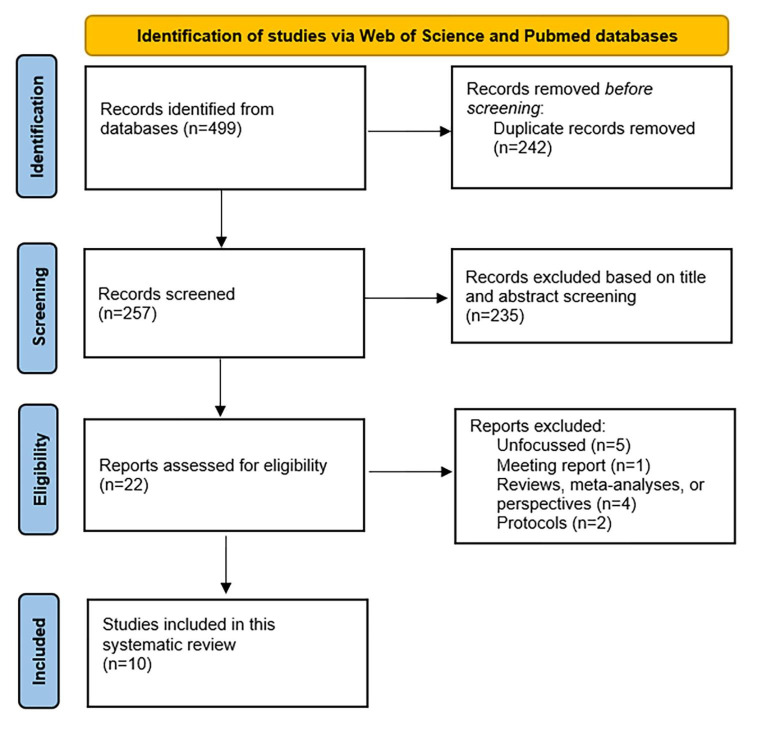
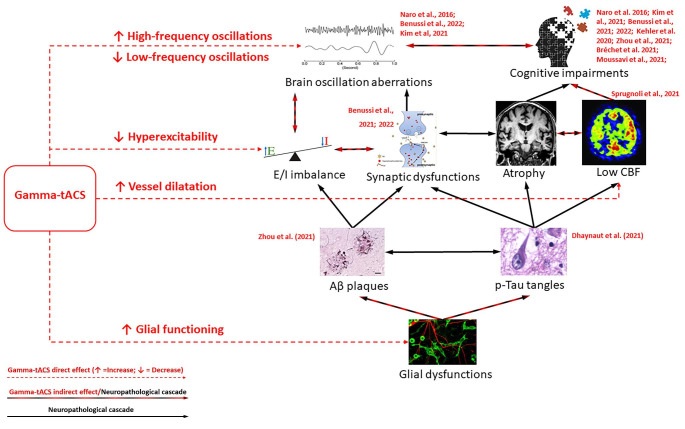
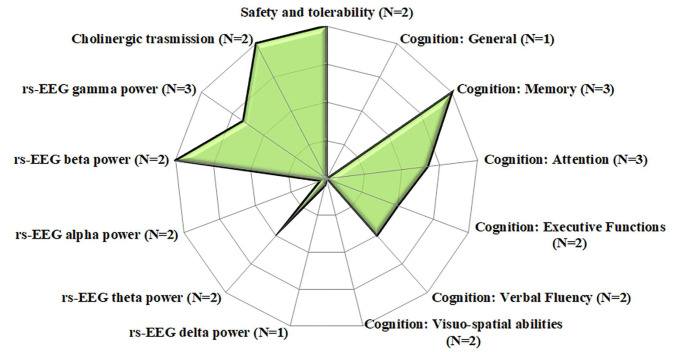
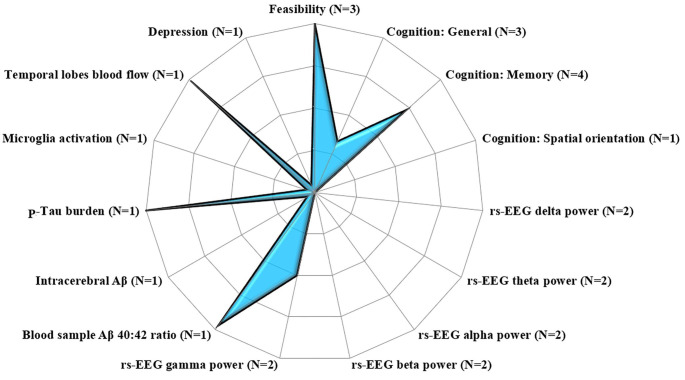
Despite the numerous pharmacological interventions targeting dementia, no disease-modifying therapy is available, and the prognosis remains unfavorable. A promising perspective involves tackling high-frequency gamma-band (> 30 Hz) oscillations involved in hippocampal-mediated memory processes, which are impaired from the early stages of typical Alzheimer's Disease (AD). Particularly, the positive effects of gamma-band entrainment on mouse models of AD have prompted researchers to translate such findings into humans using transcranial alternating current stimulation (tACS), a methodology that allows the entrainment of endogenous cortical oscillations in a frequency-specific manner. This systematic review examines the state-of-the-art on the use of gamma-tACS in Mild Cognitive Impairment (MCI) and dementia patients to shed light on its feasibility, therapeutic impact, and clinical effectiveness. A systematic search from two databases yielded 499 records resulting in 10 included studies and a total of 273 patients. The results were arranged in single-session and multi-session protocols. Most of the studies demonstrated cognitive improvement following gamma-tACS, and some studies showed promising effects of gamma-tACS on neuropathological markers, suggesting the feasibility of gamma-tACS in these patients anyhow far from the strong evidence available for mouse models. Nonetheless, the small number of studies and their wide variability in terms of aims, parameters, and measures, make it difficult to draw firm conclusions. We discuss results and methodological limitations of the studies, proposing possible solutions and future avenues to improve research on the effects of gamma-tACS on dementia.
尽管有许多针对痴呆症的药物干预措施,但仍没有有效的治疗方法,预后仍然不佳。一个有前途的研究方向是针对与海马介导的记忆过程相关的高频伽马波段(>30 Hz)振荡,这些振荡在典型的阿尔茨海默病(AD)的早期阶段就已经受损。特别是,伽马波段节律对 AD 小鼠模型的积极影响促使研究人员使用经颅交流电刺激(tACS)将这些发现转化为人类,这种方法可以以特定频率诱发内源性皮质振荡的节律。本系统综述检查了伽马-tACS 在轻度认知障碍(MCI)和痴呆症患者中的最新应用,以阐明其可行性、治疗效果和临床效果。从两个数据库进行的系统搜索产生了 499 条记录,最终纳入了 10 项研究,共有 273 名患者。结果按单次和多次方案排列。大多数研究表明伽马-tACS 后认知能力提高,一些研究表明伽马-tACS 对神经病理学标志物有一定效果,这表明无论从对小鼠模型的证据来看,伽马-tACS 对这些患者都具有可行性。然而,研究数量少且在目的、参数和测量方面差异较大,难以得出确凿的结论。我们讨论了研究结果和方法学限制,并提出了可能的解决方案和未来的研究途径,以改善对伽马-tACS 对痴呆症影响的研究。