Milner Centre for Evolution, Department of Biology and Biochemistry, University of Bath, Bath, UK.
Nanjing Institute of Geology and Palaeontology, CAS, Nanjing, China.
Nat Ecol Evol. 2023 Mar;7(3):367-381. doi: 10.1038/s41559-023-01982-5. Epub 2023 Mar 6.
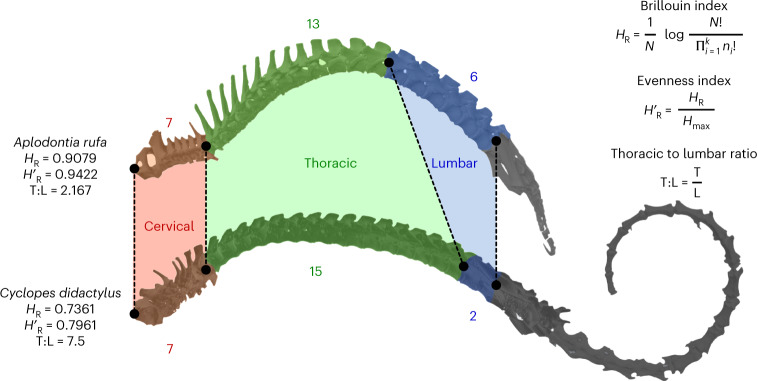
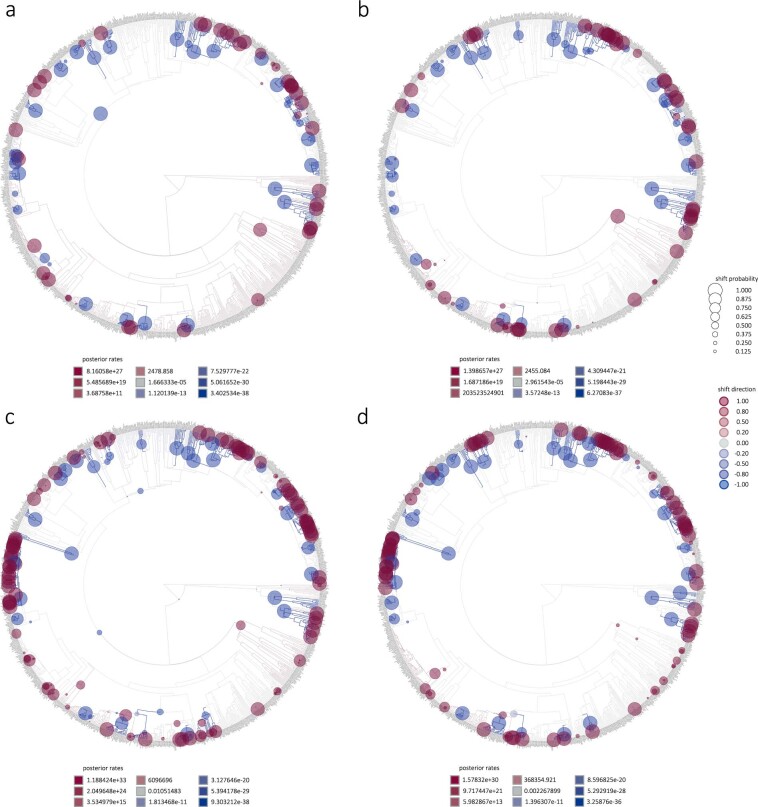
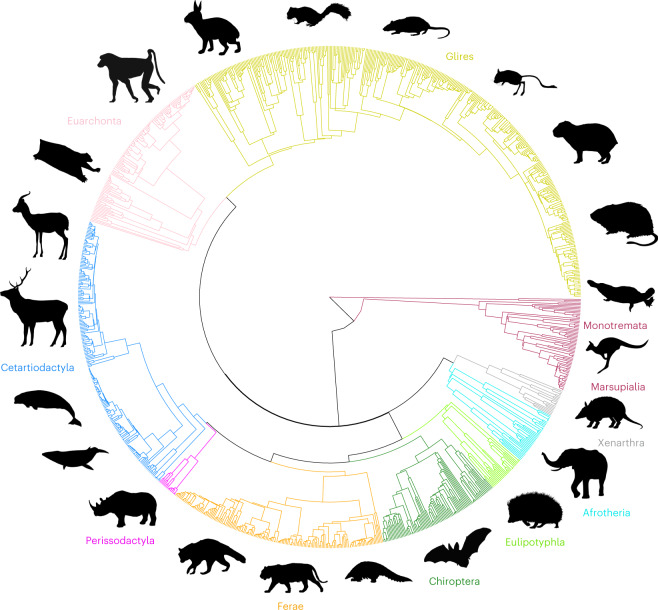
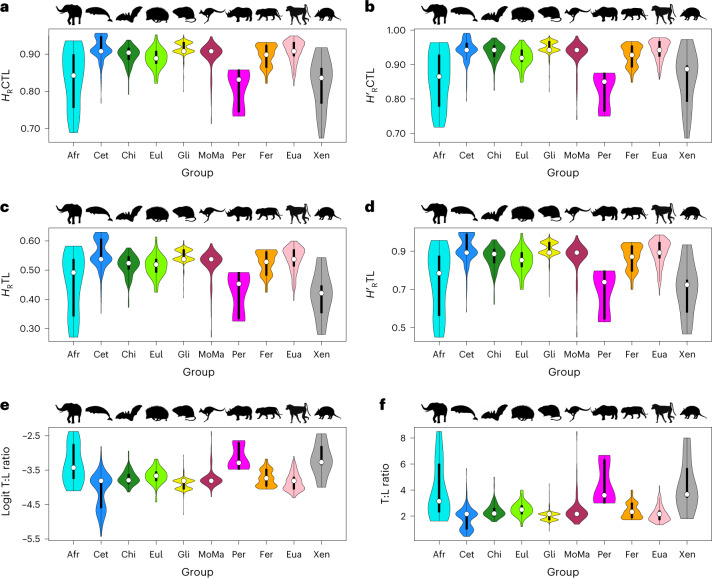
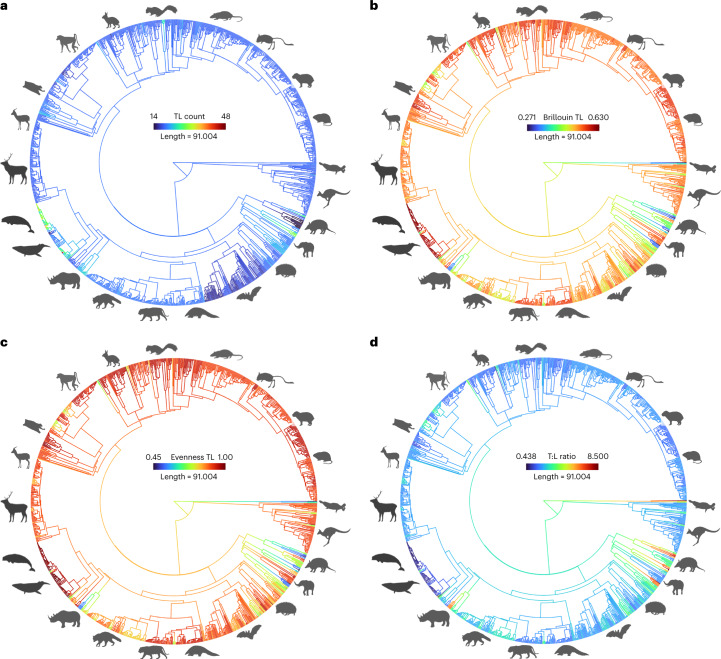
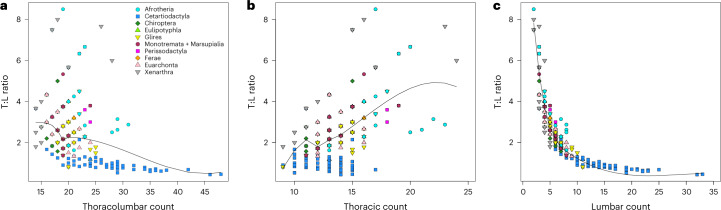
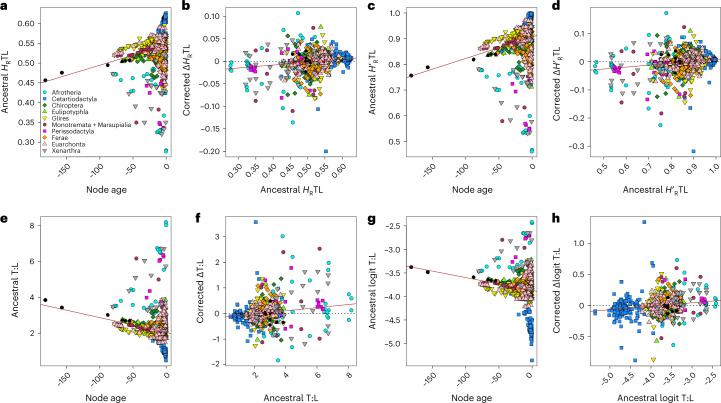
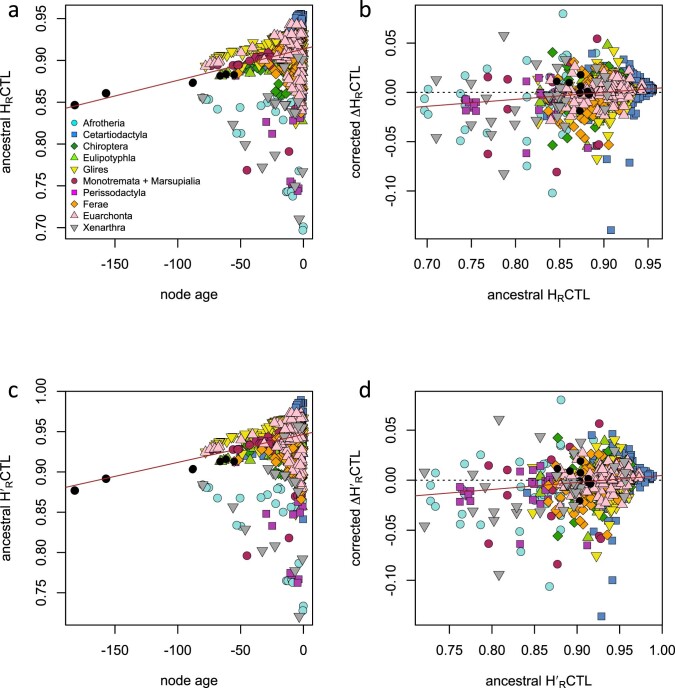
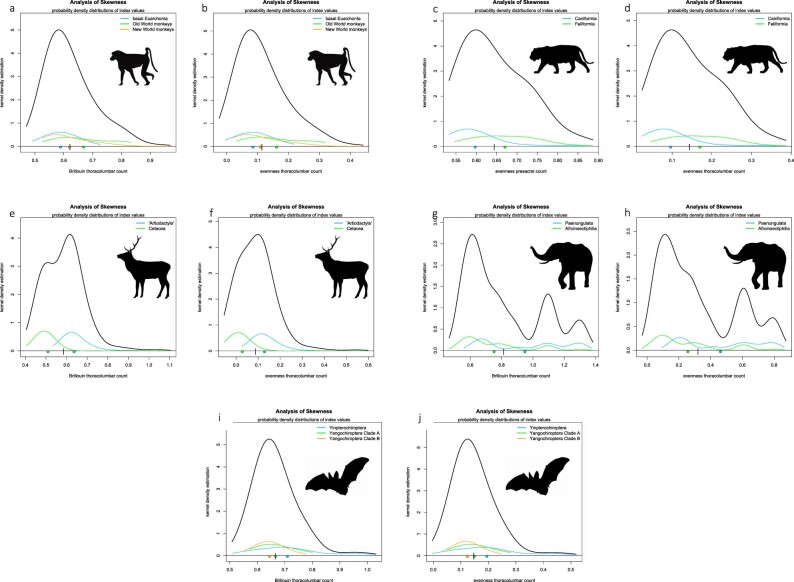
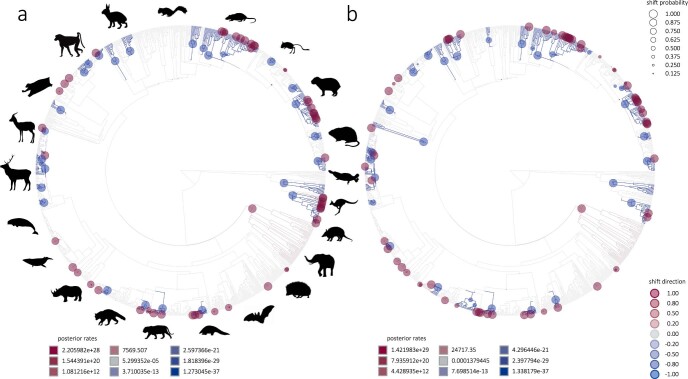
Complexity, defined as the number of parts and their degree of differentiation, is a poorly explored aspect of macroevolutionary dynamics. The maximum anatomical complexity of organisms has undoubtedly increased through evolutionary time. However, it is unclear whether this increase is a purely diffusive process or whether it is at least partly driven, occurring in parallel in most or many lineages and with increases in the minima as well as the means. Highly differentiated and serially repeated structures, such as vertebrae, are useful systems with which to investigate these patterns. We focus on the serial differentiation of the vertebral column in 1,136 extant mammal species, using two indices that quantify complexity as the numerical richness and proportional distribution of vertebrae across presacral regions and a third expressing the ratio between thoracic and lumbar vertebrae. We address three questions. First, we ask whether the distribution of complexity values in major mammal groups is similar or whether clades have specific signatures associated with their ecology. Second, we ask whether changes in complexity throughout the phylogeny are biased towards increases and whether there is evidence of driven trends. Third, we ask whether evolutionary shifts in complexity depart from a uniform Brownian motion model. Vertebral counts, but not complexity indices, differ significantly between major groups and exhibit greater within-group variation than recognized hitherto. We find strong evidence of a trend towards increasing complexity, where higher values propagate further increases in descendant lineages. Several increases are inferred to have coincided with major ecological or environmental shifts. We find support for multiple-rate models of evolution for all complexity metrics, suggesting that increases in complexity occurred in stepwise shifts, with evidence for widespread episodes of recent rapid divergence. Different subclades evolve more complex vertebral columns in different configurations and probably under different selective pressures and constraints, with widespread convergence on the same formulae. Further work should therefore focus on the ecological relevance of differences in complexity and a more detailed understanding of historical patterns.
复杂性被定义为部分的数量及其分化程度,是宏观进化动态中一个尚未得到充分探索的方面。生物的最大解剖复杂性无疑随着进化时间而增加。然而,目前尚不清楚这种增加是纯粹的扩散过程,还是至少部分受到驱动,即在大多数或许多谱系中平行发生,并伴随着最小值和平均值的增加。高度分化和连续重复的结构,如脊椎,是研究这些模式的有用系统。我们专注于 1136 种现存哺乳动物物种的脊柱序列分化,使用两个指标来量化复杂性,即沿荐前区分布的脊椎数量的数值丰富度和比例分布,以及第三个指标表示胸椎和腰椎之间的比例。我们提出了三个问题。首先,我们询问主要哺乳动物群体中复杂性值的分布是否相似,或者分支是否具有与其生态相关的特定特征。其次,我们询问整个系统发育过程中复杂性的变化是否偏向于增加,以及是否有驱动趋势的证据。第三,我们询问复杂性的进化变化是否偏离了均匀布朗运动模型。脊椎计数但不是复杂性指数在主要群体之间存在显著差异,并且表现出比迄今认识到的更大的组内变异。我们发现了强烈的证据表明复杂性呈增加趋势,其中较高的值在后代谱系中进一步增加。几个增加被推断与主要的生态或环境变化同时发生。我们发现所有复杂性指标都支持多速率进化模型,这表明复杂性的增加是通过逐步变化发生的,并且有广泛的近期快速分歧的证据。不同的亚分支以不同的配置进化出更复杂的脊椎,可能受到不同的选择压力和约束的影响,并且广泛收敛到相同的公式。因此,进一步的工作应该集中在复杂性差异的生态相关性以及对历史模式的更详细理解上。