Department of Molecular Pathology, Tokyo Medical University, Shinjuku-ku, Tokyo, Japan.
Department of AI Applied Quantitative Clinical Science, Tokyo Medical University, Shinjuku-ku, Tokyo, Japan.
J Pathol Clin Res. 2023 May;9(3):182-194. doi: 10.1002/cjp2.314. Epub 2023 Mar 10.
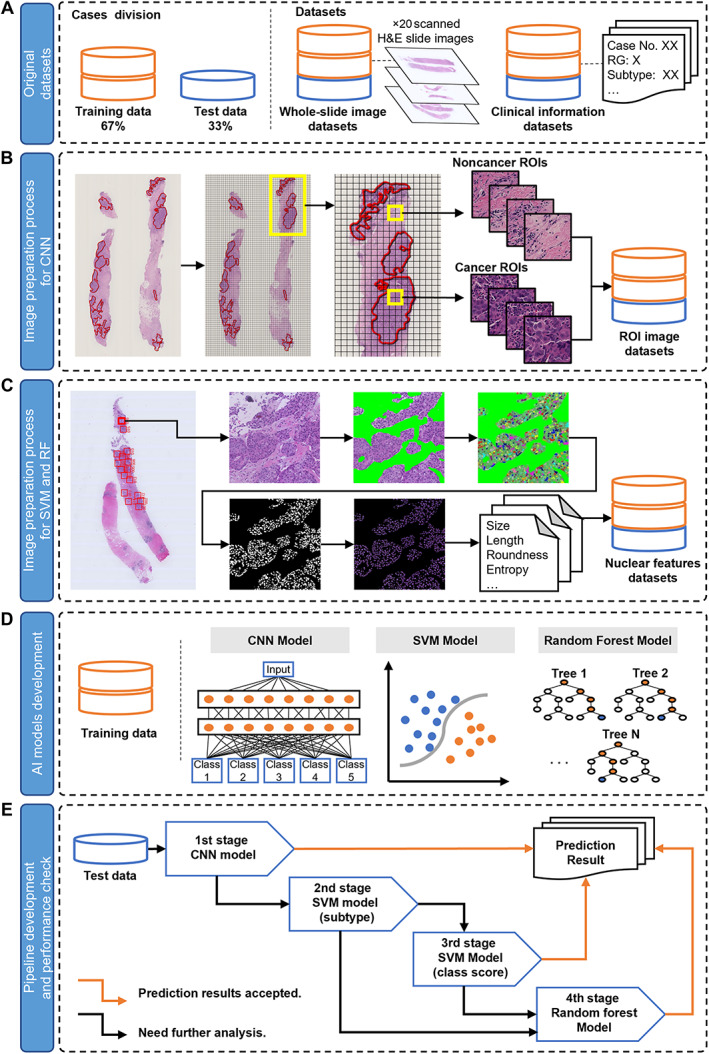
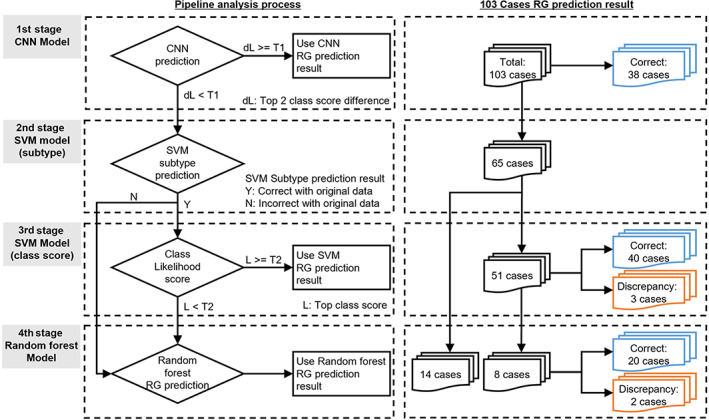
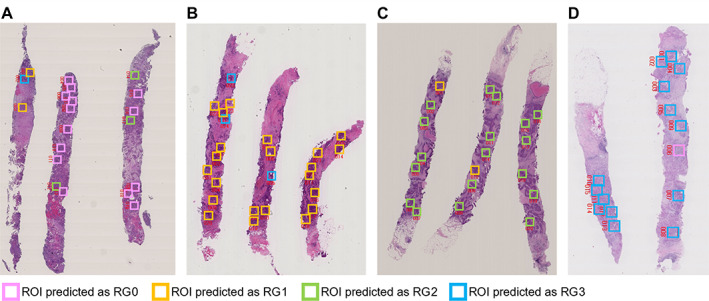
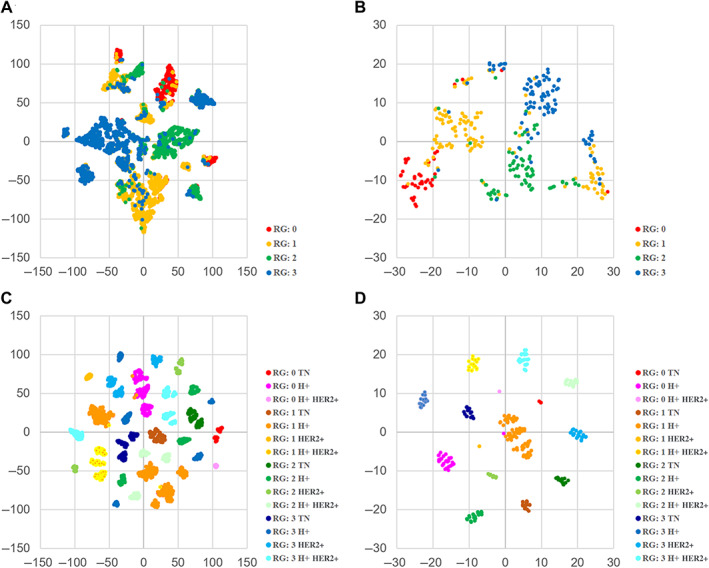
In recent years, the treatment of breast cancer has advanced dramatically and neoadjuvant chemotherapy (NAC) has become a common treatment method, especially for locally advanced breast cancer. However, other than the subtype of breast cancer, no clear factor indicating sensitivity to NAC has been identified. In this study, we attempted to use artificial intelligence (AI) to predict the effect of preoperative chemotherapy from hematoxylin and eosin images of pathological tissue obtained from needle biopsies prior to chemotherapy. Application of AI to pathological images typically uses a single machine-learning model such as support vector machines (SVMs) or deep convolutional neural networks (CNNs). However, cancer tissues are extremely diverse and learning with a realistic number of cases limits the prediction accuracy of a single model. In this study, we propose a novel pipeline system that uses three independent models each focusing on different characteristics of cancer atypia. Our system uses a CNN model to learn structural atypia from image patches and SVM and random forest models to learn nuclear atypia from fine-grained nuclear features extracted by image analysis methods. It was able to predict the NAC response with 95.15% accuracy on a test set of 103 unseen cases. We believe that this AI pipeline system will contribute to the adoption of personalized medicine in NAC therapy for breast cancer.
近年来,乳腺癌的治疗取得了显著进展,新辅助化疗(NAC)已成为一种常见的治疗方法,特别是对于局部晚期乳腺癌。然而,除了乳腺癌的亚型外,尚未确定明确的对 NAC 敏感的因素。在这项研究中,我们试图使用人工智能(AI)从化疗前的针吸活检获得的病理组织的苏木精和伊红图像中预测术前化疗的效果。AI 在病理图像中的应用通常使用单一的机器学习模型,如支持向量机(SVMs)或深度卷积神经网络(CNNs)。然而,癌症组织极其多样化,用实际数量的病例进行学习限制了单一模型的预测准确性。在这项研究中,我们提出了一种新的流水线系统,该系统使用三个独立的模型,每个模型都专注于癌症异型性的不同特征。我们的系统使用 CNN 模型从图像补丁中学习结构异型性,SVM 和随机森林模型从图像分析方法提取的细粒度核特征中学习核异型性。它能够在 103 个未见过的测试集中以 95.15%的准确率预测 NAC 反应。我们相信,这个 AI 流水线系统将有助于在乳腺癌的 NAC 治疗中采用个性化医疗。