Department of Viroscience, Erasmus MC, Rotterdam, The Netherlands.
Department of Microbiology and Immunology, Emory University School of Medicine, Atlanta, Georgia, United States of America.
PLoS Pathog. 2023 Mar 10;19(3):e1011214. doi: 10.1371/journal.ppat.1011214. eCollection 2023 Mar.
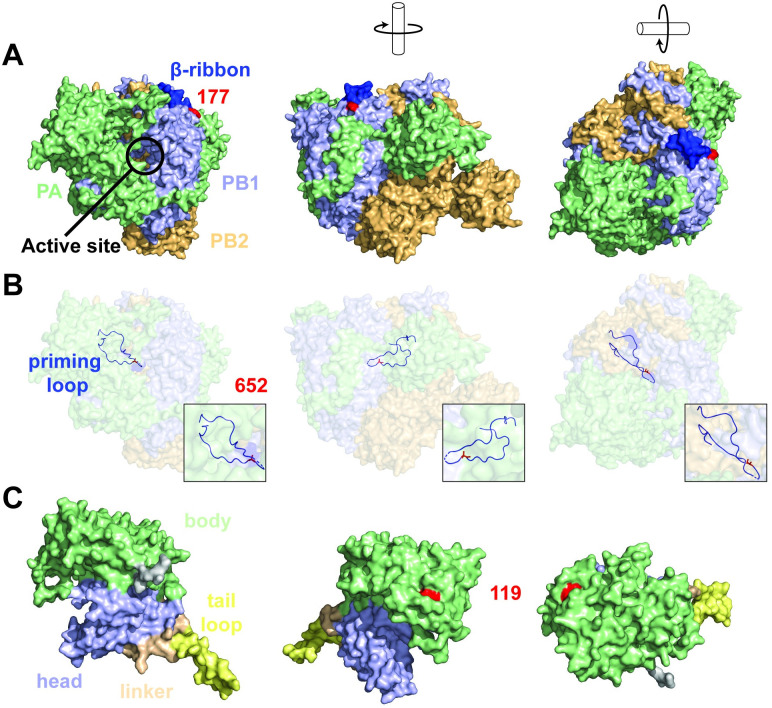
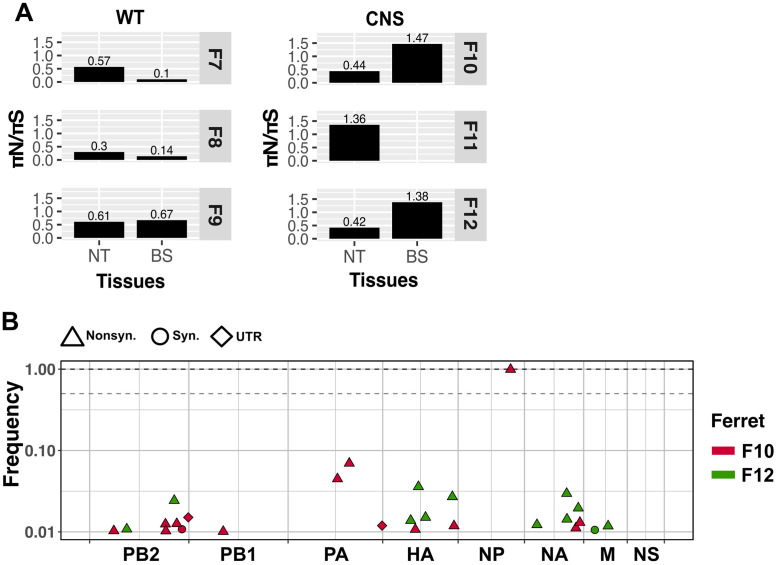
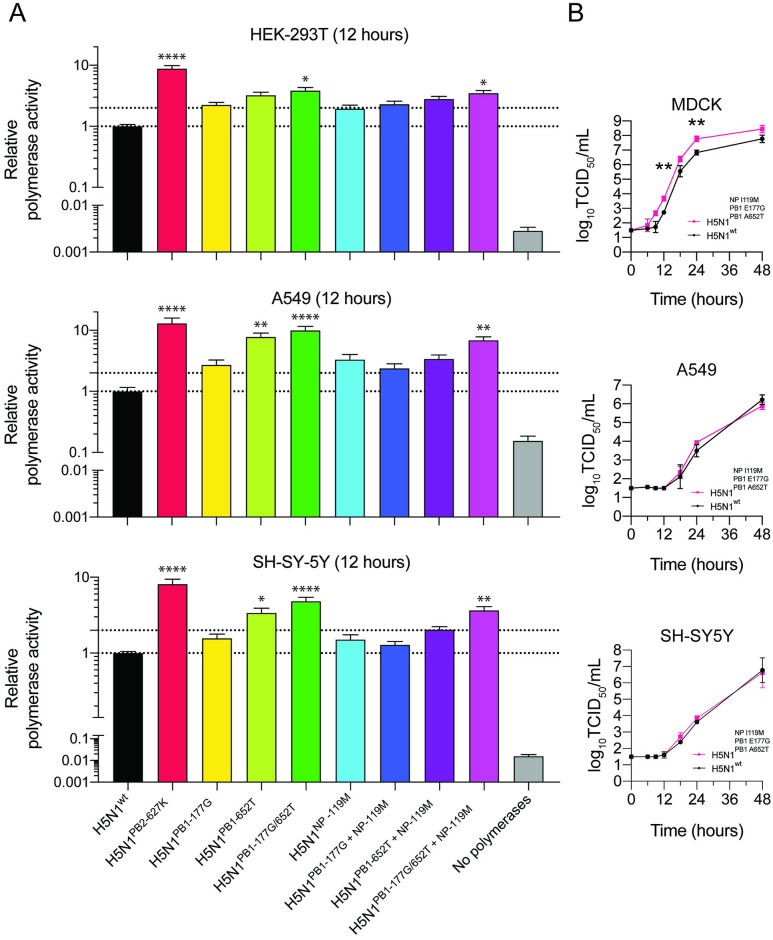
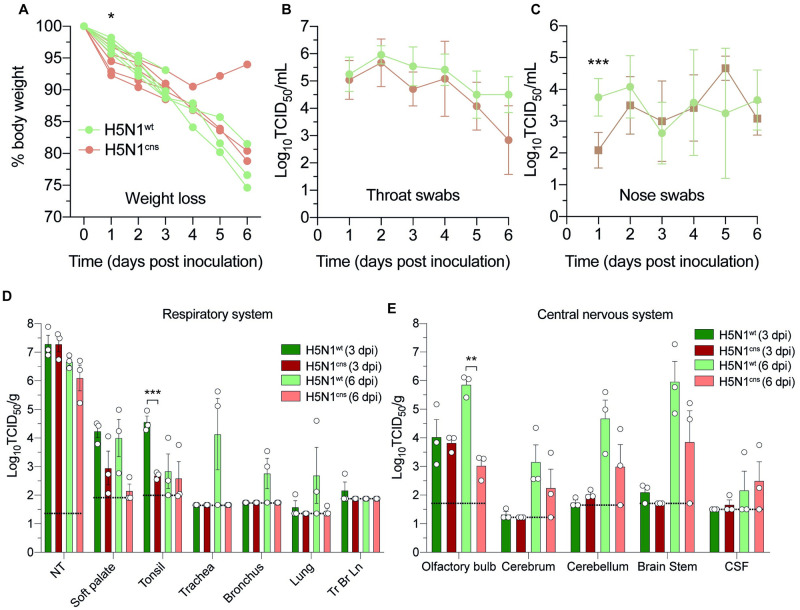
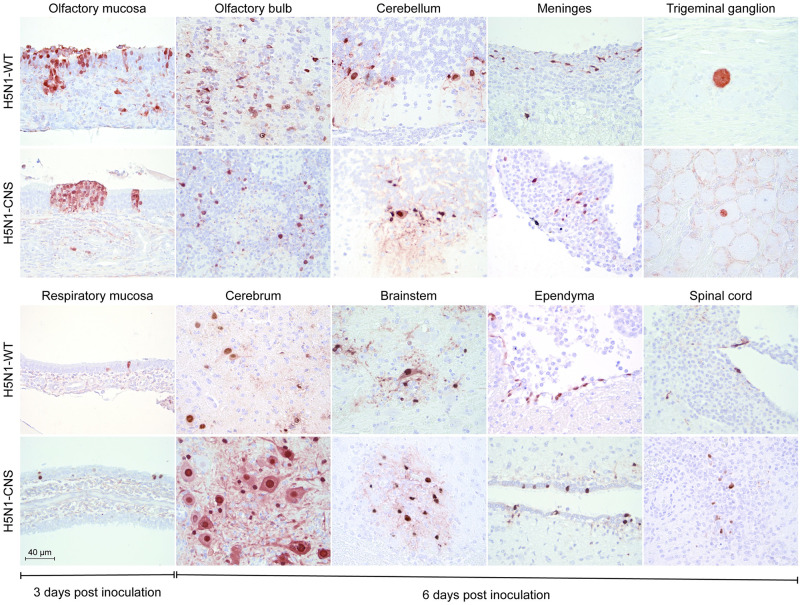
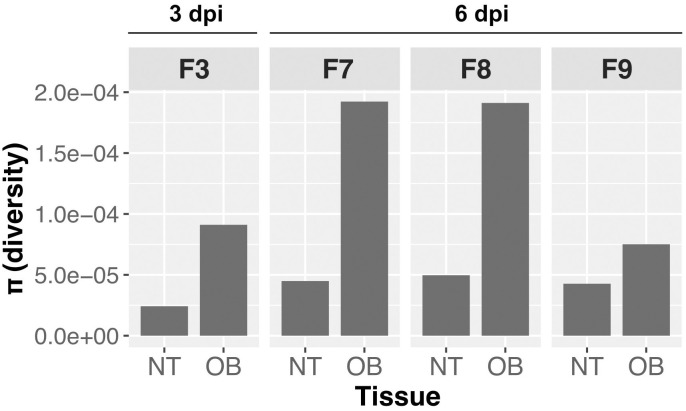
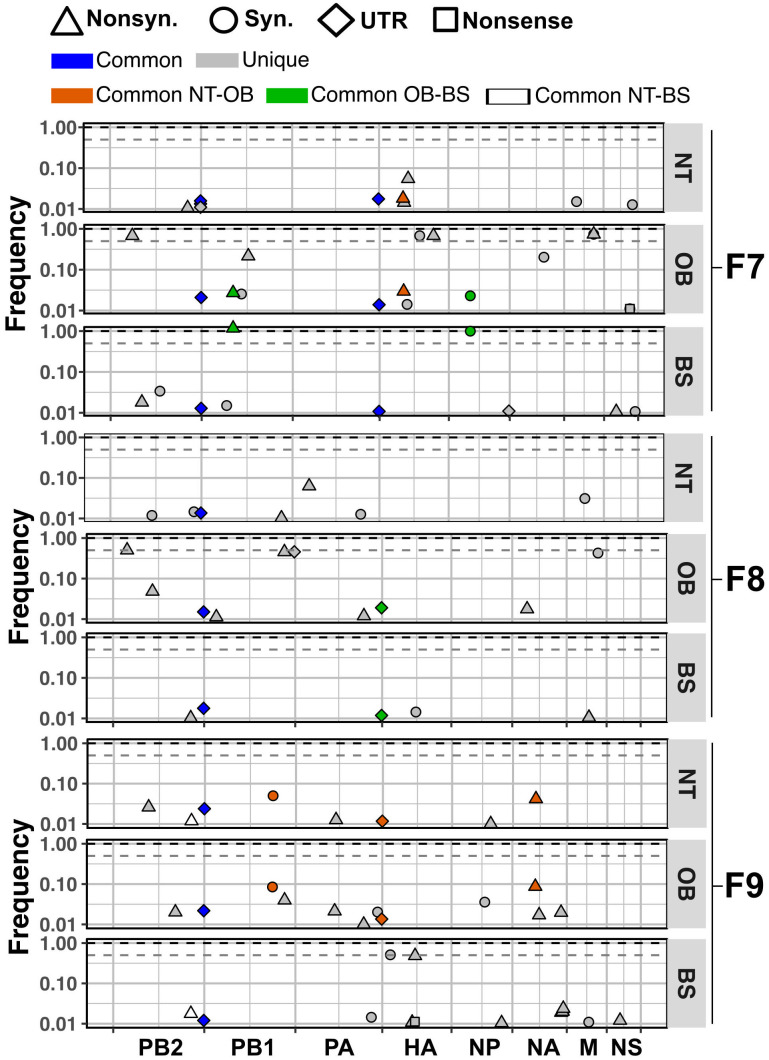
Central nervous system (CNS) disease is the most common extra-respiratory tract complication of influenza A virus infections in humans. Remarkably, zoonotic highly pathogenic avian influenza (HPAI) H5N1 virus infections are more often associated with CNS disease than infections with seasonal influenza viruses. Evolution of avian influenza viruses has been extensively studied in the context of respiratory infections, but evolutionary processes in CNS infections remain poorly understood. We have previously observed that the ability of HPAI A/Indonesia/5/2005 (H5N1) virus to replicate in and spread throughout the CNS varies widely between individual ferrets. Based on these observations, we sought to understand the impact of entrance into and replication within the CNS on the evolutionary dynamics of virus populations. First, we identified and characterized three substitutions-PB1 E177G and A652T and NP I119M - detected in the CNS of a ferret infected with influenza A/Indonesia/5/2005 (H5N1) virus that developed a severe meningo-encephalitis. We found that some of these substitutions, individually or collectively, resulted in increased polymerase activity in vitro. Nevertheless, in vivo, the virus bearing the CNS-associated mutations retained its capacity to infect the CNS but showed reduced dispersion to other anatomical sites. Analyses of viral diversity in the nasal turbinate and olfactory bulb revealed the lack of a genetic bottleneck acting on virus populations accessing the CNS via this route. Furthermore, virus populations bearing the CNS-associated mutations showed signs of positive selection in the brainstem. These features of dispersion to the CNS are consistent with the action of selective processes, underlining the potential for H5N1 viruses to adapt to the CNS.
中枢神经系统 (CNS) 疾病是人类甲型流感病毒感染最常见的呼吸道外并发症。值得注意的是,人畜共患的高致病性禽流感 (HPAI) H5N1 病毒感染比季节性流感病毒感染更常与 CNS 疾病相关。流感病毒的进化在呼吸道感染的背景下得到了广泛研究,但 CNS 感染的进化过程仍知之甚少。我们之前观察到,高致病性禽流感 A/印度尼西亚/5/2005 (H5N1) 病毒在雪貂中枢神经系统中的复制和传播能力在个体之间差异很大。基于这些观察结果,我们试图了解进入和在中枢神经系统内复制对病毒群体进化动态的影响。首先,我们鉴定并表征了在感染流感 A/印度尼西亚/5/2005 (H5N1) 病毒的雪貂中枢神经系统中发现的三个突变 - PB1 E177G 和 A652T 以及 NP I119M - ,该病毒发展为严重的脑膜脑炎。我们发现,这些突变中的一些单独或共同导致聚合酶体外活性增加。然而,在体内,携带 CNS 相关突变的病毒保留了感染中枢神经系统的能力,但向其他解剖部位的扩散能力降低。在鼻甲骨和嗅球中分析病毒多样性表明,通过这种途径进入中枢神经系统的病毒群体缺乏遗传瓶颈。此外,携带 CNS 相关突变的病毒群体在脑干中显示出正选择的迹象。这些向中枢神经系统扩散的特征与选择过程的作用一致,强调了 H5N1 病毒适应中枢神经系统的潜力。