Department of Pharmacology and Chemical Biology, University of Pittsburgh, Pittsburgh, PA, USA.
Center for Inhalation Toxicology, West Virginia University School of Medicine, Morgantown, WV, USA; Department of Physiology and Pharmacology, Health Sciences Center, West Virginia University, Morgantown, WV, USA.
Redox Biol. 2023 Jun;62:102636. doi: 10.1016/j.redox.2023.102636. Epub 2023 Feb 13.
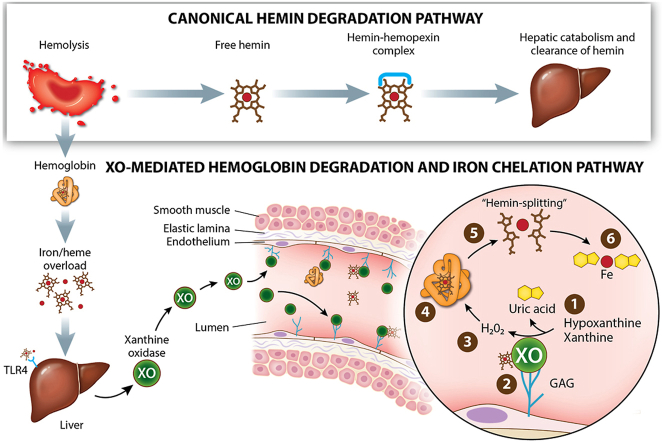
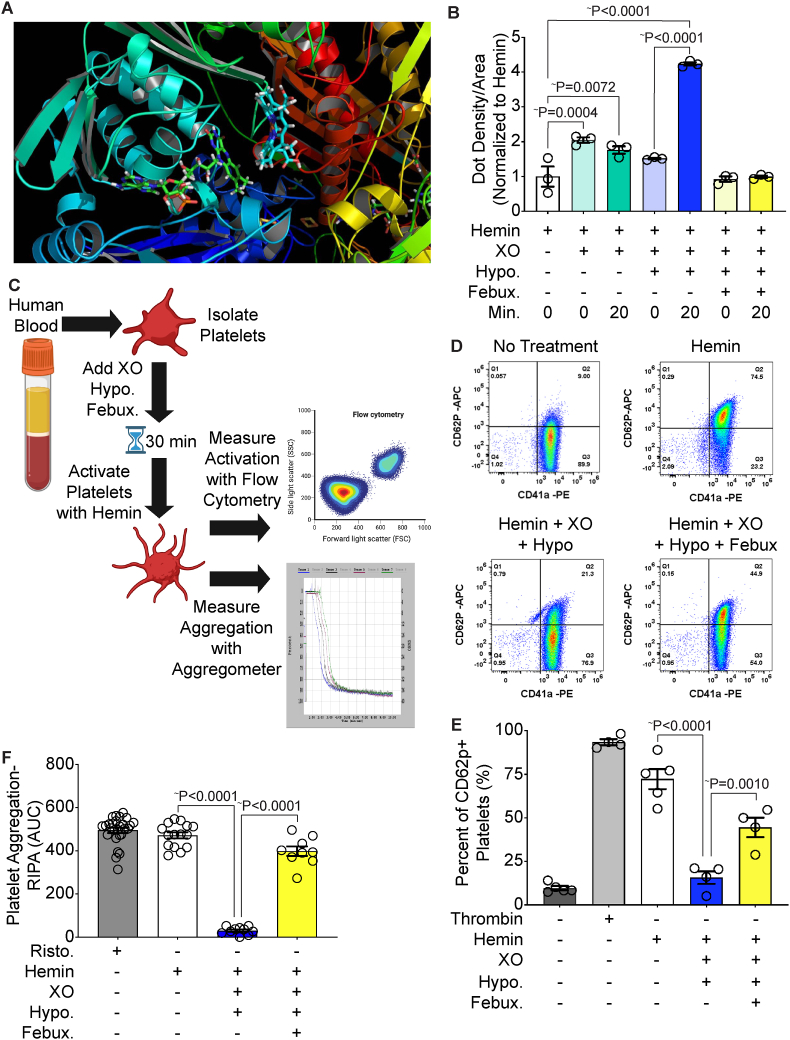
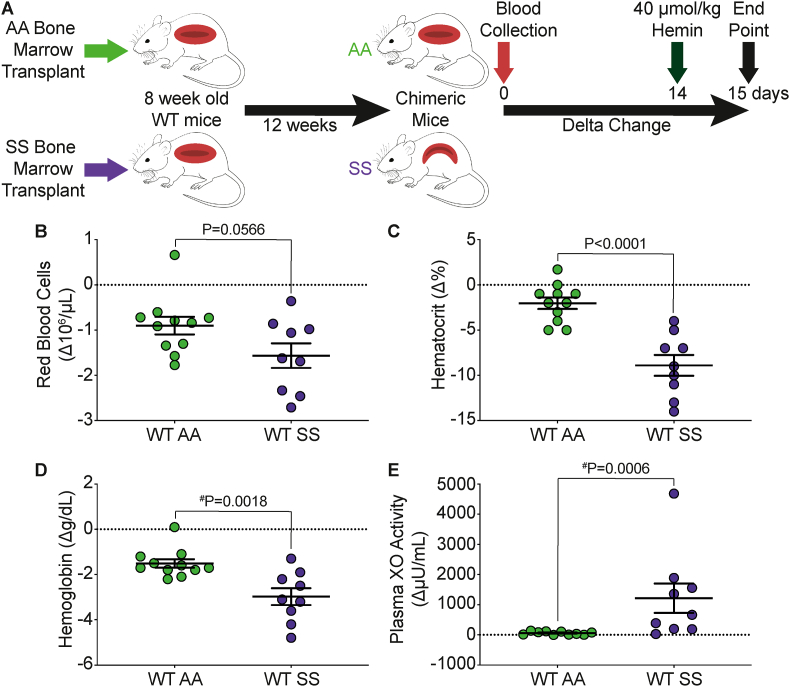
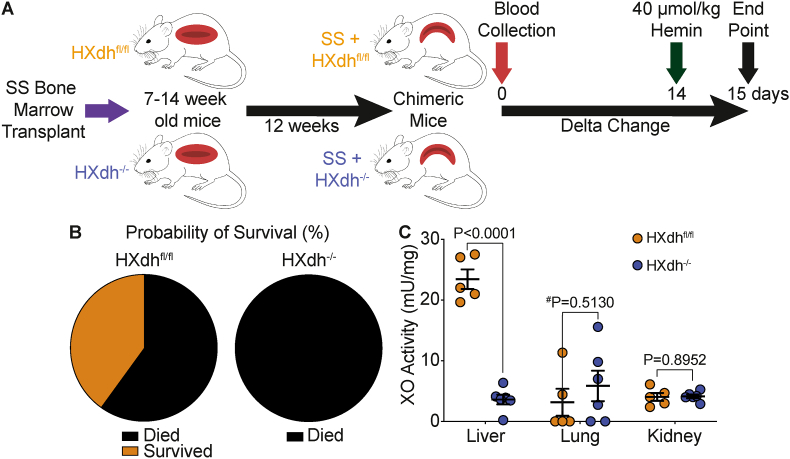
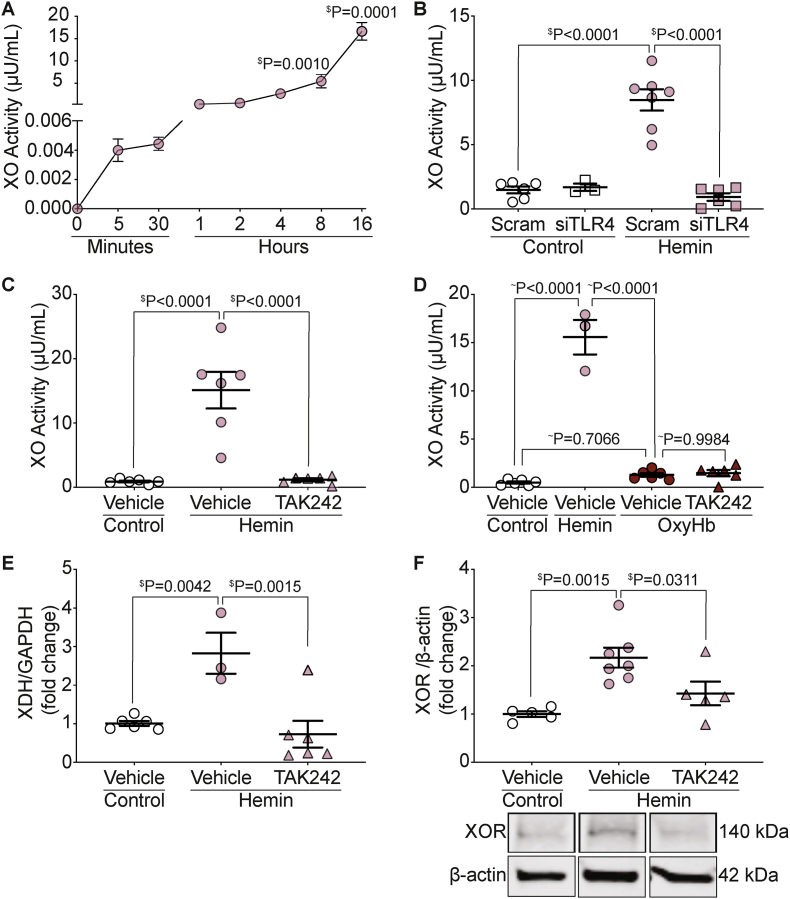
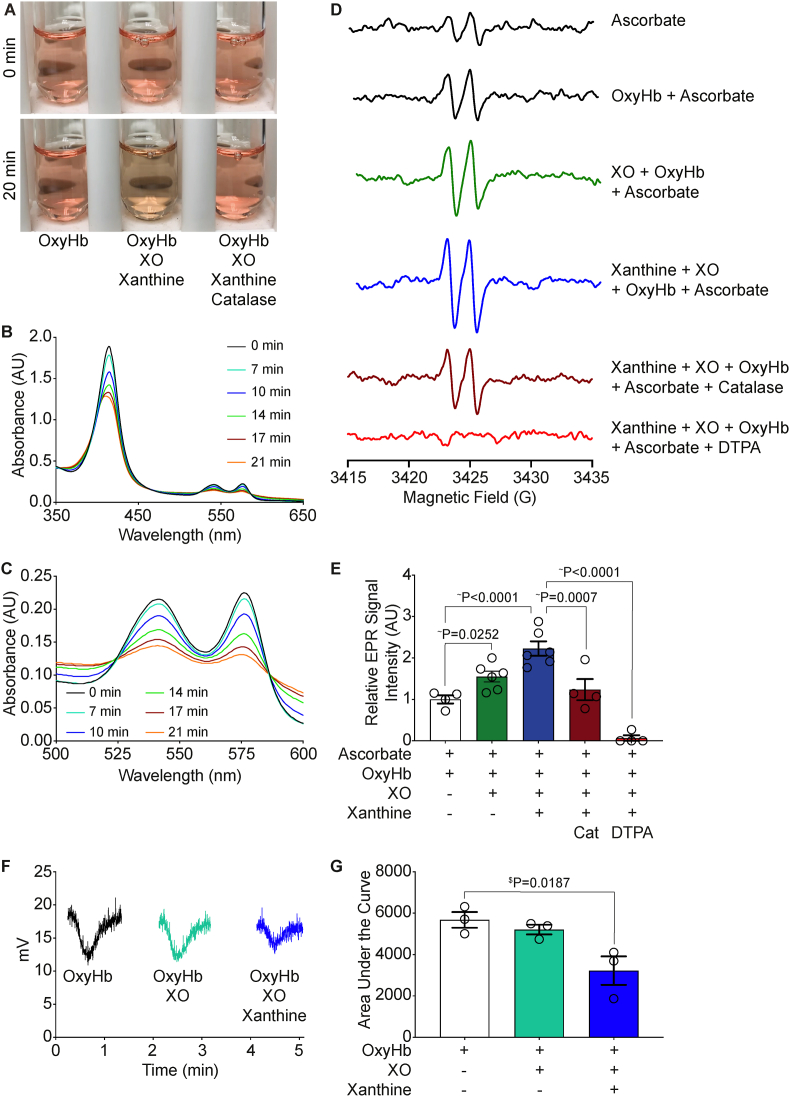
Xanthine oxidase (XO) catalyzes the catabolism of hypoxanthine to xanthine and xanthine to uric acid, generating oxidants as a byproduct. Importantly, XO activity is elevated in numerous hemolytic conditions including sickle cell disease (SCD); however, the role of XO in this context has not been elucidated. Whereas long-standing dogma suggests elevated levels of XO in the vascular compartment contribute to vascular pathology via increased oxidant production, herein, we demonstrate, for the first time, that XO has an unexpected protective role during hemolysis. Using an established hemolysis model, we found that intravascular hemin challenge (40 μmol/kg) resulted in a significant increase in hemolysis and an immense (20-fold) elevation in plasma XO activity in Townes sickle cell phenotype (SS) sickle mice compared to controls. Repeating the hemin challenge model in hepatocyte-specific XO knockout mice transplanted with SS bone marrow confirmed the liver as the source of enhanced circulating XO as these mice demonstrated 100% lethality compared to 40% survival in controls. In addition, studies in murine hepatocytes (AML12) revealed hemin mediates upregulation and release of XO to the medium in a toll like receptor 4 (TLR4)-dependent manner. Furthermore, we demonstrate that XO degrades oxyhemoglobin and releases free hemin and iron in a hydrogen peroxide-dependent manner. Additional biochemical studies revealed purified XO binds free hemin to diminish the potential for deleterious hemin-related redox reactions as well as prevents platelet aggregation. In the aggregate, data herein reveals that intravascular hemin challenge induces XO release by hepatocytes through hemin-TLR4 signaling, resulting in an immense elevation of circulating XO. This increased XO activity in the vascular compartment mediates protection from intravascular hemin crisis by binding and potentially degrading hemin at the apical surface of the endothelium where XO is known to be bound and sequestered by endothelial glycosaminoglycans (GAGs).
黄嘌呤氧化酶 (XO) 催化次黄嘌呤分解为黄嘌呤和黄嘌呤转化为尿酸,并产生氧化产物作为副产物。重要的是,在包括镰状细胞病 (SCD) 在内的许多溶血性疾病中,XO 活性升高;然而,其在这种情况下的作用尚未阐明。虽然长期以来的观点认为血管腔内 XO 水平升高会通过增加氧化产物的产生导致血管病理学,但在此,我们首次证明,在溶血过程中,XO 具有意想不到的保护作用。我们使用已建立的溶血模型发现,与对照相比,血管内血红素挑战(40 μmol/kg)导致明显的溶血增加和血浆 XO 活性的巨大(20 倍)升高在 Townes 镰状细胞表型(SS)镰状细胞小鼠中。在接受 SS 骨髓移植的肝细胞特异性 XO 敲除小鼠中重复血红素挑战模型证实肝脏是增强循环 XO 的来源,因为这些小鼠的死亡率为 100%,而对照小鼠的存活率为 40%。此外,在鼠肝细胞(AML12)中的研究表明,血红素通过 Toll 样受体 4 (TLR4) 依赖性方式介导 XO 的上调和释放到培养基中。此外,我们证明 XO 以过氧化氢依赖性方式降解氧合血红蛋白并释放游离血红素和铁。进一步的生化研究表明,纯化的 XO 结合游离血红素以减少有害的血红素相关氧化还原反应的潜力,并防止血小板聚集。总的来说,本文的数据揭示了血管内血红素挑战通过血红素-TLR4 信号诱导肝细胞释放 XO,导致循环 XO 大量升高。血管腔内的这种 XO 活性增加通过结合并可能在已知与内皮糖胺聚糖 (GAG) 结合和隔离的内皮细胞表面降解血红素来介导对血管内血红素危机的保护。