McDermott Eric J, Metsomaa Johanna, Belardinelli Paolo, Grosse-Wentrup Moritz, Ziemann Ulf, Zrenner Christoph
Department of Neurology and Stroke, and Hertie Institute for Clinical Brain Research, Eberhard Karls University Tübingen, Hoppe-Seyler-Straße 3, 72076 Tübingen, Germany.
Hertie Institute for Clinical Brain Research, Eberhard Karls University, Tübingen, Germany.
Virtual Real. 2023;27(1):347-369. doi: 10.1007/s10055-021-00538-x. Epub 2021 Sep 23.
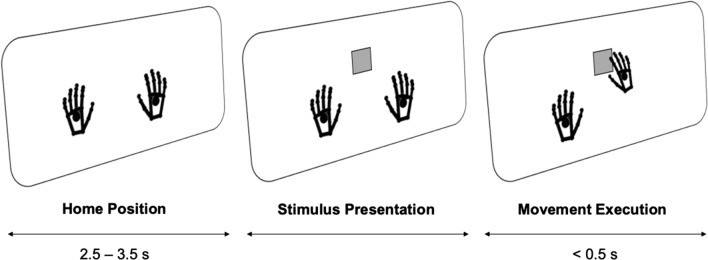
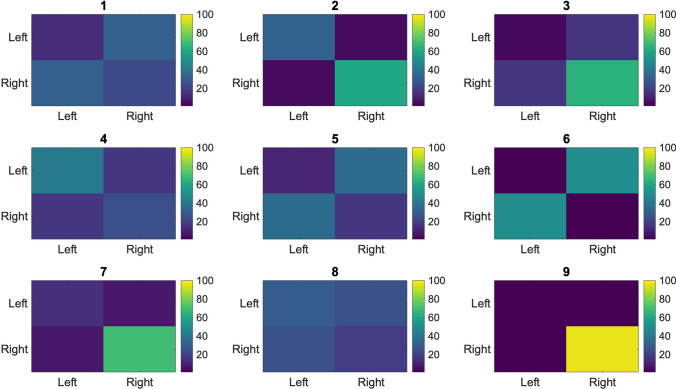
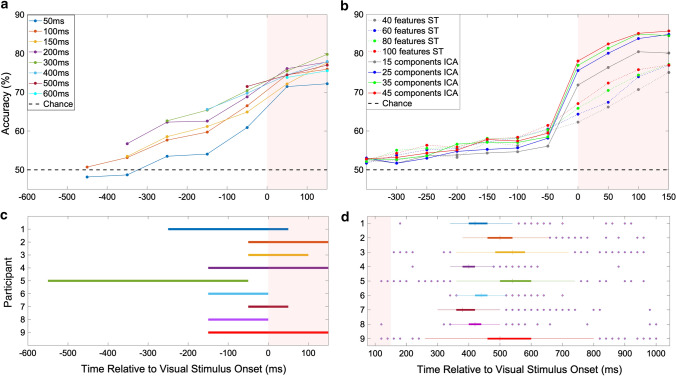
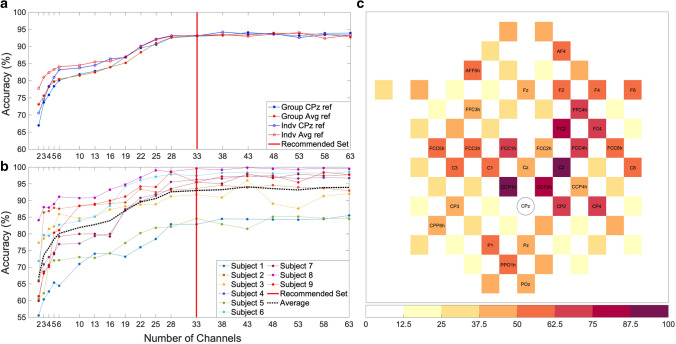
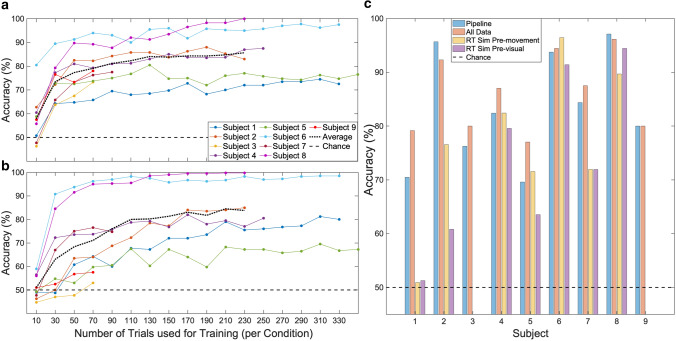
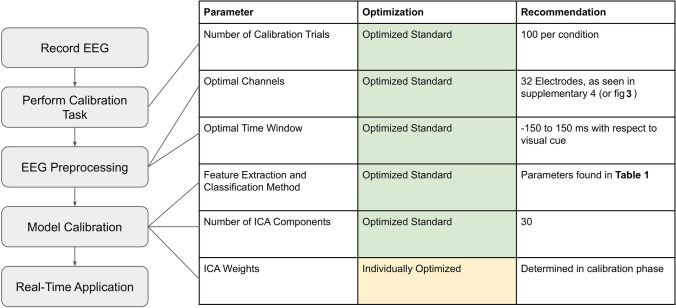
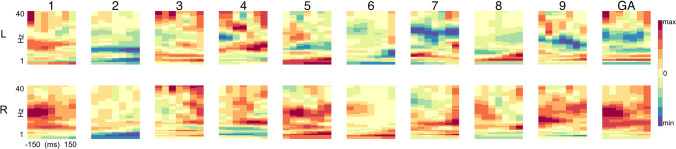
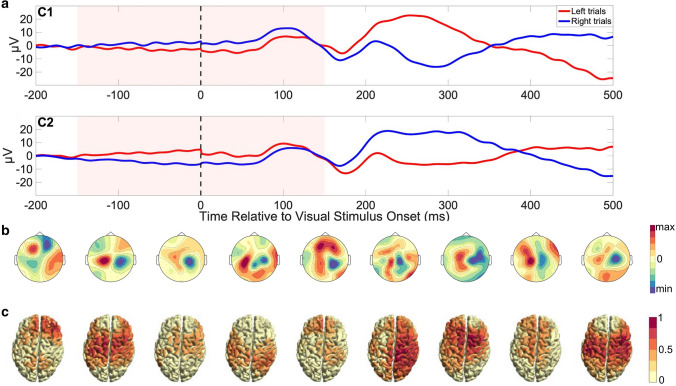
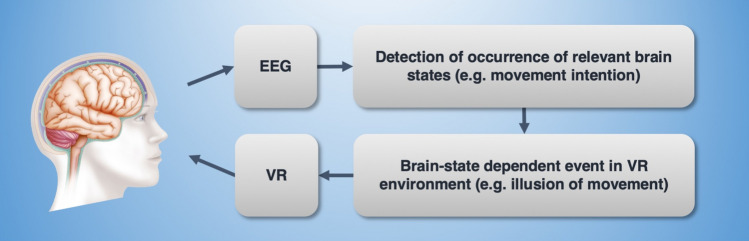
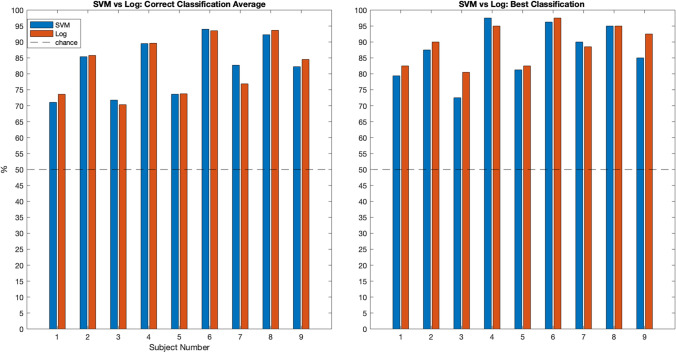
Virtual reality (VR)-based motor therapy is an emerging approach in neurorehabilitation. The combination of VR with electroencephalography (EEG) presents further opportunities to improve therapeutic efficacy by personalizing the paradigm. Specifically, the idea is to synchronize the choice and timing of stimuli in the perceived virtual world with fluctuating brain states relevant to motor behavior. Here, we present an open source EEG single-trial based classification pipeline that is designed to identify ongoing brain states predictive of the planning and execution of movements. 9 healthy volunteers each performed 1080 trials of a repetitive reaching task with an implicit two-alternative forced choice, i.e., use of the right or left hand, in response to the appearance of a visual target. The performance of the EEG decoding pipeline was assessed with respect to classification accuracy of right vs. left arm use, based on the EEG signal at the time of the stimulus. Different features, feature extraction methods, and classifiers were compared at different time windows; the number and location of informative EEG channels and the number of calibration trials needed were also quantified, as well as any benefits from individual-level optimization of pipeline parameters. This resulted in a set of recommended parameters that achieved an average 83.3% correct prediction on never-before-seen testing data, and a state-of-the-art 77.1% in a real-time simulation. Neurophysiological plausibility of the resulting classifiers was assessed by time-frequency and event-related potential analyses, as well as by Independent Component Analysis topographies and cortical source localization. We expect that this pipeline will facilitate the identification of relevant brain states as prospective therapeutic targets in closed-loop EEG-VR motor neurorehabilitation.
基于虚拟现实(VR)的运动疗法是神经康复领域中一种新兴的方法。将VR与脑电图(EEG)相结合,为通过个性化治疗模式提高治疗效果提供了更多机会。具体而言,其理念是使虚拟世界中感知到的刺激选择和时机与与运动行为相关的波动脑状态同步。在此,我们展示了一个基于EEG单次试验的开源分类流程,该流程旨在识别预测运动计划和执行的当前脑状态。9名健康志愿者每人进行了1080次重复伸手任务试验,针对视觉目标的出现进行隐含的二选一强制选择,即使用右手或左手。基于刺激时的EEG信号,根据右臂与左臂使用的分类准确率评估EEG解码流程的性能。在不同时间窗口比较了不同特征、特征提取方法和分类器;还对信息丰富的EEG通道数量和位置、所需校准试验次数以及管道参数的个体水平优化带来的任何益处进行了量化。这产生了一组推荐参数,在前所未见的测试数据上平均实现了83.3%的正确预测,在实时模拟中达到了77.1%的先进水平。通过时频和事件相关电位分析,以及独立成分分析地形图和皮质源定位,评估了所得分类器的神经生理学合理性。我们期望该流程将有助于识别相关脑状态,作为闭环EEG-VR运动神经康复中的潜在治疗靶点。