Pharmacology and Toxicology Department, Faculty of Pharmacy, Misr International University (MIU), KM 28, Cairo-Ismailia Road, Ahmed Orabi District, Cairo, Egypt.
Pharmacology and Toxicology Department, Faculty of Pharmacy, Badr University in Cairo (BUC), Cairo, Egypt.
Arch Pharm Res. 2023 Apr;46(4):323-338. doi: 10.1007/s12272-023-01441-6. Epub 2023 Mar 23.
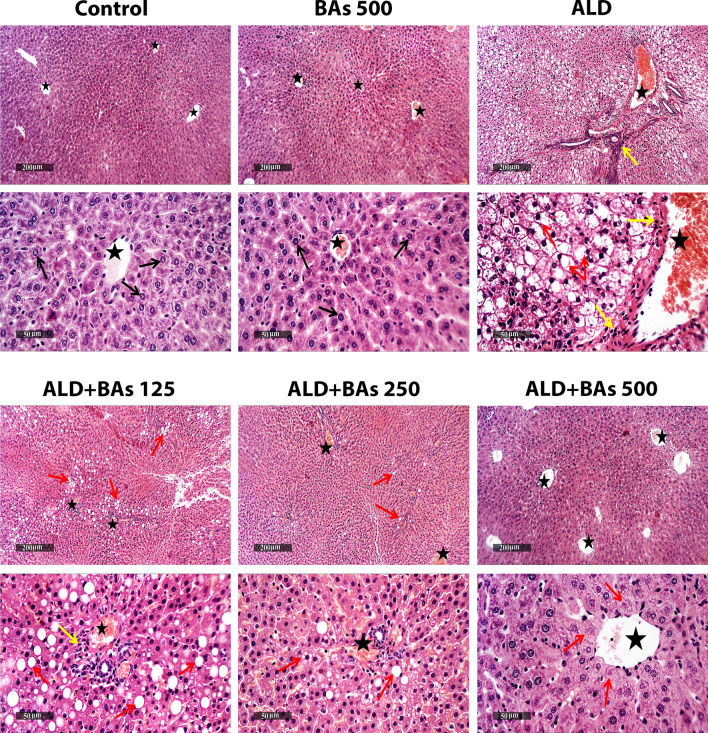
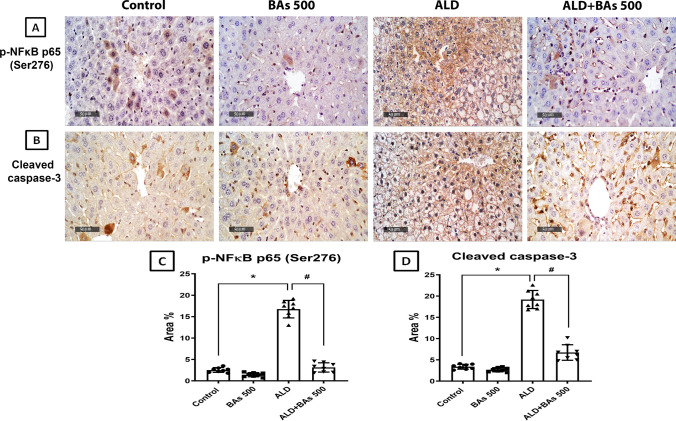
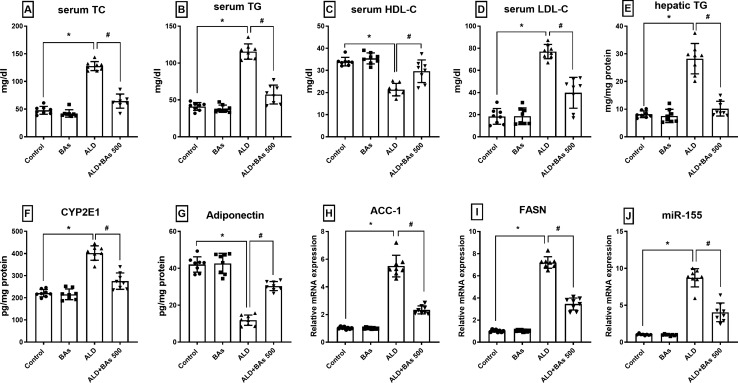
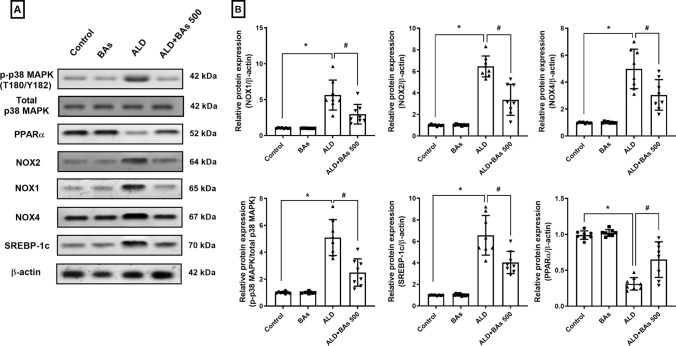
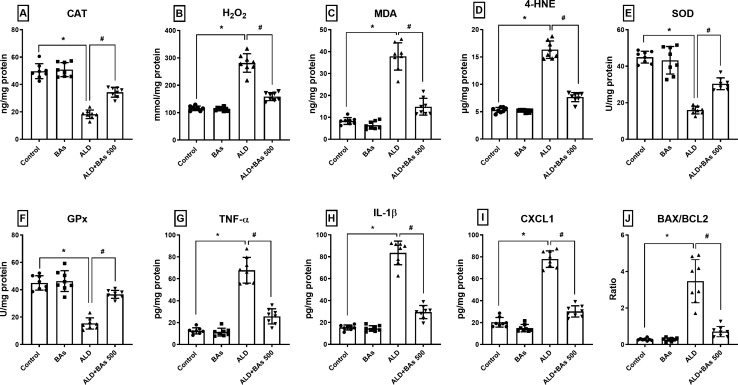
Alcoholic liver disease (ALD) refers to hepatic ailments induced by excessive alcohol intake. The pathogenesis of ALD comprises a complex interplay between various mechanistic pathways, among which inflammation and oxidative stress are key players. Boswellic acids (BAs), found in Boswellia serrata, have shown hepatoprotective effects owing to their antioxidant and anti-inflammatory activities, nevertheless, their therapeutic potential against ALD has not been previously investigated. Hence, this study was performed to depict the possible protective effect of BAs and detect their underlying mechanism of action in an experimentally-induced ALD mouse model. Male BALB/c mice were equally categorized into six groups: control, BAs-treated, ALD, and ALD that received BAs at three-dose levels (125, 250, and 500 mg/kg) by oral gavage for 14 days. Results showed that the high dose of BAs had the most protective impact against ALD according to histopathology examination, blood alcohol concentration (BAC), and liver function enzymes. Mechanistic investigations revealed that BAs (500 mg/kg) caused a significant decrease in cytochrome P450 2E1(CYP2E1), nicotine adenine dinucleotide phosphate oxidase (NOX) 1/2/4, p38 mitogen-activated protein kinase (MAPK), and sterol regulatory element-binding protein-1c (SREBP-1c) levels, and the expression of miR-155, yet increased peroxisome proliferator-activated receptor alpha (PPARα) levels. This led to an improvement in lipid profile and reduced hepatic inflammation, oxidative stress, and apoptosis indices. In summary, our study concludes that BAs can protect against ethanol-induced hepatic injury, via modulating NOX/p38 MAPK/PPARα pathways and miR-155 expression.
酒精性肝病(ALD)是指由于过量饮酒引起的肝脏疾病。ALD 的发病机制涉及多种机制途径的复杂相互作用,其中炎症和氧化应激是关键因素。乳香酸(BAs)存在于乳香树中,由于其抗氧化和抗炎活性,具有肝保护作用,但它们对 ALD 的治疗潜力尚未得到研究。因此,本研究旨在描述 BAs 的可能保护作用,并在实验性 ALD 小鼠模型中检测其潜在的作用机制。雄性 BALB/c 小鼠被平均分为六组:对照组、BAs 处理组、ALD 组和 ALD 组,ALD 组通过口服灌胃给予三种剂量水平(125、250 和 500mg/kg)的 BAs 14 天。结果表明,根据组织病理学检查、血酒精浓度(BAC)和肝功能酶,高剂量 BAs 对 ALD 具有最显著的保护作用。机制研究表明,BAs(500mg/kg)可显著降低细胞色素 P450 2E1(CYP2E1)、烟酰胺腺嘌呤二核苷酸磷酸氧化酶(NOX)1/2/4、p38 丝裂原激活蛋白激酶(MAPK)和固醇调节元件结合蛋白-1c(SREBP-1c)的水平,以及 miR-155 的表达,但增加过氧化物酶体增殖物激活受体α(PPARα)的水平。这导致脂质谱改善,肝炎症、氧化应激和细胞凋亡指数降低。综上所述,我们的研究表明,BAs 通过调节 NOX/p38 MAPK/PPARα 途径和 miR-155 表达,可预防乙醇诱导的肝损伤。