Pham Bang Nguyen, Jorry Ronny, Abori Nora, Silas Vinson D, Okely Anthony D, Pomat William
Papua New Guinea Institute of Medical Research, Goroka, Papua New Guinea.
School of Health & Society and Early Start, University of Wollongong, Wollongong, Australia.
PLOS Glob Public Health. 2022 Mar 25;2(3):e0000118. doi: 10.1371/journal.pgph.0000118. eCollection 2022.
Papua New Guinea (PNG) is undergoing an epidemiological transition with increased mortality from NCDs. This study examined NCDs-attributed mortality and associated sociodemographic factors in PNG.
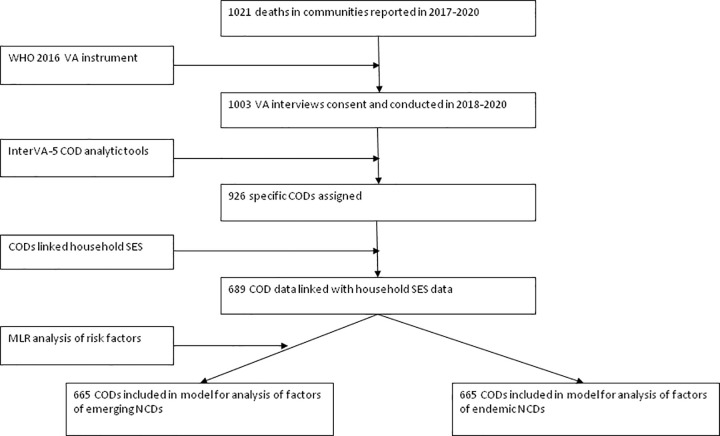
Using WHO 2016 instrument, 926 verbal autopsy (VA) interviews were conducted in six major provinces from January 2018 to December 2020. InterVA-5 tool was used to assign causes of death (COD). Multivariable logistic regression analysis was performed to identify sociodemographic factors associated with mortalities from emerging and endemic NCDs.
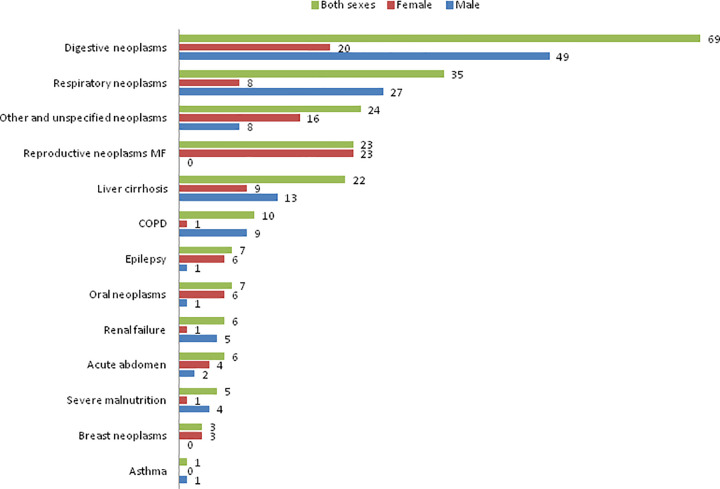
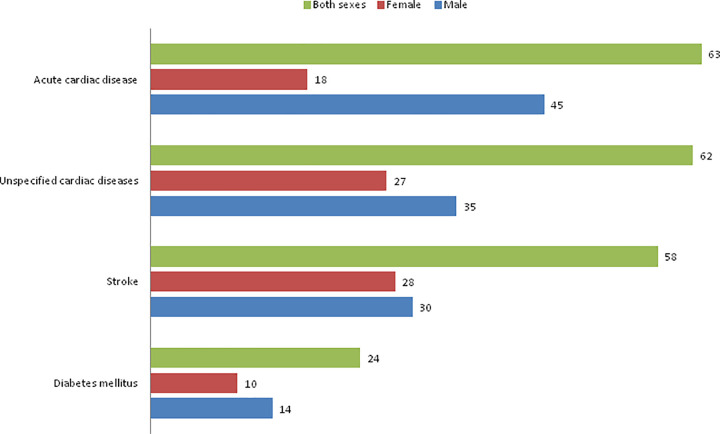
NCDs accounted for 47% of the total deaths, including 20% of deaths attributed to emerging NCDs and 27% of deaths due to endemic NCDs. Leading CODs from emerging NCDs were identified including cardiac diseases, stroke, and diabetes. The risk of dying from emerging NCDs was significantly lower among populations under age 44y compared with population aged 75+y (OR: 0.14 [0.045-0.433]; p-value: 0.001). People living in urban areas were twice likely to die from emerging NCDs than those in rural areas (OR: 1.92 [1.116-3.31]; p-value: 0.018). People in Madang province were 70% less likely to die from emerging NCDs compared to those from East New Britain province (OR: 0.314 [0.135-0.73]; p-value: 0.007). Leading CODs from endemic NCDs included digestive neoplasms, respiratory neoplasms, and other neoplasms. Only children aged 0-4y had significant lower risk of dying from endemic NCDs compared to the population aged 75+y (OR: 0.114 [95% CI: 0.014-0.896]; p-value: 0.039).
Public health interventions are urgently needed, prioritizing urban population and those aged over 44y to reduce premature mortality from NCDs.
巴布亚新几内亚(PNG)正在经历流行病学转变,非传染性疾病(NCDs)导致的死亡率上升。本研究调查了巴布亚新几内亚非传染性疾病所致死亡率及相关社会人口学因素。
使用世界卫生组织2016年的工具,于2018年1月至2020年12月在六个主要省份进行了926次口头尸检(VA)访谈。使用InterVA-5工具确定死因(COD)。进行多变量逻辑回归分析,以确定与新出现的和地方性非传染性疾病死亡率相关的社会人口学因素。
非传染性疾病占总死亡人数的47%,其中20%归因于新出现的非传染性疾病,27%归因于地方性非传染性疾病。确定了新出现的非传染性疾病的主要死因,包括心脏病、中风和糖尿病。与75岁及以上人群相比,44岁以下人群死于新出现的非传染性疾病的风险显著降低(比值比:0.14[0.045-0.433];p值:0.001)。城市地区的人死于新出现的非传染性疾病的可能性是农村地区的两倍(比值比:1.92[1.116-3.31];p值:0.018)。与东新不列颠省的人相比,马当省的人死于新出现的非传染性疾病的可能性低70%(比值比:0.314[0.135-0.73];p值:0.007)。地方性非传染性疾病的主要死因包括消化系统肿瘤、呼吸道肿瘤和其他肿瘤。与75岁及以上人群相比(比值比:0.114[95%置信区间:0.014-0.896];p值:0.039),只有0-4岁的儿童死于地方性非传染性疾病的风险显著较低。
迫切需要采取公共卫生干预措施,优先考虑城市人口和44岁以上人群,以降低非传染性疾病导致的过早死亡率。