Institute of Crop Science and Resource Conservation (INRES), Plant Diseases and Plant Protection, University of Bonn, 53115 Bonn, Germany.
Institute for Grapevine Breeding, Julius Kühn-Institut, 76833 Siebeldingen, Germany.
Toxins (Basel). 2023 Mar 3;15(3):192. doi: 10.3390/toxins15030192.
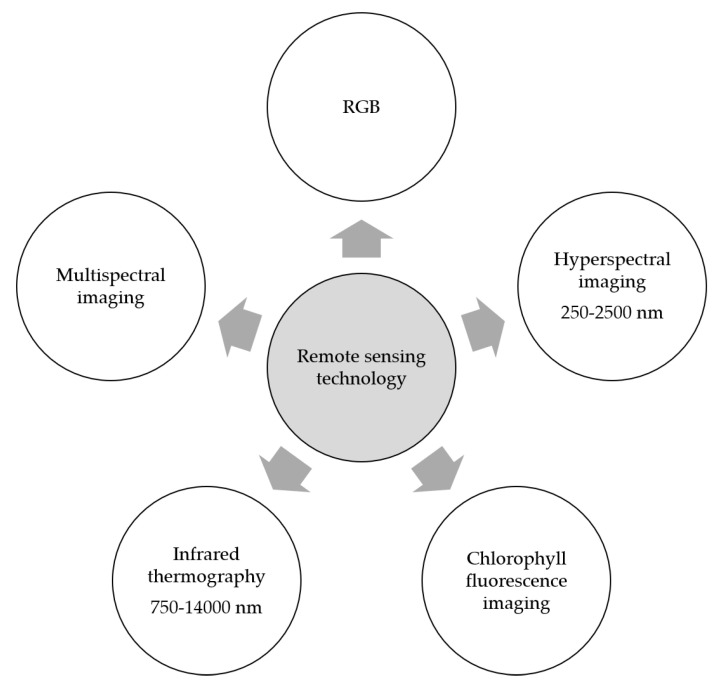
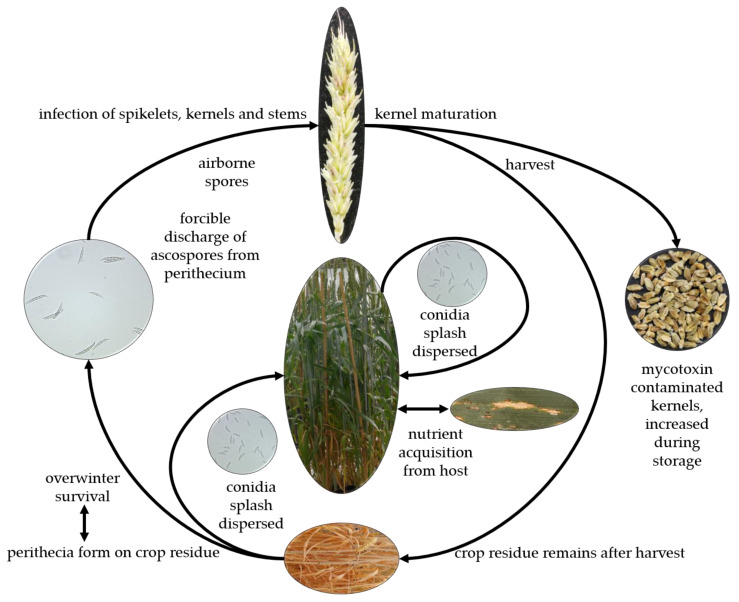
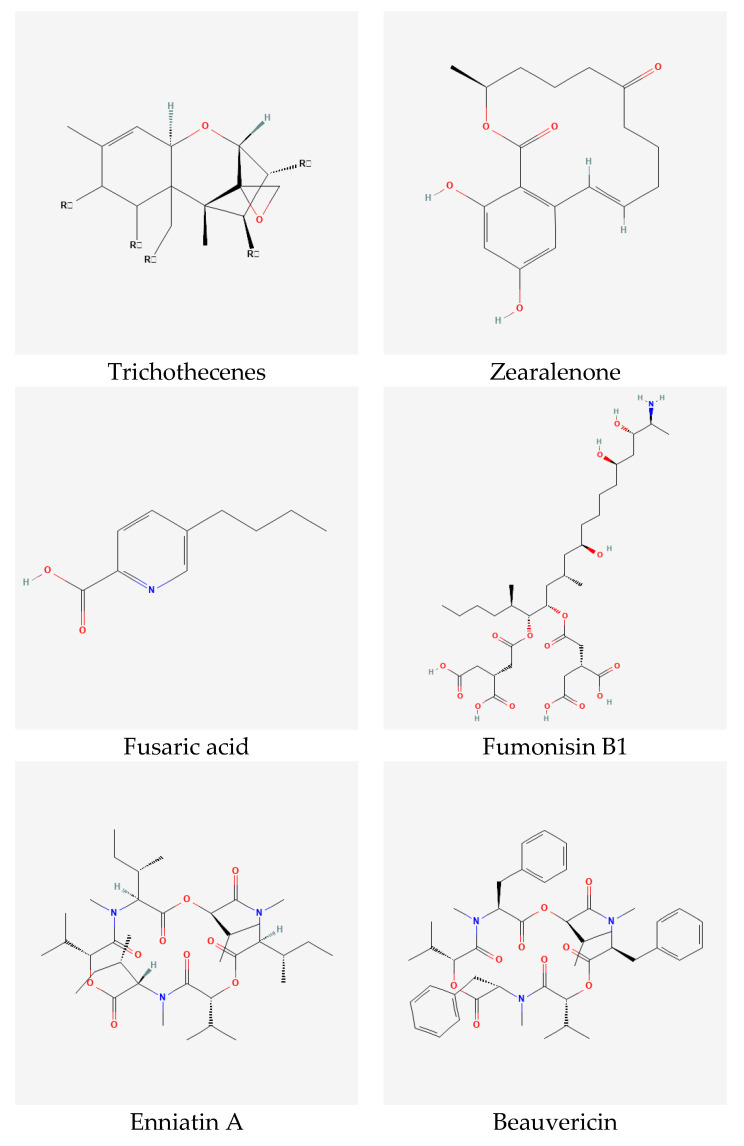
head blight (FHB) is a major threat for wheat production worldwide. Most reviews focus on as a main causal agent of FHB. However, different species are involved in this disease complex. These species differ in their geographic adaptation and mycotoxin profile. The incidence of FHB epidemics is highly correlated with weather conditions, especially rainy days with warm temperatures at anthesis and an abundance of primary inoculum. Yield losses due to the disease can reach up to 80% of the crop. This review summarizes the species involved in the FHB disease complex with the corresponding mycotoxin profiles, disease cycle, diagnostic methods, the history of FHB epidemics, and the management strategy of the disease. In addition, it discusses the role of remote sensing technology in the integrated management of the disease. This technology can accelerate the phenotyping process in the breeding programs aiming at FHB-resistant varieties. Moreover, it can support the decision-making strategies to apply fungicides via monitoring and early detection of the diseases under field conditions. It can also be used for selective harvest to avoid mycotoxin-contaminated plots in the field.
小麦赤霉病(FHB)是全球小麦生产的主要威胁。大多数综述都集中在[病原体]作为 FHB 的主要致病因子。然而,不同的[病原体]物种参与了这种疾病的复合。这些物种在地理适应性和真菌毒素特征上存在差异。FHB 流行的发生与天气条件高度相关,尤其是在开花期温暖潮湿、有大量初始接种体的雨天。由于该疾病导致的产量损失可达作物的 80%。本综述总结了参与 FHB 疾病复合的[病原体]物种及其相应的真菌毒素特征、疾病周期、诊断方法、FHB 流行的历史以及该疾病的管理策略。此外,还讨论了遥感技术在该疾病综合管理中的作用。该技术可以加速针对 FHB 抗性品种的育种计划中的表型分析过程。此外,它可以通过监测和早期检测田间条件下的疾病,为应用杀菌剂提供决策支持策略。它还可用于选择性收获,以避免田间受真菌毒素污染的地块。