Tana Milena, Tirone Chiara, Aurilia Claudia, Lio Alessandra, Paladini Angela, Fattore Simona, Esposito Alice, De Tomaso Davide, Vento Giovanni
Unità Operativa Complessa di Neonatologia, Fondazione Policlinico Universitario A. Gemelli IRCCS, 00168 Rome, Italy.
Department of Woman and Child Health and Public Health, Università Cattolica del Sacro Cuore, 00168 Rome, Italy.
Children (Basel). 2023 Mar 10;10(3):535. doi: 10.3390/children10030535.
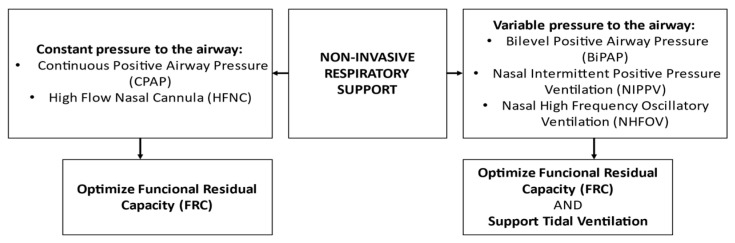
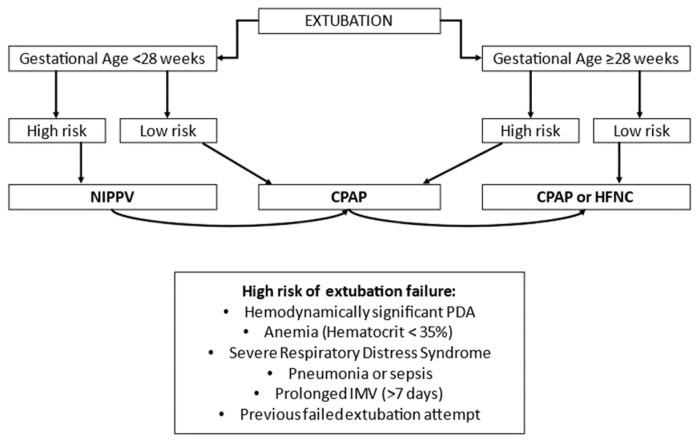
Extremely preterm infants frequently require some form of respiratory assistance to facilitate the cardiopulmonary transition that occurs in the first hours of life. Current resuscitation guidelines identify as a primary determinant of overall newborn survival the establishment, immediately after birth, of adequate lung inflation and ventilation to ensure an adequate functional residual capacity. Any respiratory support provided, however, is an important contributing factor to the development of bronchopulmonary dysplasia. The risks correlated to invasive ventilatory techniques increase inversely with gestational age. Preterm infants are born at an early stage of lung development and are more susceptible to lung injury deriving from mechanical ventilation. Any approach aiming to reduce the global burden of preterm lung disease must implement lung-protective ventilation strategies that begin from the newborn's first breaths in the delivery room. Neonatologists today must be able to manage both invasive and noninvasive forms of respiratory assistance to treat a spectrum of lung diseases ranging from acute to chronic conditions. We searched PubMed for articles on preterm infant respiratory assistance. Our narrative review provides an evidence-based overview on the respiratory management of preterm infants, especially in the acute phase of neonatal respiratory distress syndrome, starting from the delivery room and continuing in the neonatal intensive care unit, including a section regarding exogenous surfactant therapy.
极早产儿在出生后的最初几个小时内,常常需要某种形式的呼吸支持来促进心肺功能的转变。当前的复苏指南将出生后立即建立充分的肺膨胀和通气以确保足够的功能残气量,确定为新生儿总体生存的主要决定因素。然而,所提供的任何呼吸支持都是支气管肺发育不良发生的一个重要促成因素。与有创通气技术相关的风险与胎龄呈反比。早产儿在肺发育的早期阶段出生,更容易受到机械通气所致肺损伤的影响。任何旨在减轻早产儿肺部疾病全球负担的方法,都必须实施从产房内新生儿的第一口呼吸开始的肺保护性通气策略。如今,新生儿科医生必须能够管理有创和无创形式的呼吸支持,以治疗从急性到慢性的一系列肺部疾病。我们在PubMed上搜索了有关早产儿呼吸支持的文章。我们的叙述性综述提供了基于证据的早产儿呼吸管理概述,特别是在新生儿呼吸窘迫综合征的急性期,从产房开始并持续到新生儿重症监护病房,其中包括关于外源性表面活性剂治疗的章节。