MRC Laboratory of Molecular Biology, Francis Crick Avenue, Cambridge CB2 0QH, UK.
Department of Pharmaceutical and Biological Chemistry, School of Pharmacy, University College London, 29-39 Brunswick Square, London WC1N 1AX, UK.
Sci Adv. 2023 Mar 29;9(13):eadf3021. doi: 10.1126/sciadv.adf3021.
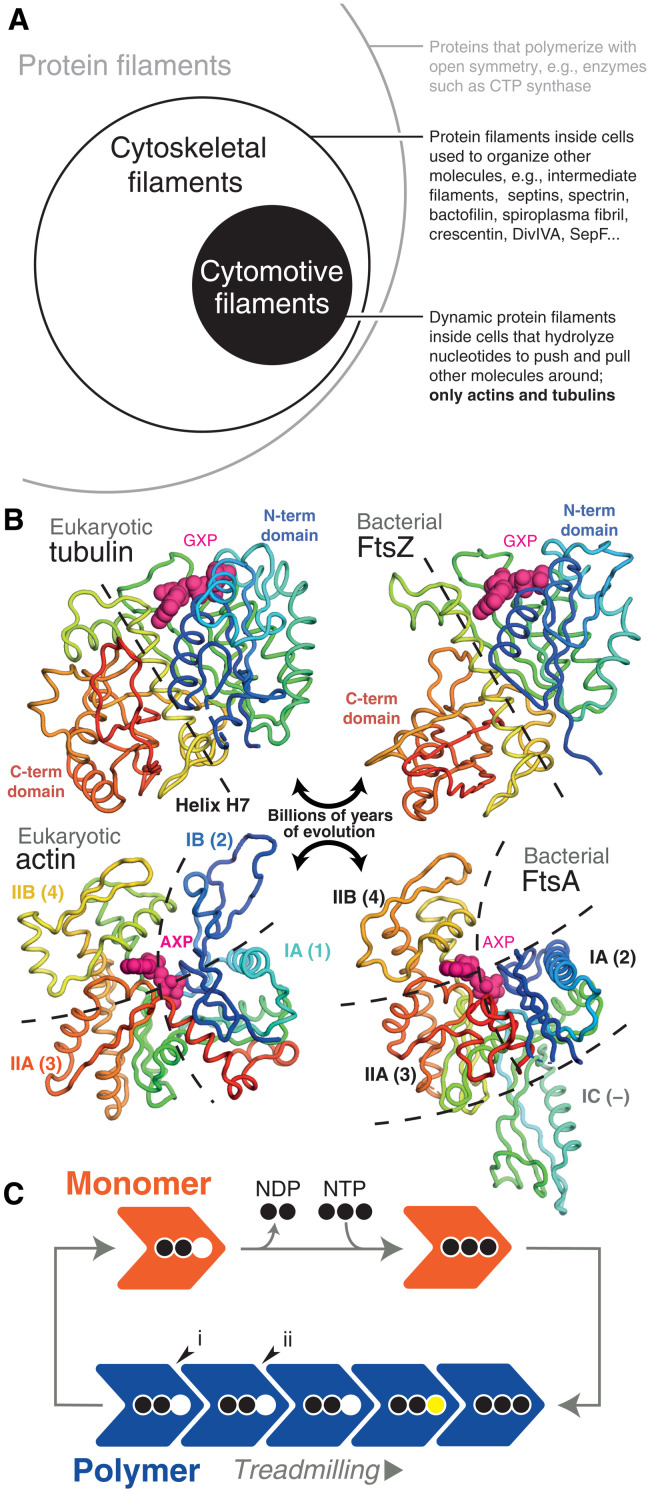
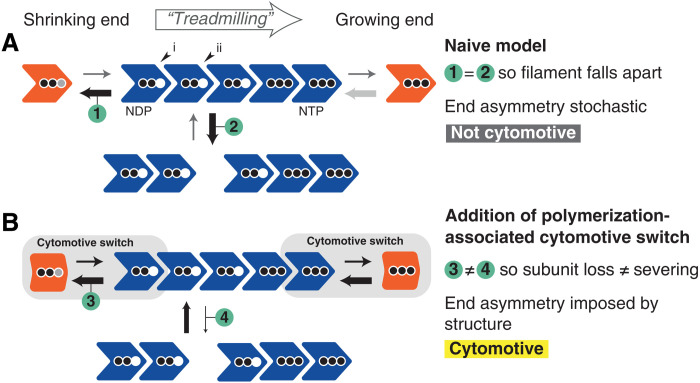
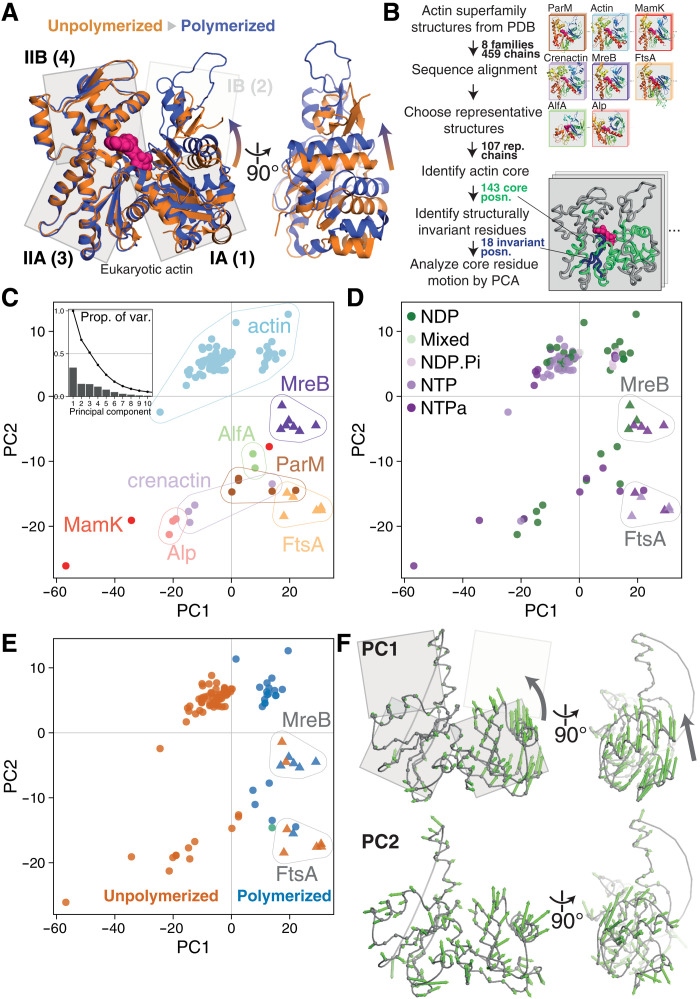
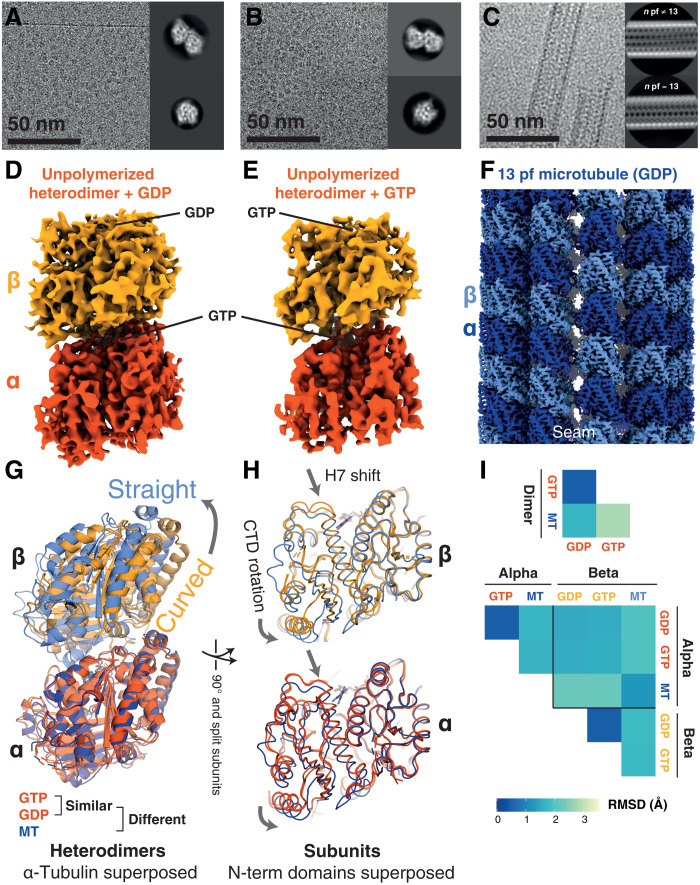
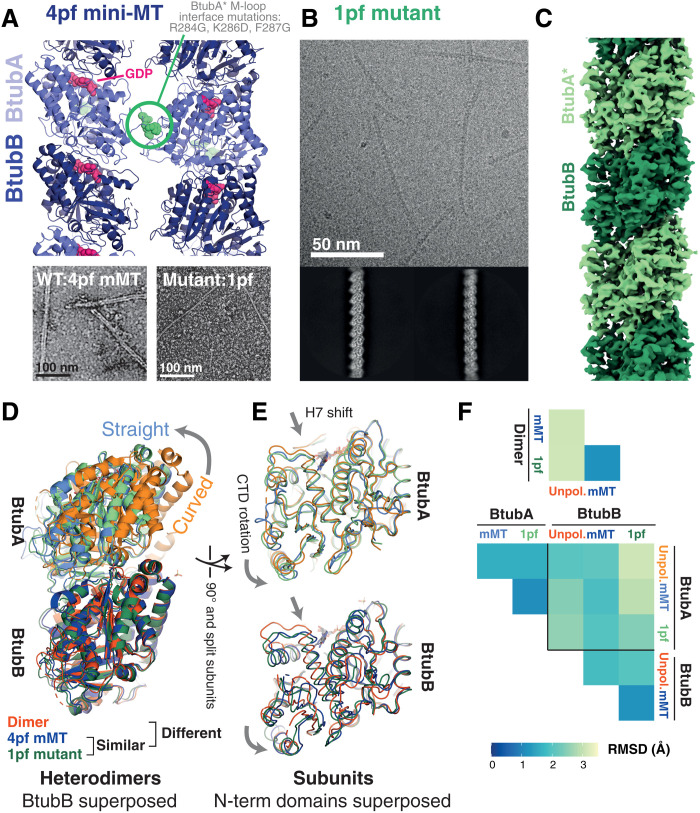
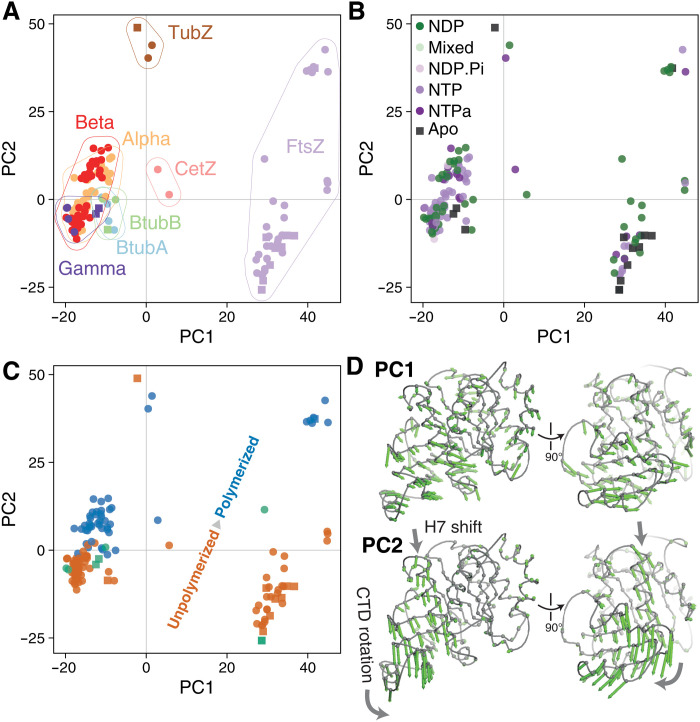
Protein filaments are used in myriads of ways to organize other molecules within cells. Some filament-forming proteins couple the hydrolysis of nucleotides to their polymerization cycle, thus powering the movement of other molecules. These filaments are termed cytomotive. Only members of the actin and tubulin protein superfamilies are known to form cytomotive filaments. We examined the basis of cytomotivity via structural studies of the polymerization cycles of actin and tubulin homologs from across the tree of life. We analyzed published data and performed structural experiments designed to disentangle functional components of these complex filament systems. Our analysis demonstrates the existence of shared subunit polymerization switches among both cytomotive actins and tubulins, i.e., the conformation of subunits switches upon assembly into filaments. These cytomotive switches can explain filament robustness, by enabling the coupling of kinetic and structural polarities required for cytomotive behaviors and by ensuring that single cytomotive filaments do not fall apart.
蛋白丝在细胞内组织其他分子的方式有千百种。有些形成纤维的蛋白质将核苷酸的水解与聚合循环偶联,从而驱动其他分子的运动。这些纤维被称为动力蛋白。已知只有肌动蛋白和微管蛋白蛋白超家族的成员能够形成动力蛋白纤维。我们通过对生命之树中不同来源的肌动蛋白和微管蛋白同源物的聚合循环的结构研究,来研究动力蛋白的基础。我们分析了已发表的数据并进行了结构实验,旨在分离这些复杂纤维系统的功能组件。我们的分析表明,动力肌动蛋白和微管蛋白都存在共享的亚基聚合开关,即亚基在组装成纤维时的构象发生转变。这些动力开关可以通过为动力行为所需的动力学和结构极性的耦合来解释纤维的稳健性,并确保单个动力纤维不会解体。