• 文献检索
  • 文档翻译
  • 深度研究
  • 学术资讯
  • Suppr Zotero 插件Zotero 插件
  • 邀请有礼
  • 套餐&价格
  • 历史记录
应用&插件
Suppr Zotero 插件Zotero 插件浏览器插件Mac 客户端Windows 客户端微信小程序
定价
高级版会员购买积分包购买API积分包
服务
文献检索文档翻译深度研究API 文档MCP 服务
关于我们
关于 Suppr公司介绍联系我们用户协议隐私条款
关注我们

Suppr 超能文献

核心技术专利:CN118964589B侵权必究
粤ICP备2023148730 号-1Suppr @ 2026

文献检索

告别复杂PubMed语法,用中文像聊天一样搜索,搜遍4000万医学文献。AI智能推荐,让科研检索更轻松。

立即免费搜索

文件翻译

保留排版,准确专业,支持PDF/Word/PPT等文件格式,支持 12+语言互译。

免费翻译文档

深度研究

AI帮你快速写综述,25分钟生成高质量综述,智能提取关键信息,辅助科研写作。

立即免费体验

加速时变磁场中自引导微型机器人的设计

Accelerating the Design of Self-Guided Microrobots in Time-Varying Magnetic Fields.

作者信息

Dhatt-Gauthier Kiran, Livitz Dimitri, Wu Yiyang, Bishop Kyle J M

机构信息

Department of Chemical Engineering, Columbia University, New York, New York 10027, United States.

出版信息

JACS Au. 2023 Mar 10;3(3):611-627. doi: 10.1021/jacsau.2c00499. eCollection 2023 Mar 27.

DOI:10.1021/jacsau.2c00499
PMID:37006772
原文链接:https://pmc.ncbi.nlm.nih.gov/articles/PMC10052236/
Abstract

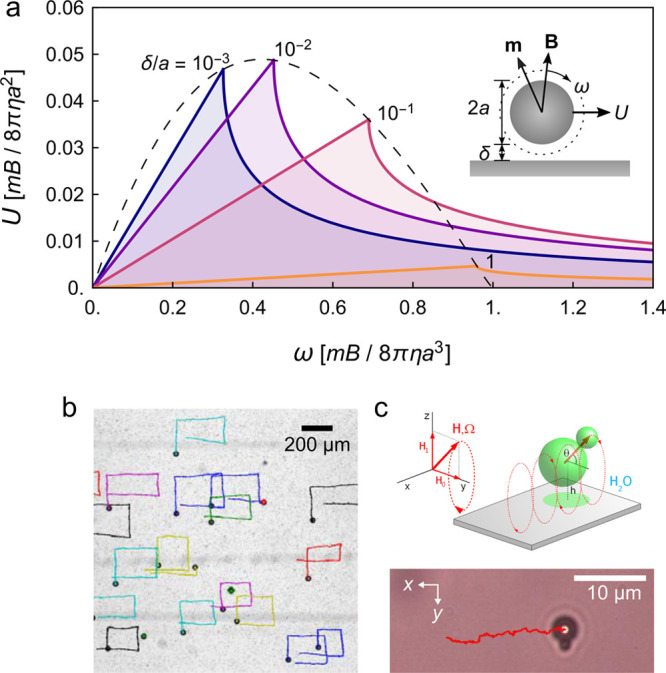
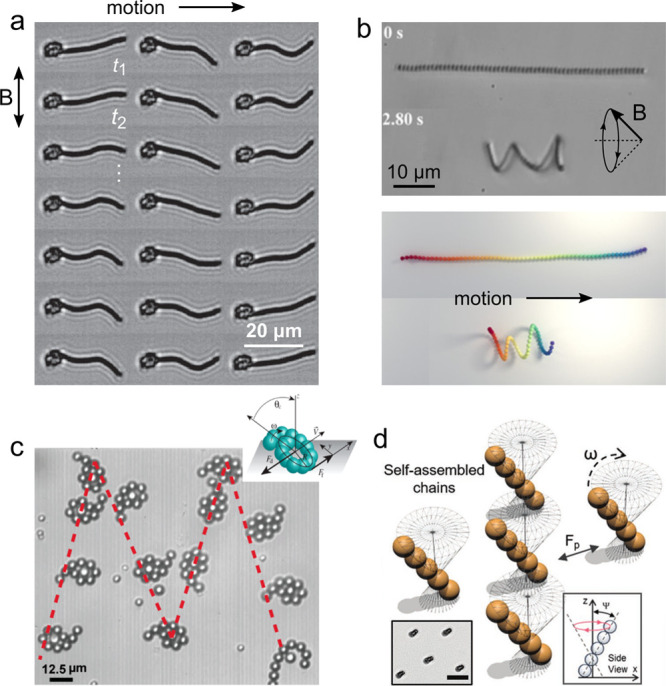
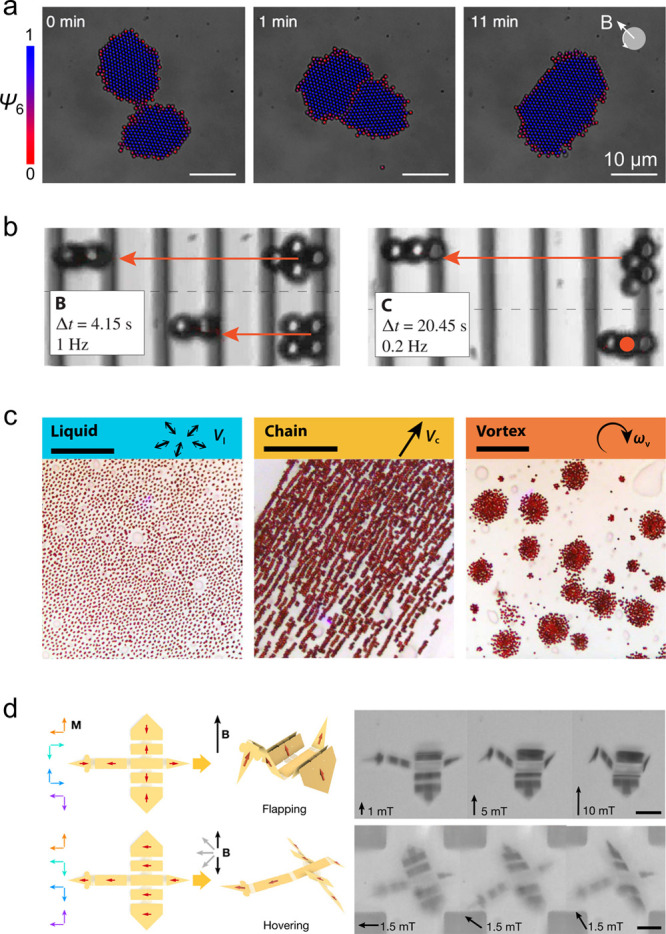
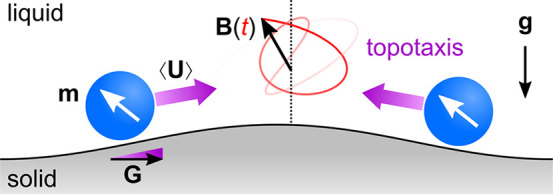
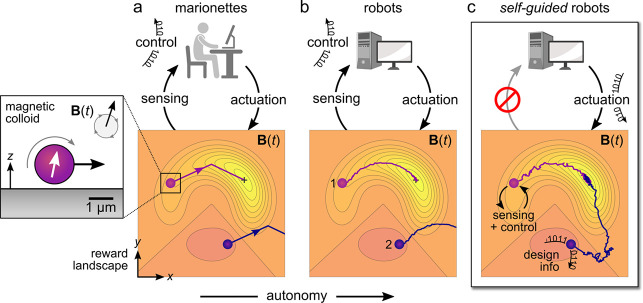
Mobile robots combine sensory information with mechanical actuation to move autonomously through structured environments and perform specific tasks. The miniaturization of such robots to the size of living cells is actively pursued for applications in biomedicine, materials science, and environmental sustainability. Existing microrobots based on field-driven particles rely on knowledge of the particle position and the target destination to control particle motion through fluid environments. Often, however, these external control strategies are challenged by limited information and global actuation where a common field directs multiple robots with unknown positions. In this Perspective, we discuss how time-varying magnetic fields can be used to encode the self-guided behaviors of magnetic particles conditioned on local environmental cues. Programming these behaviors is framed as a design problem: we seek to identify the design variables (e.g., particle shape, magnetization, elasticity, stimuli-response) that achieve the desired performance in a given environment. We discuss strategies for accelerating the design process using automated experiments, computational models, statistical inference, and machine learning approaches. Based on the current understanding of field-driven particle dynamics and existing capabilities for particle fabrication and actuation, we argue that self-guided microrobots with potentially transformative capabilities are close at hand.

摘要

移动机器人将感官信息与机械驱动相结合,以便在结构化环境中自主移动并执行特定任务。人们正在积极探索将此类机器人小型化至活细胞大小,以应用于生物医学、材料科学和环境可持续性领域。现有的基于场驱动粒子的微型机器人依靠粒子位置和目标目的地的信息来控制粒子在流体环境中的运动。然而,这些外部控制策略常常受到信息有限和全局驱动的挑战,在全局驱动中,一个共同的场会引导多个位置未知的机器人。在这篇观点文章中,我们讨论如何利用时变磁场对基于局部环境线索的磁性粒子的自引导行为进行编码。将这些行为进行编程被视为一个设计问题:我们试图确定在给定环境中实现所需性能的设计变量(例如,粒子形状、磁化强度、弹性、刺激响应)。我们讨论了使用自动化实验、计算模型、统计推断和机器学习方法来加速设计过程的策略。基于目前对场驱动粒子动力学的理解以及粒子制造和驱动的现有能力,我们认为具有潜在变革能力的自引导微型机器人即将问世。
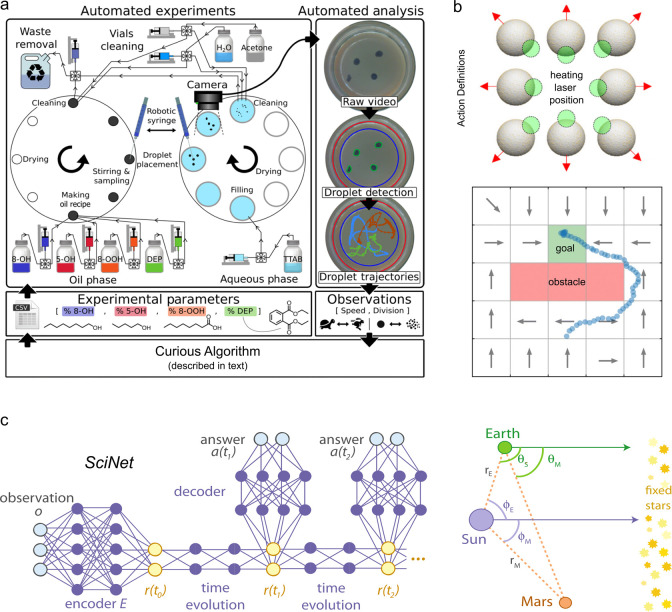
https://cdn.ncbi.nlm.nih.gov/pmc/blobs/4a07/10052236/1588268b43f4/au2c00499_0013.jpg
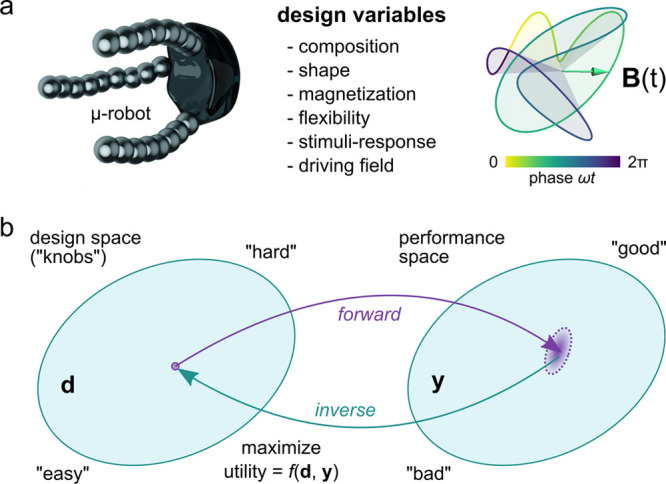
https://cdn.ncbi.nlm.nih.gov/pmc/blobs/4a07/10052236/e0be6c194c62/au2c00499_0001.jpg
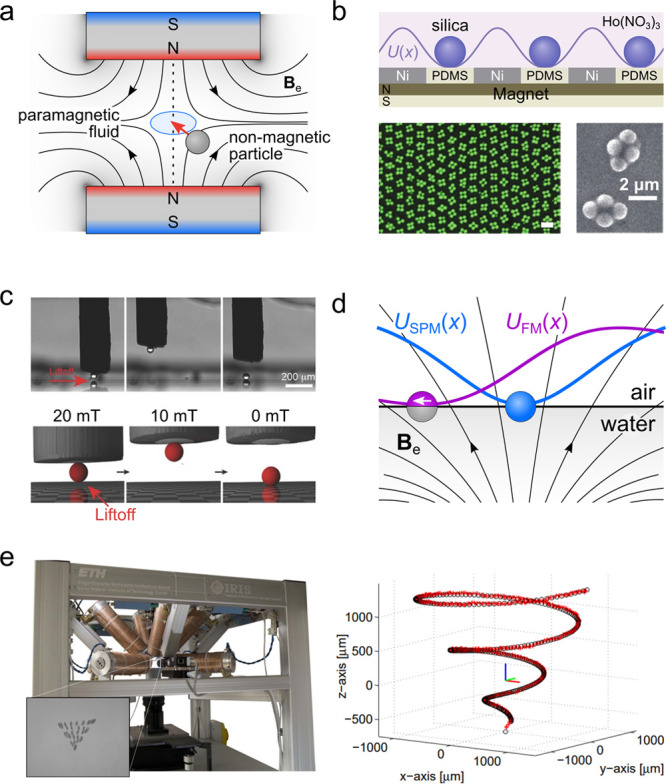
https://cdn.ncbi.nlm.nih.gov/pmc/blobs/4a07/10052236/65ba5d917591/au2c00499_0002.jpg
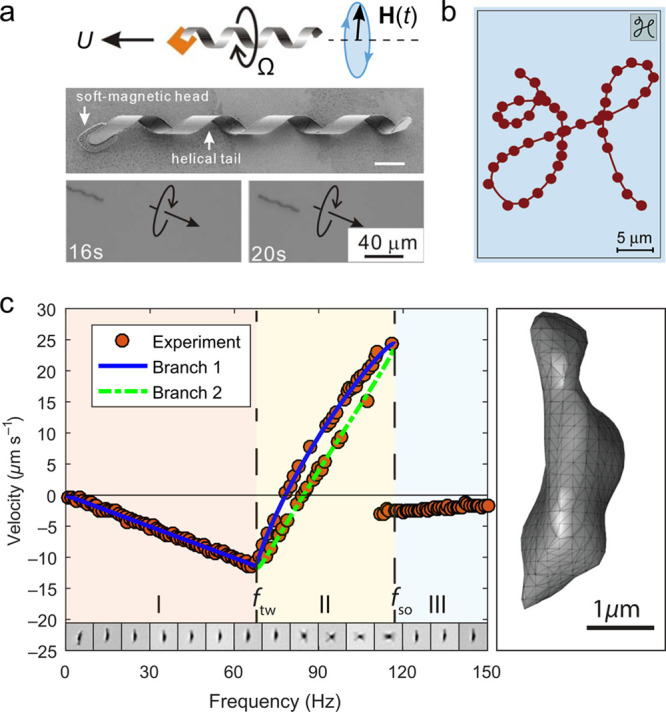
https://cdn.ncbi.nlm.nih.gov/pmc/blobs/4a07/10052236/e962613062d7/au2c00499_0003.jpg
https://cdn.ncbi.nlm.nih.gov/pmc/blobs/4a07/10052236/20dfbc18f0c6/au2c00499_0004.jpg
https://cdn.ncbi.nlm.nih.gov/pmc/blobs/4a07/10052236/dcaf12cd3363/au2c00499_0005.jpg
https://cdn.ncbi.nlm.nih.gov/pmc/blobs/4a07/10052236/0af42f101230/au2c00499_0006.jpg
https://cdn.ncbi.nlm.nih.gov/pmc/blobs/4a07/10052236/f44ec661ce1c/au2c00499_0007.jpg
https://cdn.ncbi.nlm.nih.gov/pmc/blobs/4a07/10052236/b9b2dcb63871/au2c00499_0008.jpg
https://cdn.ncbi.nlm.nih.gov/pmc/blobs/4a07/10052236/50af9c2330cc/au2c00499_0009.jpg
https://cdn.ncbi.nlm.nih.gov/pmc/blobs/4a07/10052236/1e7e95d56c4f/au2c00499_0010.jpg
https://cdn.ncbi.nlm.nih.gov/pmc/blobs/4a07/10052236/c40ac1babb67/au2c00499_0011.jpg
https://cdn.ncbi.nlm.nih.gov/pmc/blobs/4a07/10052236/d94a1507b358/au2c00499_0012.jpg
https://cdn.ncbi.nlm.nih.gov/pmc/blobs/4a07/10052236/1588268b43f4/au2c00499_0013.jpg
https://cdn.ncbi.nlm.nih.gov/pmc/blobs/4a07/10052236/e0be6c194c62/au2c00499_0001.jpg
https://cdn.ncbi.nlm.nih.gov/pmc/blobs/4a07/10052236/65ba5d917591/au2c00499_0002.jpg
https://cdn.ncbi.nlm.nih.gov/pmc/blobs/4a07/10052236/e962613062d7/au2c00499_0003.jpg
https://cdn.ncbi.nlm.nih.gov/pmc/blobs/4a07/10052236/20dfbc18f0c6/au2c00499_0004.jpg
https://cdn.ncbi.nlm.nih.gov/pmc/blobs/4a07/10052236/dcaf12cd3363/au2c00499_0005.jpg
https://cdn.ncbi.nlm.nih.gov/pmc/blobs/4a07/10052236/0af42f101230/au2c00499_0006.jpg
https://cdn.ncbi.nlm.nih.gov/pmc/blobs/4a07/10052236/f44ec661ce1c/au2c00499_0007.jpg
https://cdn.ncbi.nlm.nih.gov/pmc/blobs/4a07/10052236/b9b2dcb63871/au2c00499_0008.jpg
https://cdn.ncbi.nlm.nih.gov/pmc/blobs/4a07/10052236/50af9c2330cc/au2c00499_0009.jpg
https://cdn.ncbi.nlm.nih.gov/pmc/blobs/4a07/10052236/1e7e95d56c4f/au2c00499_0010.jpg
https://cdn.ncbi.nlm.nih.gov/pmc/blobs/4a07/10052236/c40ac1babb67/au2c00499_0011.jpg
https://cdn.ncbi.nlm.nih.gov/pmc/blobs/4a07/10052236/d94a1507b358/au2c00499_0012.jpg
https://cdn.ncbi.nlm.nih.gov/pmc/blobs/4a07/10052236/1588268b43f4/au2c00499_0013.jpg

相似文献

1
Accelerating the Design of Self-Guided Microrobots in Time-Varying Magnetic Fields.加速时变磁场中自引导微型机器人的设计
JACS Au. 2023 Mar 10;3(3):611-627. doi: 10.1021/jacsau.2c00499. eCollection 2023 Mar 27.
2
Programmable Modular Acoustic Microrobots.可编程模块化声学微型机器人
Int Conf Manip Autom Robot Small Scales. 2023 Oct;2023. doi: 10.1109/marss58567.2023.10294125. Epub 2023 Oct 31.
3
Bioinspired soft microrobots actuated by magnetic field.受生物启发的磁场驱动软微型机器人。
Biomed Microdevices. 2021 Oct 1;23(4):52. doi: 10.1007/s10544-021-00590-z.
4
Special section on biomimetics of movement.运动仿生学专题
Bioinspir Biomim. 2011 Dec;6(4):040201. doi: 10.1088/1748-3182/6/4/040201. Epub 2011 Nov 29.
5
A review on microrobots driven by optical and magnetic fields.关于光场和磁场驱动的微型机器人的综述。
Lab Chip. 2023 Mar 1;23(5):848-868. doi: 10.1039/d2lc00573e.
6
Responsive Magnetic Nanocomposites for Intelligent Shape-Morphing Microrobots.用于智能变形微机器人的响应性磁性纳米复合材料。
ACS Nano. 2023 May 23;17(10):8899-8917. doi: 10.1021/acsnano.3c01609. Epub 2023 May 4.
7
Magnetic propelled hydrogel microrobots for actively enhancing the efficiency of lycorine hydrochloride to suppress colorectal cancer.用于主动提高盐酸石蒜碱抑制结直肠癌效率的磁驱动水凝胶微型机器人
Front Bioeng Biotechnol. 2024 Feb 21;12:1361617. doi: 10.3389/fbioe.2024.1361617. eCollection 2024.
8
Pros and Cons: Magnetic versus Optical Microrobots.利弊分析:磁性与光学微机器人。
Adv Mater. 2020 May;32(20):e1906766. doi: 10.1002/adma.201906766. Epub 2020 Feb 13.
9
Formation Techniques Used in Shape-Forming Microrobotic Systems with Multiple Microrobots: A Review.用于具有多个微型机器人的形状形成微型机器人系统的成型技术综述
Micromachines (Basel). 2022 Nov 16;13(11):1987. doi: 10.3390/mi13111987.
10
Programmable aniso-electrodeposited modular hydrogel microrobots.可编程各向异性电沉积模块化水凝胶微机器人。
Sci Adv. 2022 Dec 14;8(50):eade6135. doi: 10.1126/sciadv.ade6135.

引用本文的文献

1
SwarmRL: building the future of smart active systems.群体强化学习:构建智能主动系统的未来。
Eur Phys J E Soft Matter. 2025 Apr 7;48(4-5):16. doi: 10.1140/epje/s10189-025-00477-4.
2
Photocatalytic Magnetic Microgyroscopes with Activity-Tunable Precessional Dynamics.具有可调进动动力学活性的光催化磁性微陀螺仪
Nano Lett. 2024 Nov 27;24(47):14950-14956. doi: 10.1021/acs.nanolett.4c03386. Epub 2024 Nov 11.
3
Magnetic Microrobots for In Vivo Cargo Delivery: A Review.用于体内货物递送的磁性微型机器人:综述

本文引用的文献

1
PyMC: a modern, and comprehensive probabilistic programming framework in Python.PyMC:Python 中一个现代且全面的概率编程框架。
PeerJ Comput Sci. 2023 Sep 1;9:e1516. doi: 10.7717/peerj-cs.1516. eCollection 2023.
2
Dual nature of magnetic nanoparticle dispersions enables control over short-range attraction and long-range repulsion interactions.磁性纳米颗粒分散体的双重性质能够控制短程吸引和长程排斥相互作用。
Commun Chem. 2022 Jun 9;5(1):72. doi: 10.1038/s42004-022-00687-3.
3
Stan: A Probabilistic Programming Language.斯坦:一种概率编程语言。
Micromachines (Basel). 2024 May 20;15(5):664. doi: 10.3390/mi15050664.
J Stat Softw. 2017;76. doi: 10.18637/jss.v076.i01. Epub 2017 Jan 11.
4
Physical intelligence as a new paradigm.身体智能作为一种新范式。
Extreme Mech Lett. 2021 Apr 26;46:101340. eCollection 2021 Jul 30.
5
Microrobot collectives with reconfigurable morphologies, behaviors, and functions.具有可重构形态、行为和功能的微型机器人集群。
Nat Commun. 2022 Apr 26;13(1):2239. doi: 10.1038/s41467-022-29882-5.
6
Automating Bayesian inference and design to quantify acoustic particle levitation.自动化贝叶斯推理与设计以量化声学粒子悬浮。
Soft Matter. 2021 Nov 17;17(44):10128-10139. doi: 10.1039/d1sm01116b.
7
Reconfigurable artificial microswimmers with internal feedback.具有内部反馈的可重构人工微游泳者。
Nat Commun. 2021 Aug 6;12(1):4762. doi: 10.1038/s41467-021-25108-2.
8
Reinforcement learning with artificial microswimmers.人工微游泳者的强化学习。
Sci Robot. 2021 Mar 24;6(52). doi: 10.1126/scirobotics.abd9285.
9
Ultrasound Doppler-guided real-time navigation of a magnetic microswarm for active endovascular delivery.超声多普勒引导下磁性微群的实时导航用于主动血管内递送。
Sci Adv. 2021 Feb 26;7(9). doi: 10.1126/sciadv.abe5914. Print 2021 Feb.
10
Hierarchical assemblies of superparamagnetic colloids in time-varying magnetic fields.时变磁场中超级顺磁胶体的分层组装体
Soft Matter. 2021 Feb 15;17(5):1120-1155. doi: 10.1039/d0sm01878c.