Lin Ming-Jie, Tang Xiu-Xiao, Yao Gao-Sheng, Tan Zhi-Ping, Dai Lei, Wang Ying-Han, Zhu Jiang-Quan, Xu Quan-Hui, Mumin Mukhtar Adan, Liang Hui, Wang Zhu, Deng Qiong, Luo Jun-Hang, Wei Jin-Huan, Cao Jia-Zheng
Department of Urology, The First Affiliated Hospital of Sun Yat-sen University, Guangzhou, China.
Advanced Medical Technology Center, The First Affiliated Hospital, Zhongshan School of Medicine, Sun Yat-sen University, Guangzhou, China.
Front Pharmacol. 2023 Mar 20;14:1120562. doi: 10.3389/fphar.2023.1120562. eCollection 2023.
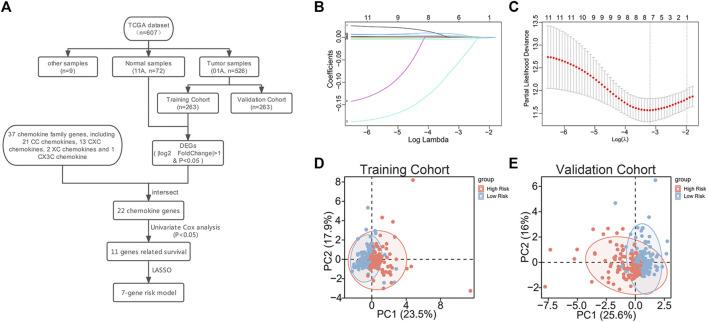
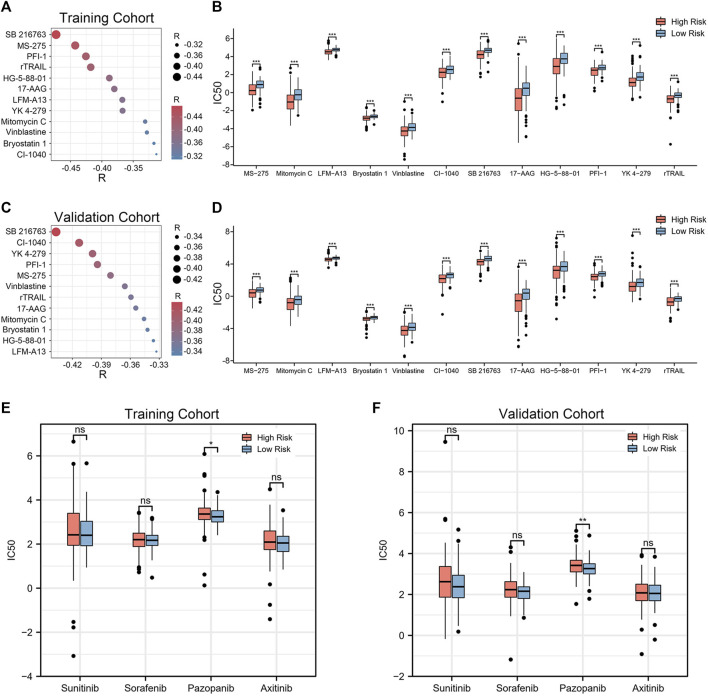
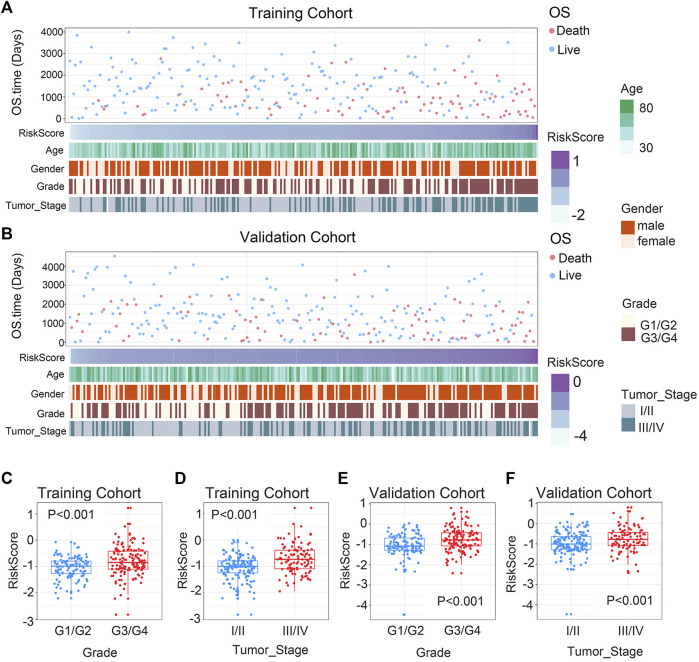
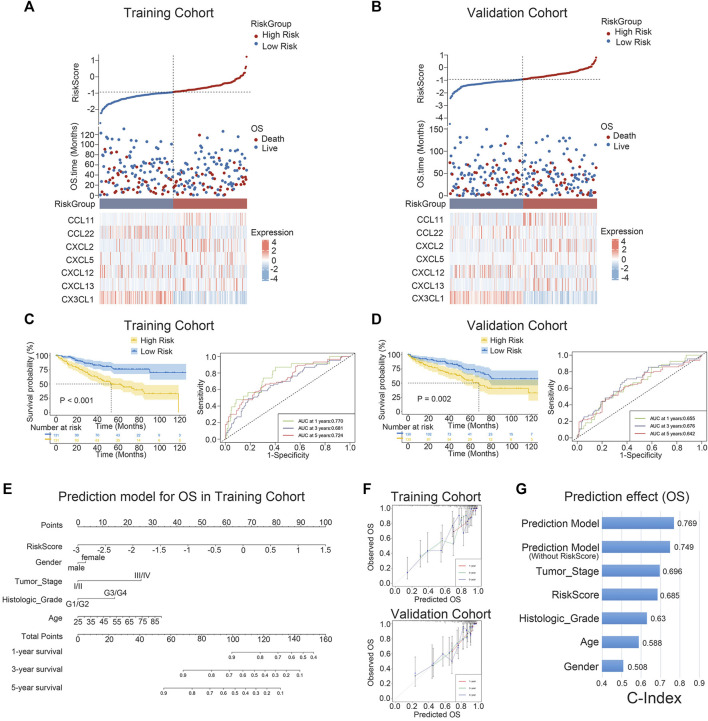
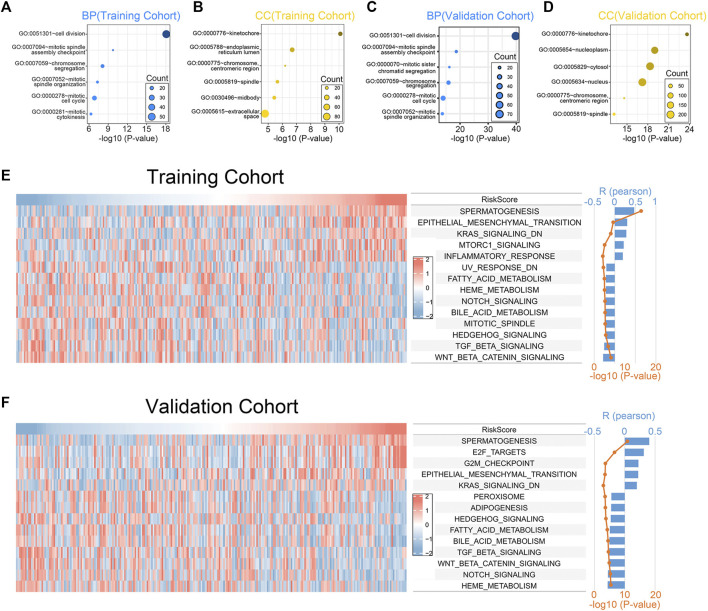
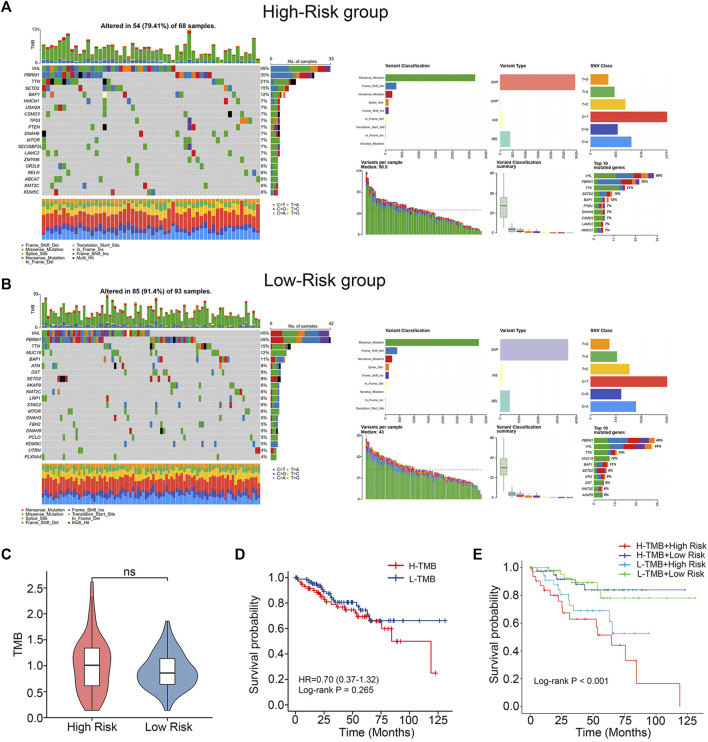
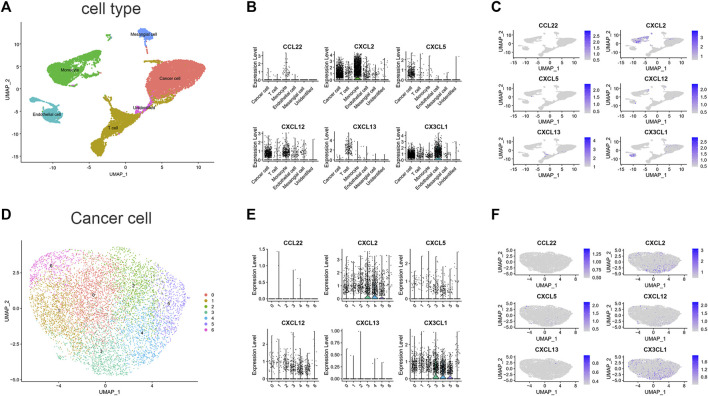
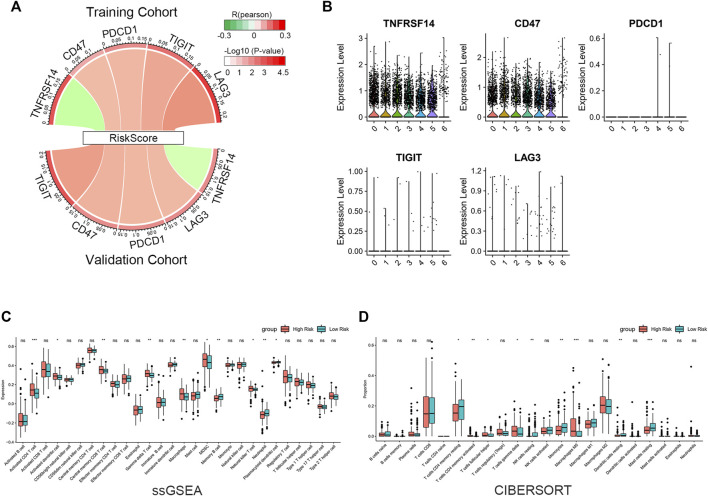
Renal clear cell carcinoma (ccRCC) is one of the most prevailing type of malignancies, which is affected by chemokines. Chemokines can form a local network to regulate the movement of immune cells and are essential for tumor proliferation and metastasis as well as for the interaction between tumor cells and mesenchymal cells. Establishing a chemokine genes signature to assess prognosis and therapy responsiveness in ccRCC is the goal of this effort. mRNA sequencing data and clinicopathological data on 526 individuals with ccRCC were gathered from the The Cancer Genome Atlas database for this investigation (263 training group samples and 263 validation group samples). Utilizing the LASSO algorithm in conjunction with univariate Cox analysis, the gene signature was constructed. The Gene Expression Omnibus (GEO) database provided the single cell RNA sequencing (scRNA-seq) data, and the R package "Seurat" was applied to analyze the scRNA-seq data. In addition, the enrichment scores of 28 immune cells in the tumor microenvironment (TME) were calculated using the "ssGSEA" algorithm. In order to develop possible medications for patients with high-risk ccRCC, the "pRRophetic" package is employed. High-risk patients had lower overall survival in this model for predicting prognosis, which was supported by the validation cohort. In both cohorts, it served as an independent prognostic factor. Annotation of the predicted signature's biological function revealed that it was correlated with immune-related pathways, and the riskscore was positively correlated with immune cell infiltration and several immune checkpoints (ICs), including CD47, PDCD1, TIGIT, and LAG-3, while it was negatively correlated with TNFRSF14. The CXCL2, CXCL12, and CX3CL1 genes of this signature were shown to be significantly expressed in monocytes and cancer cells, according to scRNA-seq analysis. Furthermore, the high expression of CD47 in cancer cells suggested us that this could be a promising immune checkpoint. For patients who had high riskscore, we predicted 12 potential medications. Overall, our findings show that a putative 7-chemokine-gene signature might predict a patient's prognosis for ccRCC and reflect the disease's complicated immunological environment. Additionally, it offers suggestions on how to treat ccRCC using precision treatment and focused risk assessment.
肾透明细胞癌(ccRCC)是最常见的恶性肿瘤类型之一,受趋化因子影响。趋化因子可形成局部网络来调节免疫细胞的运动,对肿瘤增殖、转移以及肿瘤细胞与间充质细胞之间的相互作用至关重要。建立趋化因子基因特征以评估ccRCC的预后和治疗反应性是这项工作的目标。本研究从癌症基因组图谱数据库收集了526例ccRCC患者的mRNA测序数据和临床病理数据(263个训练组样本和263个验证组样本)。利用LASSO算法结合单变量Cox分析构建基因特征。基因表达综合数据库(GEO)提供了单细胞RNA测序(scRNA-seq)数据,并应用R包“Seurat”分析scRNA-seq数据。此外,使用“ssGSEA”算法计算肿瘤微环境(TME)中28种免疫细胞的富集分数。为了开发针对高危ccRCC患者的潜在药物,采用了“pRRophetic”包。在这个预测预后的模型中,高危患者的总生存期较低,验证队列对此提供了支持。在两个队列中,它都是一个独立的预后因素。对预测特征的生物学功能注释显示,它与免疫相关途径相关,风险评分与免疫细胞浸润和几个免疫检查点(ICs)呈正相关,包括CD47、PDCD1、TIGIT和LAG-3,而与TNFRSF14呈负相关。根据scRNA-seq分析,该特征的CXCL2、CXCL12和CX3CL1基因在单核细胞和癌细胞中显著表达。此外,癌细胞中CD47的高表达提示我们这可能是一个有前景的免疫检查点。对于风险评分高的患者,我们预测了12种潜在药物。总体而言,我们的研究结果表明,一个假定的7趋化因子基因特征可能预测ccRCC患者的预后,并反映该疾病复杂的免疫环境。此外,它还为如何使用精准治疗和聚焦风险评估来治疗ccRCC提供了建议。