Dixit Shriniket, Kumar Anant, Srinivasan Kathiravan
School of Computer Science and Engineering, Vellore Institute of Technology, Vellore 632014, India.
School of Bioscience and Technology, Vellore Institute of Technology, Vellore 632014, India.
Diagnostics (Basel). 2023 Apr 5;13(7):1353. doi: 10.3390/diagnostics13071353.
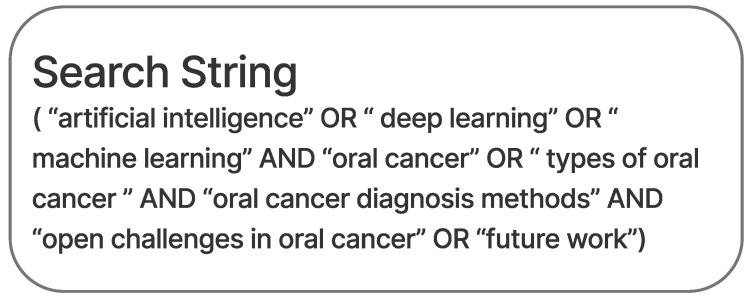
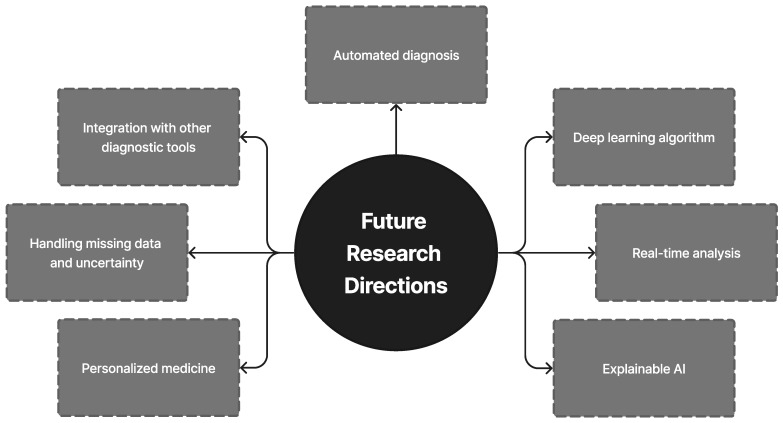
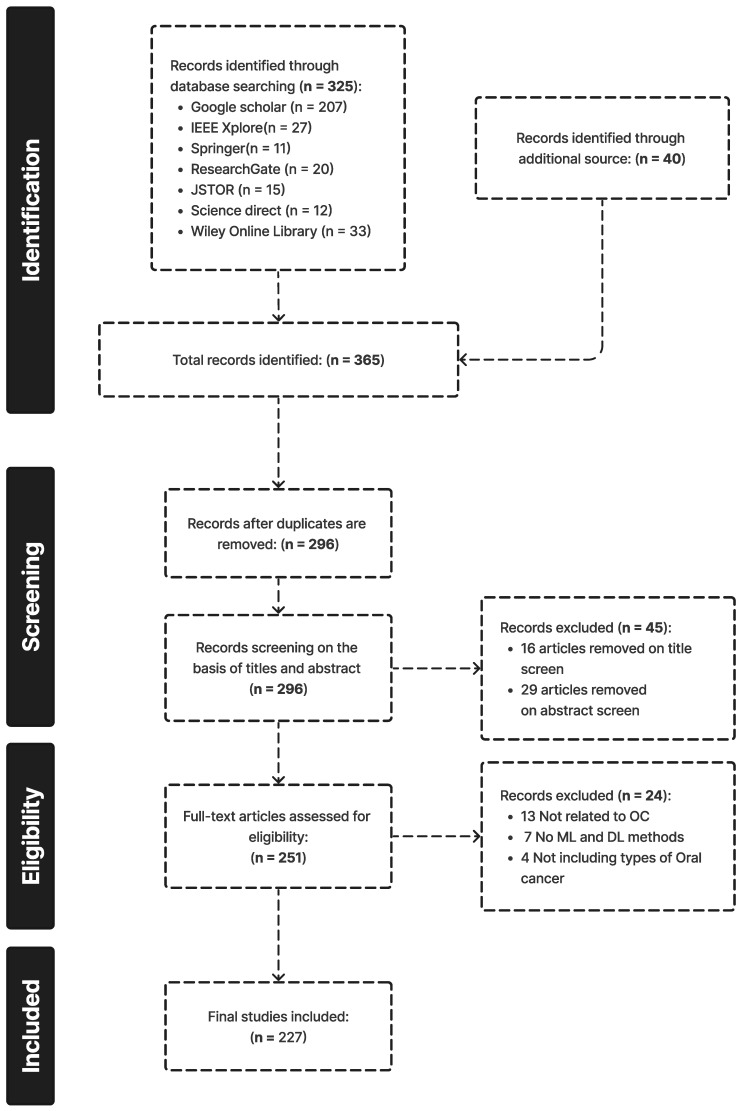
Cancer is a problematic global health issue with an extremely high fatality rate throughout the world. The application of various machine learning techniques that have appeared in the field of cancer diagnosis in recent years has provided meaningful insights into efficient and precise treatment decision-making. Due to rapid advancements in sequencing technologies, the detection of cancer based on gene expression data has improved over the years. Different types of cancer affect different parts of the body in different ways. Cancer that affects the mouth, lip, and upper throat is known as oral cancer, which is the sixth most prevalent form of cancer worldwide. India, Bangladesh, China, the United States, and Pakistan are the top five countries with the highest rates of oral cavity disease and lip cancer. The major causes of oral cancer are excessive use of tobacco and cigarette smoking. Many people's lives can be saved if oral cancer (OC) can be detected early. Early identification and diagnosis could assist doctors in providing better patient care and effective treatment. OC screening may advance with the implementation of artificial intelligence (AI) techniques. AI can provide assistance to the oncology sector by accurately analyzing a large dataset from several imaging modalities. This review deals with the implementation of AI during the early stages of cancer for the proper detection and treatment of OC. Furthermore, performance evaluations of several DL and ML models have been carried out to show that the DL model can overcome the difficult challenges associated with early cancerous lesions in the mouth. For this review, we have followed the rules recommended for the extension of scoping reviews and meta-analyses (PRISMA-ScR). Examining the reference lists for the chosen articles helped us gather more details on the subject. Additionally, we discussed AI's drawbacks and its potential use in research on oral cancer. There are methods for reducing risk factors, such as reducing the use of tobacco and alcohol, as well as immunization against HPV infection to avoid oral cancer, or to lessen the burden of the disease. Additionally, officious methods for preventing oral diseases include training programs for doctors and patients as well as facilitating early diagnosis via screening high-risk populations for the disease.
癌症是一个全球性的重大健康问题,在全世界范围内致死率极高。近年来,各种机器学习技术在癌症诊断领域的应用为高效、精准的治疗决策提供了有意义的见解。由于测序技术的迅速发展,基于基因表达数据的癌症检测在过去几年中有了改进。不同类型的癌症以不同方式影响身体的不同部位。影响口腔、嘴唇和上咽喉的癌症被称为口腔癌,它是全球第六大常见癌症形式。印度、孟加拉国、中国、美国和巴基斯坦是口腔疾病和唇癌发病率最高的五个国家。口腔癌的主要病因是过度使用烟草和吸烟。如果能早期发现口腔癌(OC),许多人的生命可以挽救。早期识别和诊断有助于医生提供更好的患者护理和有效治疗。随着人工智能(AI)技术的实施,OC筛查可能会取得进展。AI可以通过准确分析来自多种成像模态的大量数据集,为肿瘤学领域提供帮助。本综述探讨了在癌症早期阶段实施AI以正确检测和治疗OC的情况。此外,还对几种深度学习(DL)和机器学习(ML)模型进行了性能评估,以表明DL模型可以克服与口腔早期癌性病变相关的困难挑战。在本综述中,我们遵循了推荐用于扩展综述和元分析(PRISMA-ScR)的规则。检查所选文章的参考文献列表有助于我们收集更多关于该主题的详细信息。此外,我们还讨论了AI的缺点及其在口腔癌研究中的潜在用途。有一些降低风险因素的方法,例如减少烟草和酒精的使用,以及针对人乳头瘤病毒(HPV)感染进行免疫接种以预防口腔癌,或减轻疾病负担。此外,预防口腔疾病的有益方法包括对医生和患者的培训计划,以及通过筛查高危人群来促进疾病的早期诊断。