Greenville School of Medicine, University of South Carolina, 607 Grove Road, Greenville, SC 29605, USA.
Int J Mol Sci. 2023 Apr 6;24(7):6812. doi: 10.3390/ijms24076812.
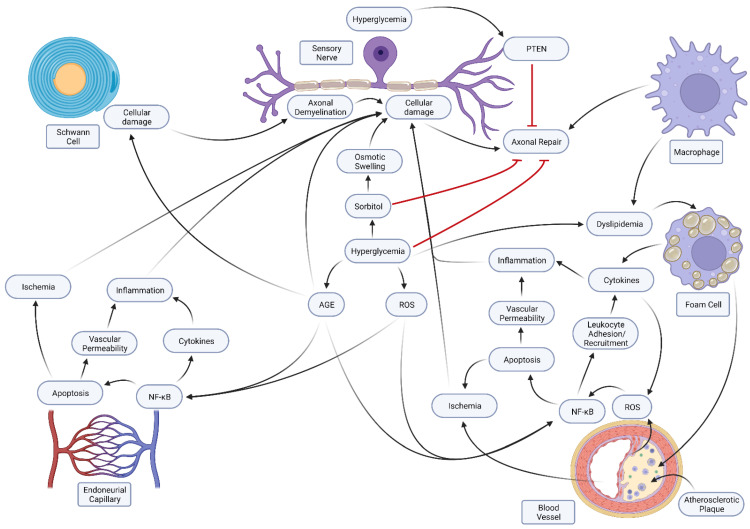
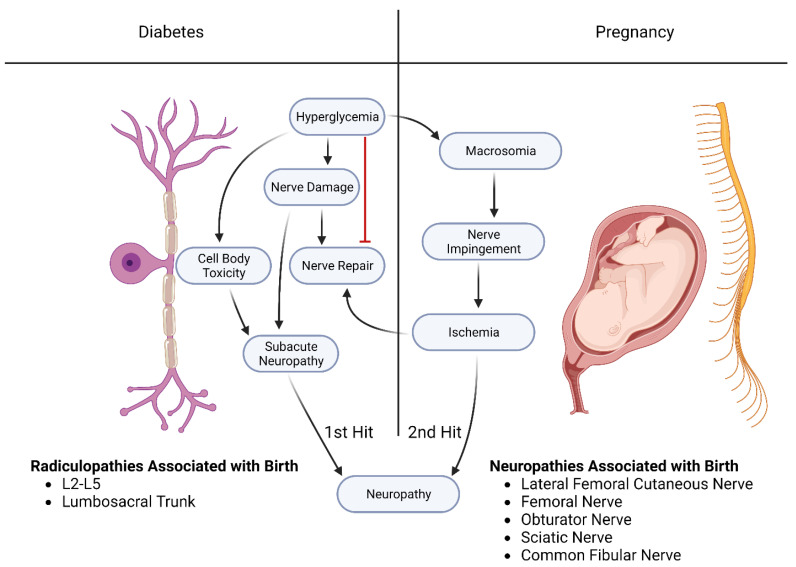
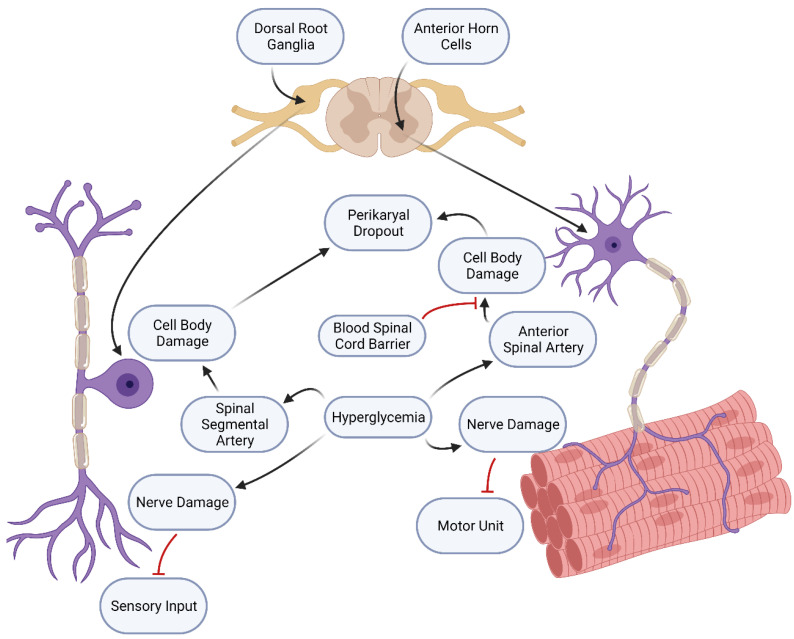
The two-hit model has been proposed to explain the effects of diabetes on mothers who are already in a putative subclinical damaged state and then undergo neuronal damage during the delivery process. However, the anatomical and pathophysiological mechanisms are not well understood. Our overarching hypothesis in this review paper is that pregnant women who are diabetic have a damaged peripheral nervous system, constituting the "first hit" hypothesis. The delivery process itself-the "second hit"-can produce neurological damage to the mother. Women with diabetes mellitus (DM) are at risk for neurological damage during both hits, but the cumulative effects of both "hits" pose a greater risk of neurological damage and pathophysiological changes during delivery. In our analysis, we introduce the different steps of our concept paper. Subsequently, we describe each of the topics. First, we outline the mechanisms by which diabetes acts as a detrimental variable in neuropathy by focusing on the most common form of diabetic neuropathy, diabetic distal symmetrical polyneuropathy, also known as distal sensorimotor neuropathy. The possible role of macrosomia in causing diabetic neuropathy and obstetric neurological injury is discussed. Second, we describe how vaginal delivery can cause various obstetrical neurological syndromes and pathophysiological changes. Third, we highlight the risk of obstetric neuropathy and discuss anatomical sites at which lesions may occur, including lesions during delivery. Fourth, we characterize the pathophysiological pathways involved in the causation of diabetic neuropathy. Finally, we highlight diabetic damage to sensory vs. motor nerves, including how hyperglycemia causes different types of damage depending on the location of nerve cell bodies.
双打击模型被提出用于解释糖尿病对已经处于潜在亚临床损伤状态的母亲的影响,然后在分娩过程中发生神经元损伤。然而,其解剖学和病理生理学机制尚不清楚。在这篇综述论文中,我们的总体假设是,患有糖尿病的孕妇外周神经系统受损,构成“第一击”假说。分娩过程本身——“第二击”——可能会对母亲造成神经损伤。患有糖尿病的女性在两次打击中都有发生神经损伤的风险,但两次“打击”的累积效应在分娩期间更有可能导致神经损伤和病理生理变化。在我们的分析中,我们引入了我们的概念论文的不同步骤。随后,我们描述了每个主题。首先,我们通过关注最常见的糖尿病神经病变形式,即糖尿病远端对称性多发性神经病,也称为远端感觉运动神经病,概述了糖尿病作为神经病变有害变量的作用机制。讨论了巨胎在引起糖尿病神经病变和产科神经损伤中的可能作用。其次,我们描述了阴道分娩如何引起各种产科神经系统综合征和病理生理变化。第三,我们强调了产科神经病变的风险,并讨论了可能发生病变的解剖部位,包括分娩期间的病变。第四,我们描述了导致糖尿病神经病变的病理生理途径。最后,我们强调了糖尿病对感觉神经和运动神经的损伤,包括高血糖如何根据神经细胞体的位置引起不同类型的损伤。